Humanity stands at the threshold of a new era in biomedicine as the first vaccine developed entirely through artificial intelligence (AI) algorithms becomes a reality. While traditional vaccine development required decades of trial and error in the laboratory, the convergence of computational biology and machine learning now allows scientists to "predict" viral behavior and design countermeasures with atomic precision. The news, highlighted by international networks and Vietnam.vn, underscores how technology is transforming global health security.
From Biological Observation to Digital Design
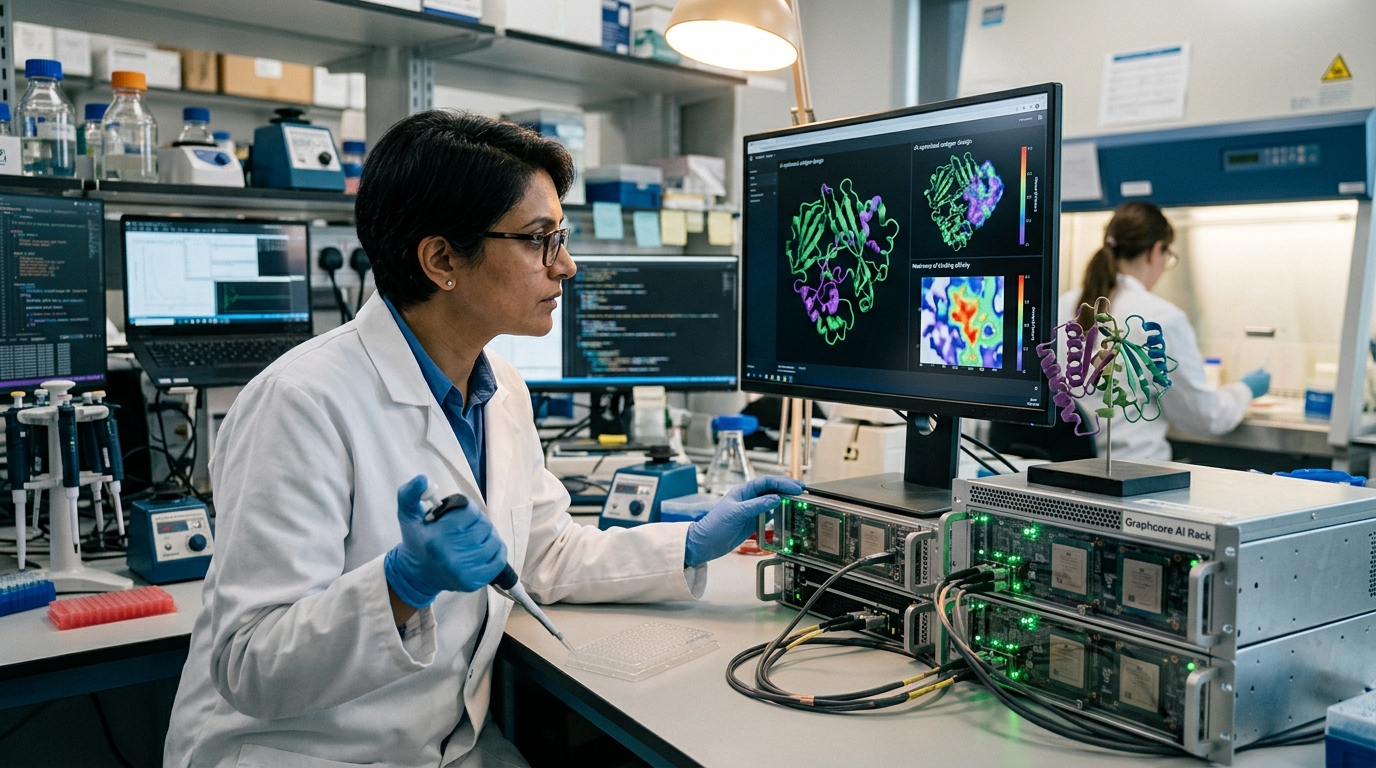
The traditional method of creating vaccines relied on culturing weakened viruses or isolating proteins, a process that was time-consuming and often uncertain. This new vaccine, however, was born inside supercomputers. Using Deep Learning models, researchers were able to analyze billions of potential protein combinations to find the one that would elicit the strongest immune response with the fewest side effects.
The key to success lies in AI's ability to solve the "protein folding" problem. By understanding the three-dimensional shape of viral proteins, the algorithm can design a synthetic molecule that fits the target perfectly, like a key in a lock. This process, which once required years of work by armies of PhD researchers, is now completed in a matter of days.
Speed as a Strategic Advantage
The significance of this development is not only scientific but also strategic. In a world constantly threatened by emerging pandemics and mutations, response speed is everything. The AI platform used for this specific vaccine allows for the immediate adjustment of the design as soon as the genetic sequence of a new pathogen becomes known.
- 70% reduction in research and development costs.
- Minimization of failed clinical trials through simulations.
- Ability to create personalized vaccines for rare diseases.
However, speed brings its own challenges. Regulatory bodies, such as the FDA and EMA, are being called upon to redefine approval protocols. How can one guarantee the safety of a drug designed by a "black box" of algorithms? The answer seems to lie in a hybrid approach: digital design paired with rigorous, traditional human clinical trials.
The Geopolitics of Biotech and the Future
The fact that this news is gaining significant traction in emerging economies like Vietnam indicates a shift in power. Artificial intelligence is democratizing access to high-end biotechnology. Countries that previously relied exclusively on imports from the West are now investing in their own AI centers to develop domestic health solutions. This could break the monopoly of Big Pharma giants and lead to cheaper medicines for the developing world.
"We are not just designing a vaccine; we are designing the future of human survival in a world of microbial uncertainty," says a lead researcher on the project.
In conclusion, the first AI-developed vaccine is proof that technology can become biology's ultimate ally. The challenge now is the ethical management of this power and ensuring that its fruits reach every corner of the planet without exclusion.