In an era where technology is frequently criticized for distancing humanity from its core essence, a groundbreaking application of Artificial Intelligence (AI) serves as a poignant reminder of science's fundamental value in the service of life. For the first time in global medical history, AI systems are being deployed for the mass and precise screening of newborns to prevent blindness. This development, centered on Retinopathy of Prematurity (ROP), promises to alter the destiny of thousands of children annually, particularly in regions where access to specialized ophthalmologists is critically scarce.
The Scourge of Retinopathy of Prematurity
Retinopathy of Prematurity is a potentially devastating condition affecting preterm infants. As the blood vessels in a baby's retina do not have time to fully develop, premature birth interrupts this process, leading to abnormal vessel growth that can cause retinal detachment and permanent vision loss. It is estimated that globally, approximately 50,000 children are blinded or suffer severe visual impairment each year due to ROP.
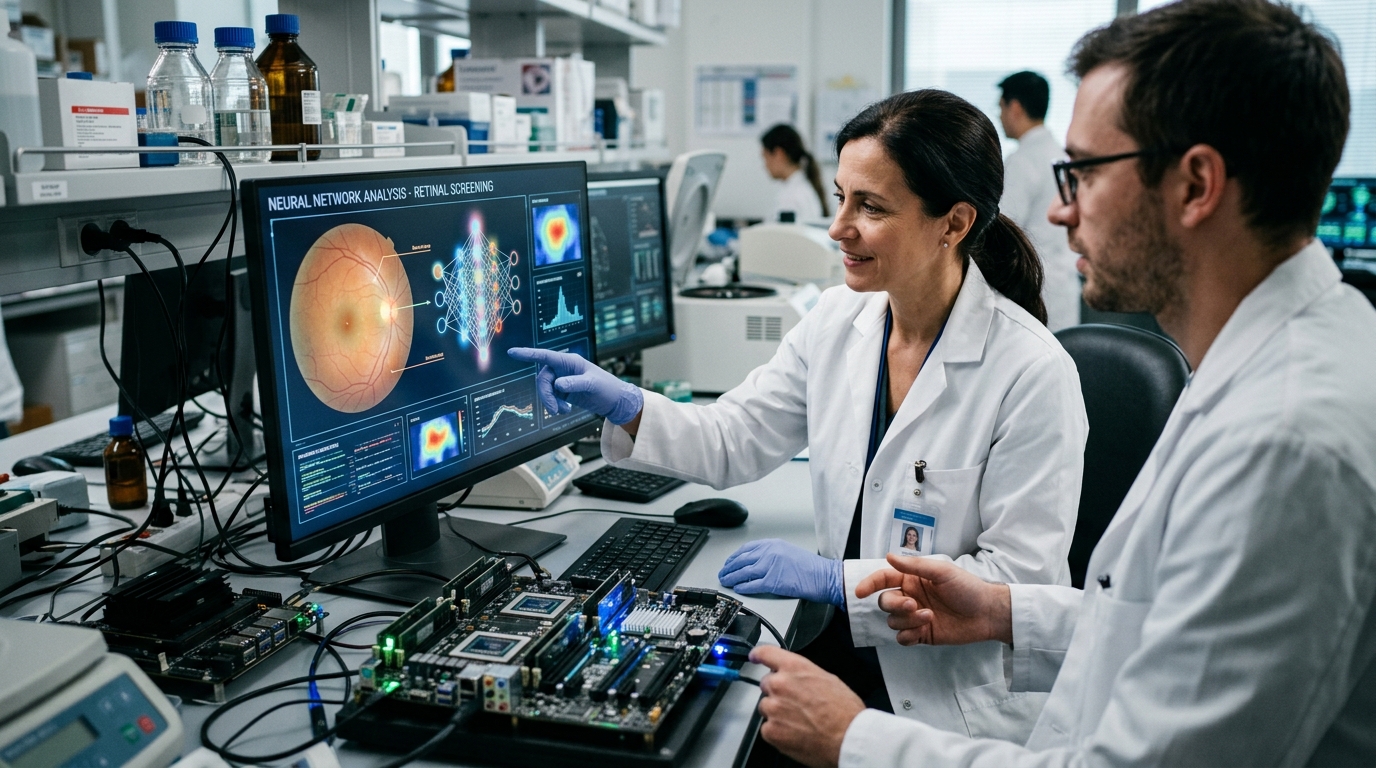
The challenge with ROP diagnosis is twofold: it requires highly specialized physicians and is a time-sensitive process. In many low-to-middle-income countries, the number of ophthalmologists capable of accurately examining a neonate is minimal. This is where Artificial Intelligence steps in, acting as a "digital specialist" capable of evaluating thousands of retinal images within seconds.
The Technology Behind the Innovation
The system, developed by an international team of researchers led by University College London (UCL) and Moorfields Eye Hospital, is based on sophisticated deep learning algorithms. These algorithms were trained using tens of thousands of images from neonatal fundoscopy, learning to recognize the minute signs of pathological vessel development.
- Automated Classification: The system can categorize ROP into stages, indicating which infants require immediate surgical intervention.
- Reduction of Human Error: Studies have shown that AI maintains consistent performance, unlike human doctors who may have differing assessments of the same case.
- Telemedicine Integration: Images can be captured by nurses in remote areas and analyzed centrally by the AI system.
"The use of Artificial Intelligence does not replace the doctor; rather, it provides a powerful tool to reach places that were previously inaccessible," the researchers state.
Social and Ethical Implications
The implementation of this technology is not merely a technical achievement; it is an act of social justice. In developing economies, ROP has reached epidemic proportions as the survival of preterm infants increases thanks to better intensive care units, but ophthalmological monitoring has not kept pace. AI bridges this gap, offering world-class diagnostic capability to every corner of the planet.
However, questions arise. Who bears responsibility in the event of a misdiagnosis by the algorithm? How is the privacy of these infants' data ensured? The medical community insists that AI must function as a decision support system rather than an autonomous judge. The final decision for treatment remains with the human practitioner, but the algorithm is the one that sounds the alarm in time.
The Future of Pediatric Diagnostics
The success of the ROP program paves the way for similar applications in other pediatric diseases. From detecting congenital heart defects via AI-enhanced ultrasounds to diagnosing rare genetic syndromes through facial analysis, Artificial Intelligence is becoming the invisible guardian angel of the next generation. The challenge now shifts from the laboratory to clinical practice: how will these systems be integrated into national healthcare systems in a sustainable and ethical manner?
In conclusion, the world's first application of AI for screening blindness in infants stands as a beacon of hope. It demonstrates that technological progress, when guided by empathy and necessity, can solve problems that were considered insurmountable for decades. The light in a child's eyes is perhaps the most precious return on investment (ROI) that data science can offer.