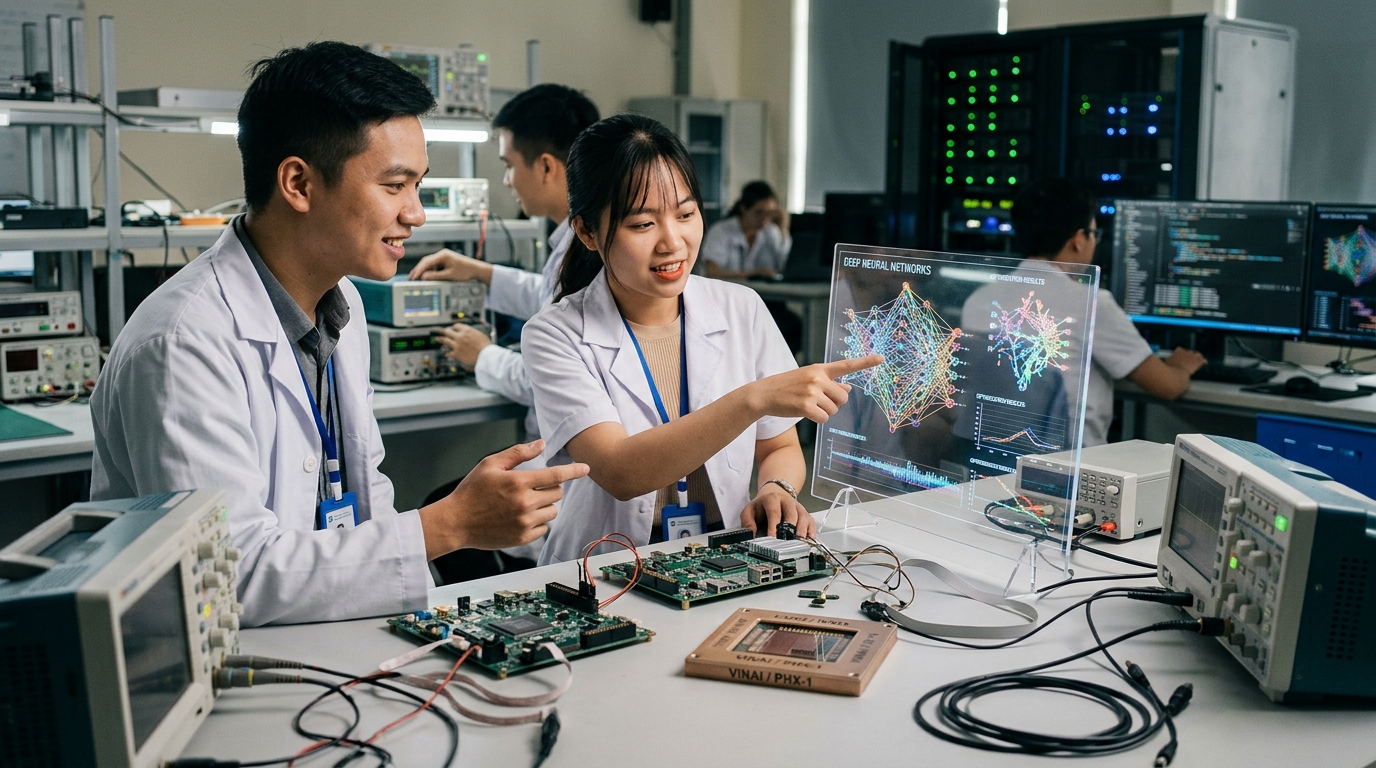
In an era where geopolitical power is increasingly measured by computational capacity and intellectual property, Vietnam is taking a bold leap into the future. The recent announcement and honoring of exceptional Vietnamese students in the field of Artificial Intelligence (AI), as reported by Vietnam.vn, is far more than a ceremonial event. It represents the realization of a national strategy aimed at positioning the country among the top ten global AI hubs by 2030.
These honored students, hailing from prestigious institutions such as Vietnam National University and FPT University, have been recognized for their cutting-edge research in diverse fields: from Natural Language Processing (NLP) tailored to the nuances of the Vietnamese language, to Computer Vision applications in precision agriculture and medical diagnostics. This new generation of scientists is not merely being trained to staff foreign multinationals; they are being groomed to build a domestic ecosystem of innovation.
The National Strategy and the Educational Miracle
Vietnam's ascent in the AI hierarchy is no accident. The Vietnamese government has designated AI as a central pillar of the "Fourth Industrial Revolution." Supported by the Ministry of Science and Technology, specialized scholarship programs and centers of excellence have been established to bridge the gap between academic research and the labor market. This approach is holistic, beginning with the strengthening of STEM skills in secondary education and extending to the creation of regulatory "sandboxes" for testing emerging technologies.
- Investment in Human Capital: Vietnam boasts one of the youngest and most STEM-oriented populations in Asia, providing a massive talent pool.
- Public-Private Partnerships: Major corporations like VinGroup and FPT are funding state-of-the-art labs and providing the large datasets necessary for training complex models.
- Focus on Applied AI: Research is not confined to theoretical papers but is directed toward solving local challenges, such as urban traffic management and supply chain optimization.
From Manufacturing to Intellectual Creation
For decades, Vietnam was primarily known as the "successor to China" in low-cost manufacturing. However, the recognition of these AI prodigies signals a profound paradigm shift. The nation is actively seeking to escape the middle-income trap by investing heavily in the knowledge economy. AI provides the essential toolkit for this transition. As the United States and China compete for dominance in semiconductors and algorithms, Vietnam is strategically positioning itself as a reliable third pole, capable of producing high-tier technical talent.
"Artificial Intelligence is not just a technology for us; it is the key to our national sovereignty in the 21st century," stated a Ministry of Science official during the ceremony.
The primary challenge, however, remains talent retention. The threat of "brain drain" to Silicon Valley or Singapore is a persistent reality. To counter this, Hanoi is now offering significant incentives for overseas scientists to return and for entrepreneurs to launch startups within the country. The students honored this year represent the vanguard of this movement, proving that innovation knows no geographical boundaries when provided with the right institutional support.
Global Implications and Future Outlook
The rise of Vietnamese AI talent sends a clear message to the international community: Southeast Asia is no longer just a consumer market, but a formidable producer of technology. As these bright minds embark on their professional journeys, the global AI landscape must prepare for a new, dynamic presence that combines technical excellence with a unique cultural perspective. The success of these students is a testament to the fact that with vision and state support, emerging economies can compete at the highest levels of the digital age.