At the heart of the scientific method has always been the principle of "peer review"—the idea that human judgment, sharpened by years of training and experience, is the ultimate filter for truth. However, as we navigate through 2026, the scientific community finds itself at a critical crossroads. A series of recent studies and analyses, such as those highlighted by Liberal.gr, demonstrate a fundamental shift: scientists are beginning to trust Artificial Intelligence systems more than their own colleagues. This phenomenon is not merely a technological advancement, but a profound epistemological crisis reshaping the production of knowledge.
The Illusion of Objectivity
Why would a distinguished biologist or physicist prefer the analysis of an LLM (Large Language Model) over the critique of a seasoned peer? The answer lies in the perception of objectivity. Humans, no matter how well-trained, carry cognitive biases, personal rivalries, and the pressure of academic advancement ("publish or perish"). In contrast, AI is presented as a "neutral" arbiter, capable of processing millions of data points without fatigue or emotional interference.
However, this "objectivity" is often an illusion. AI models are trained on data produced by humans, thus carrying all existing biases into a more sophisticated, "mathematical" package. When a scientist blindly trusts an algorithmic conclusion, they risk accepting a "digital authority" that lacks the capacity for critical questioning—the very DNA of science since the time of Galileo. The danger is that we trade human fallibility for algorithmic opacity, which is far harder to correct.
The Reproducibility Crisis and AI
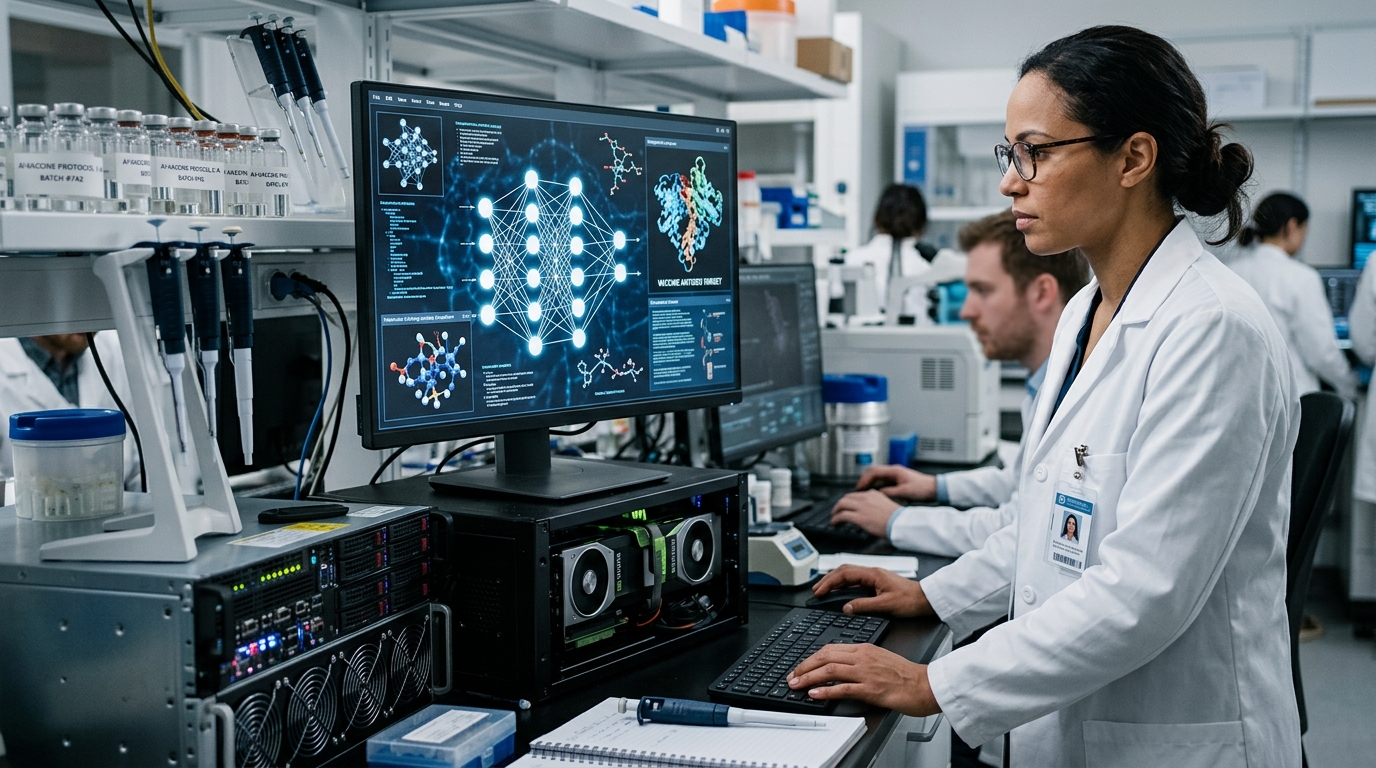
For years, science has been grappling with the "reproducibility crisis"—the fact that many experiments cannot be replicated with the same results. AI promises to solve this by offering standardized analysis methods. In fields like drug discovery, systems like AlphaFold have made leaps that would have required decades of human labor. The speed and precision of these tools create a sense of awe, which is gradually turning into a dangerous dependency.
The problem arises when AI is used not as a tool, but as the final judge. There are now reports of researchers using AI to "correct" or "improve" the findings of their colleagues before they are even published. This practice bypasses traditional dialogue and disagreement, which are essential for progress. If scientific truth ends up being whatever aligns with the dominant algorithmic model, we risk being trapped in an intellectual echo chamber where innovation is stifled by statistical probability. We are essentially automating the consensus, which is the antithesis of a breakthrough.
The "Black Box" Phenomenon in Research
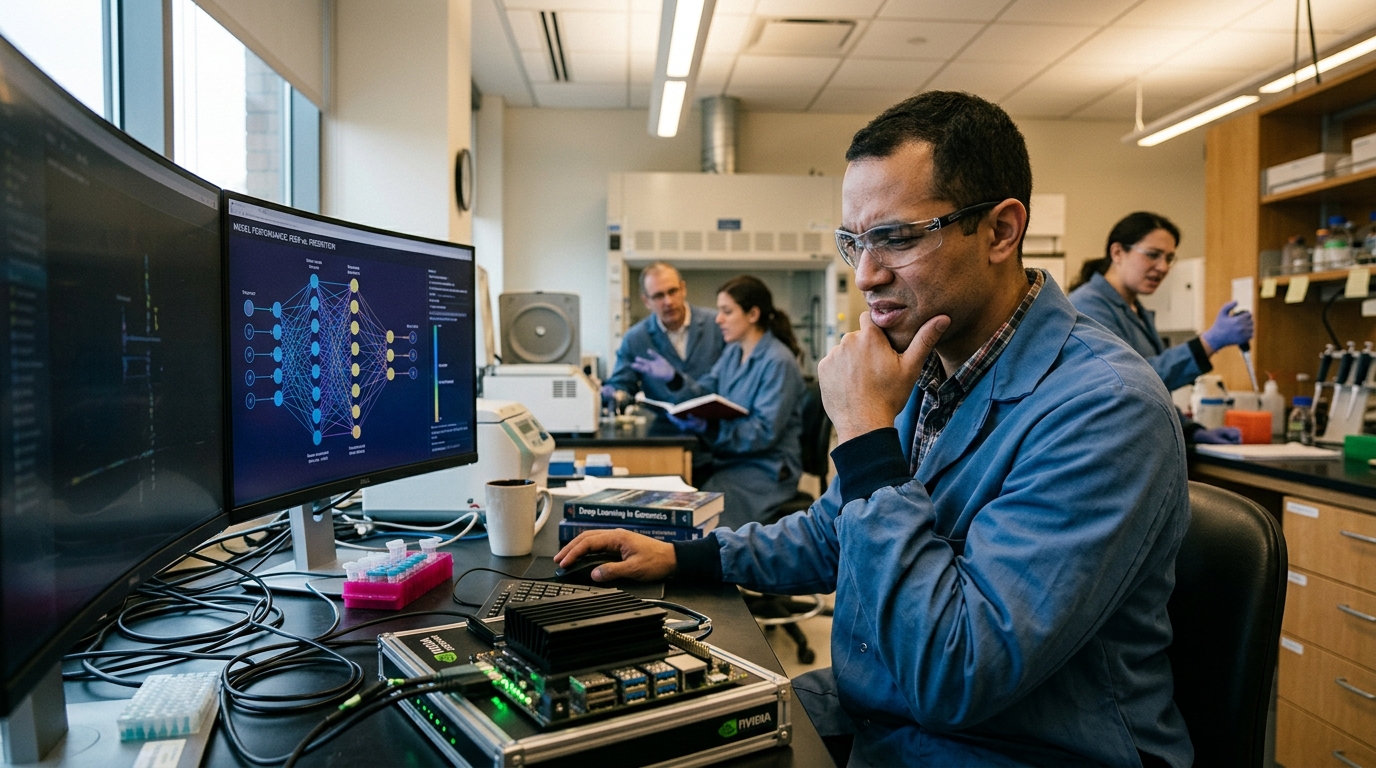
One of the most concerning aspects of this trend is the acceptance of "black boxes." In traditional science, it is not enough to know that something works; one must also know why. AI often provides correct answers without explaining the logical path behind them. When scientists begin to trust these outputs more than the explanations of their peers, they are essentially abandoning understanding in favor of prediction.
This shift has serious ethical implications. Who bears the responsibility if a medical protocol based on AI fails? If a scientist trusted the algorithm over a human warning, how is their negligence assessed? Trust in the machine reduces the sense of individual and collective responsibility, transforming researchers from thinkers into data managers. We are witnessing a deskilling of the scientific elite, where the ability to interpret data is being outsourced to proprietary code.
Conclusion: The Need for a New Humanism in Science
Artificial Intelligence is undoubtedly the most powerful ally science has ever had. However, blind trust in it at the expense of human collaboration is a perilous path. Science is a social activity; it relies on trust, disagreement, and a shared ethical commitment to truth. The peer review process, despite its flaws, is a mechanism of human accountability that no machine can replicate.
To safeguard the future of research, we must retrain scientists not only in how to use AI but also in how to challenge it. Human intuition, the ability to see beyond the data, and ethical judgment cannot be replaced by any algorithm. Trusting our colleagues, with all their imperfections, is what keeps science human and, ultimately, reliable. The laboratory of the future must be a place where the machine serves the mind, not the other way around.