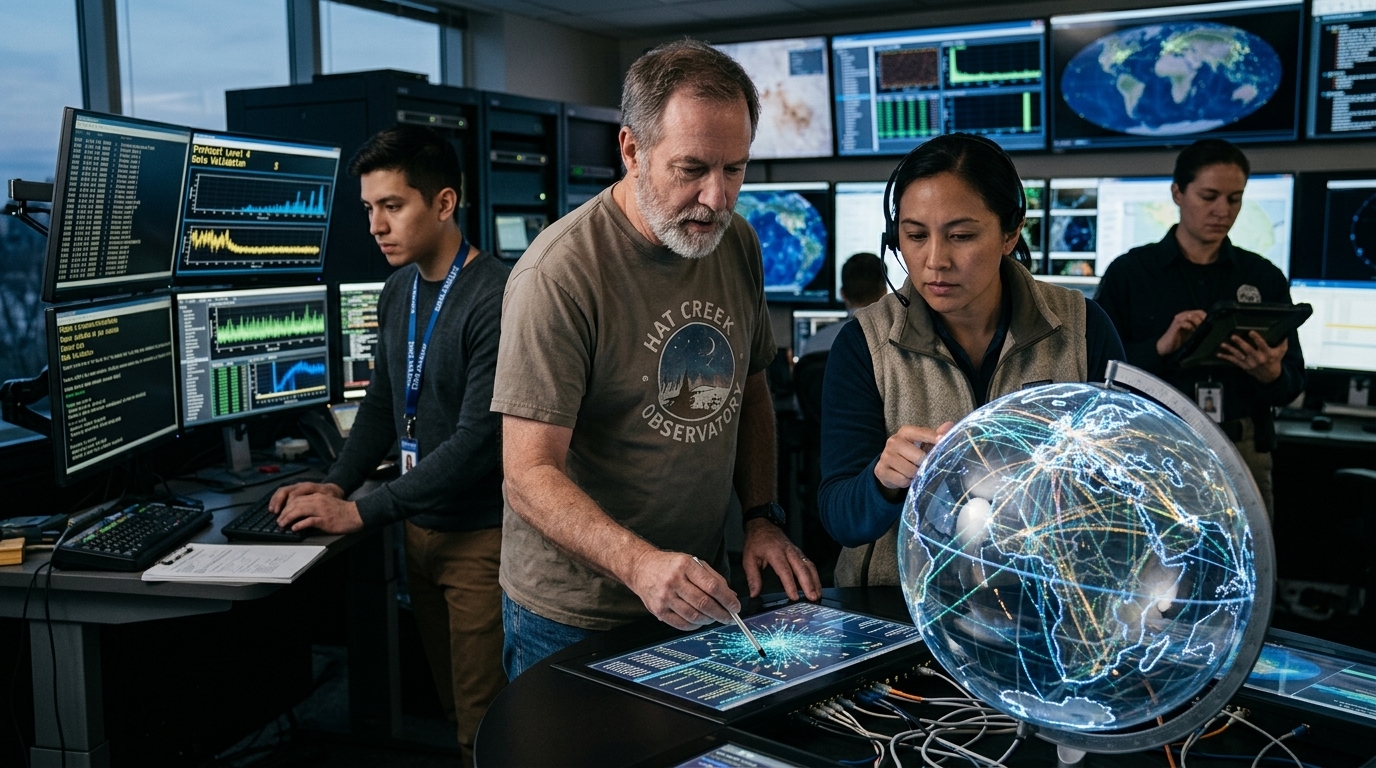
It is May 2026, and the promise of Artificial Intelligence (AI) for universal automation seems to be materializing at a pace that exceeds all forecasts. However, beneath the surface of increased productivity and reduced operating costs, a systemic threat is beginning to emerge that most risk analysts have ignored: the paradox of intellectual cannibalization. AI, in its quest to optimize business, is eliminating the very class of human experts from which it draws its knowledge and corrective capability.
The Learning Paradox and the Erosion of Expertise
For Large Language Models (LLMs) and AI systems to remain at the cutting edge of accuracy, they require a constant feed of high-quality data, produced or evaluated by humans. This process, known as Reinforcement Learning from Human Feedback (RLHF), relies on the ability of experts to identify subtle nuances, ethical dilemmas, and technical errors that the model itself cannot perceive. But when a business replaces its junior and mid-level analysts with automated systems, it breaks the chain of production for future experts.
Expertise is not a static state but an evolutionary journey. Without the "friction" of daily work at an entry level, tomorrow's "senior" experts simply will not exist. This creates a gap in the labor market and, by extension, a crisis in the quality of AI training data. If the humans supervising the AI do not possess the deep knowledge acquired only through experience, the AI will begin to recycle its own errors, leading to what scientists call "model collapse."
The Synthetic Data Trap
Many argue that the solution lies in synthetic data—data generated by the AI itself to train the next generation of models. However, research shows that the exclusive use of synthetic data leads to a progressive degradation of the system's intelligence. AI tends to "forget" outliers and focus on the average, losing the capacity for creative thinking and solving complex problems.
- The loss of "tacit knowledge" held by experienced professionals.
- The creation of echo chambers where models confirm their own biases.
- The difficulty of adapting to new, unprecedented situations not included in historical data.
In the legal or medical fields, for instance, replacing assistants with AI may offer short-term cost savings. But in the long run, who will be able to judge if the AI's diagnosis or legal advice is correct? If the next generation of professionals has only learned to trust the software, critical thinking will atrophy, making humanity a hostage to algorithmic errors.
Strategic Re-evaluation: Humans as Investment, Not Cost
Businesses must realize that maintaining human experts is not an act of charity but a critical risk management strategy. "Human-in-the-loop" supervision should not be a formal check, but an active learning process for both sides. Organizations that thrive will be those that create hybrid work models where AI takes on the bulk of the work, but the human retains the role of architect and judge.
"The tragedy of the modern enterprise is that it sacrifices the seed of the future to satisfy the hunger of the quarter," market analysts state.
In conclusion, the challenge for business leadership in 2026 is to find the golden mean. The reckless replacement of experts by AI leads to a technological stalemate. True innovation requires a dialogue between algorithmic speed and human wisdom. Without the human as a reference point, AI risks becoming a powerful engine running on empty tracks, with no destination and no one to stop it when it approaches the cliff.