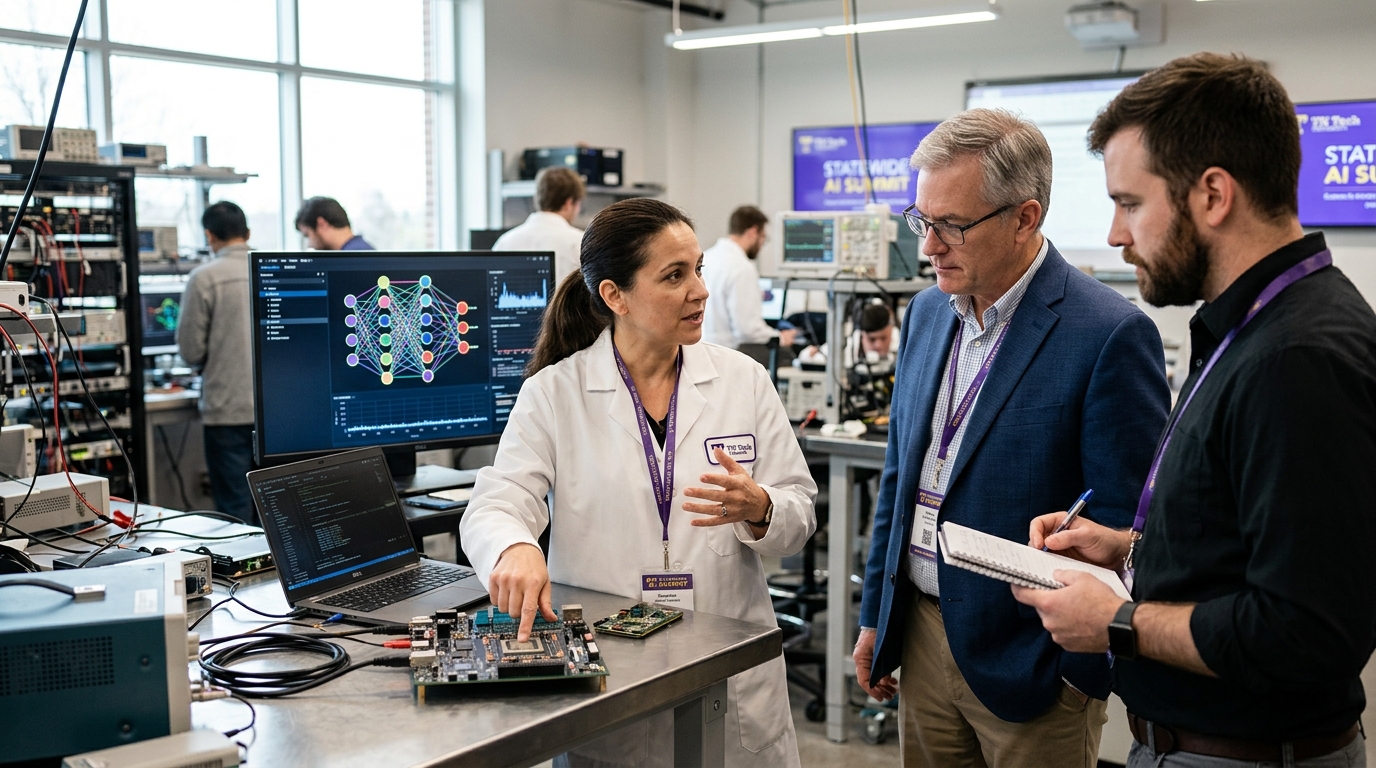
In an era where Artificial Intelligence (AI) has transitioned from a theoretical novelty to the backbone of global economic and social activity, Tennessee Tech University (TN Tech) took a decisive step by hosting the Statewide Artificial Intelligence Summit. This event was far more than an academic gathering; it represented a strategic convergence of public and private sector leaders aimed at fortifying Tennessee’s position within the 4th Industrial Revolution.
The summit, which drew hundreds of stakeholders, focused on three critical pillars: educational reform, workforce readiness, and the ethical governance of algorithms. In a state that has historically relied on manufacturing and agriculture, the imperative for digital transformation is palpable. TN Tech, serving as a regional technological beacon, demonstrated that high-level innovation is not the exclusive domain of Silicon Valley but can flourish in the heart of the American South.
Education as the Bedrock of the New Era
A primary theme of the summit was the fundamental reimagining of higher education’s role. Speakers emphasized that AI should not be viewed as a threat to academic integrity but as a powerful partner in the learning process. Discussions revolved around curricula that integrate Generative AI not only within computer science departments but across the humanities, business, and the arts.
TN Tech’s strategy includes the establishment of 'AI Labs' designed to function as incubators for students and local businesses. The goal is to foster an ecosystem where graduates are not merely consumers of technology but architects of AI-driven solutions. 'Algorithmic literacy' was identified as a non-negotiable skill for future citizens, essential for navigating a world filled with potential misinformation and automated decision-making.
Economic Competitiveness and the Evolving Workforce
The economic dialogue at the summit was particularly urgent. Industry representatives highlighted the rapid transformation of the Tennessee job market. From automotive assembly lines to logistics hubs, automation and real-time data analytics are demanding a new set of competencies. The summit acted as a bridge between market demands and educational output, resulting in commitments for expanded internships and robust lifelong learning initiatives.
Significant attention was paid to the state’s rural communities. AI offers unique opportunities for precision agriculture, enabling farmers to optimize yields with fewer resources. However, this potential remains locked without adequate infrastructure, such as the expansion of high-speed fiber networks—a point that policymakers at the summit pledged to prioritize in upcoming legislative sessions.
Ethics, Governance, and the Path Forward
In its concluding sessions, the summit addressed the complex challenges of ethics and governance. As Tennessee considers legislative frameworks to regulate AI, experts warned against the risks of unchecked algorithmic deployment in sensitive areas like criminal justice and healthcare. The proposal for a state-level 'Code of Ethics' emerged as a necessary step to ensure that technology serves human interests and does not exacerbate existing social disparities.
The TN Tech Summit was not a standalone event but the launchpad for a sustained statewide effort. The commitment to an annual gathering and the formation of a permanent AI advisory committee indicate that Tennessee is determined to be a leader in the new digital landscape. The success of this initiative will ultimately depend on continuous collaboration and the state’s agility in adapting to a world changing at an exponential pace.