In the global race to decarbonize heavy industry, cement remains one of the most formidable challenges. Responsible for approximately 8% of global CO2 emissions, the sector is under intense scrutiny from regulators and ESG-focused investors. Against this backdrop, TITAN Group, a Greek multinational with a history spanning over a century, has announced a strategic partnership with the Canadian startup CURA. This collaboration promises to disrupt the foundations of traditional cement manufacturing through the application of electrochemical technology.
The Science of Electrochemical Decomposition
Traditional cement production relies on the calcination of limestone in rotary kilns that reach temperatures exceeding 1,450 degrees Celsius. During this process, limestone (CaCO3) releases massive amounts of carbon dioxide as a chemical byproduct, in addition to the emissions generated by burning fuels to heat the kiln. CURA’s technology, which TITAN will be testing, proposes a radically different approach: the electrochemical separation of limestone.
Instead of relying on thermal energy, this method utilizes electricity to break down limestone into calcium hydroxide and high-purity carbon dioxide at ambient or significantly lower temperatures. The advantage is twofold: first, the CO2 produced is concentrated and ready for Carbon Capture, Utilization, and Storage (CCUS); second, the entire process can be powered by renewable energy sources, effectively eliminating emissions from fossil fuel combustion.
Strategic Implications and Pilot Testing
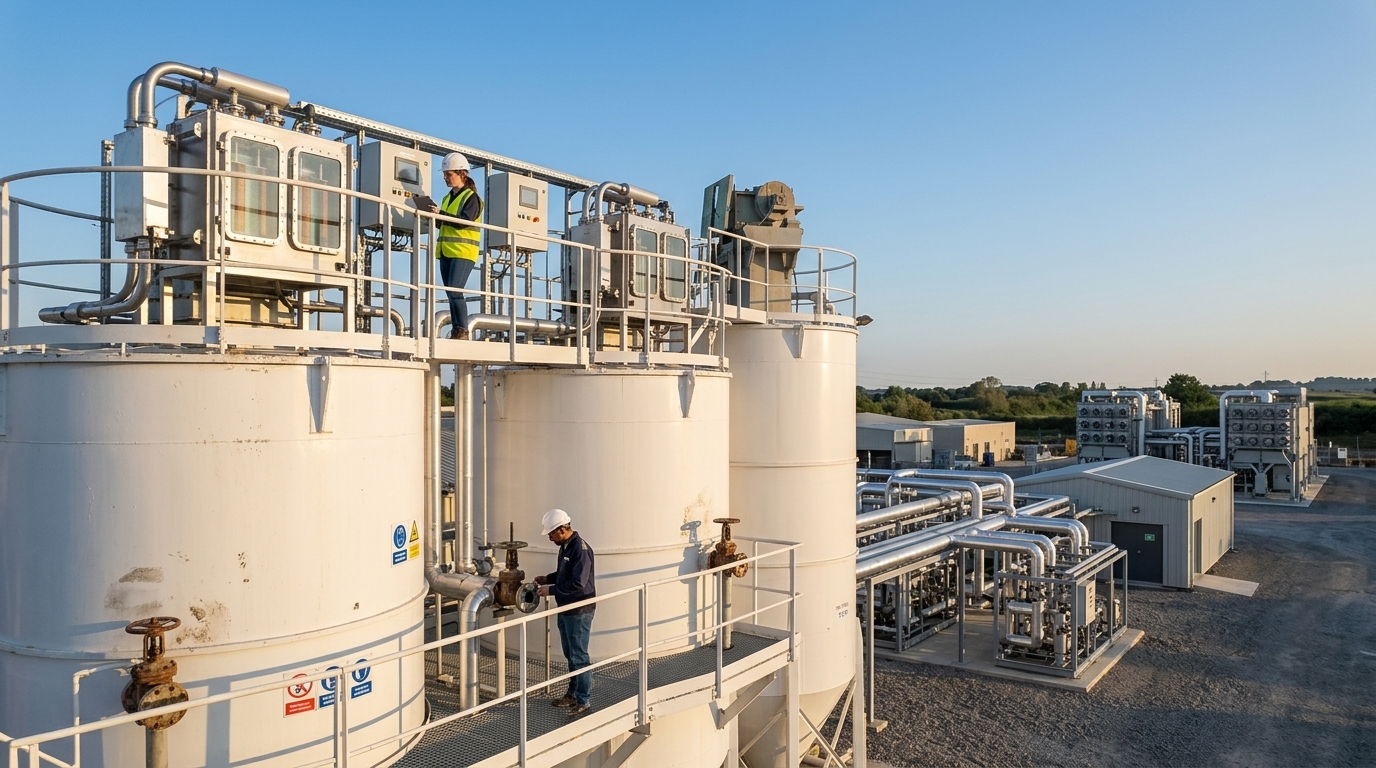
This partnership is far more than a theoretical experiment. It involves exploring pilot applications at selected TITAN Group facilities, likely in Europe or the US, where carbon pricing mechanisms make such technological shifts economically viable. TITAN has committed to achieving Net Zero by 2050, and adopting cutting-edge technologies like CURA’s is essential to meeting its interim 2030 targets.
Market analysts suggest that this move places TITAN at the forefront of global industrial innovation. While many competitors are focusing solely on end-of-pipe carbon capture, the electrochemical approach fundamentally alters the production process itself. This could eventually lead to smaller, more modular production units that function as "cement electrolyzers," integrated into smart electrical grids and powered by surplus renewable energy.
Challenges and the Global Landscape
Despite the immense potential, the path to commercial scaling is fraught with obstacles. The primary challenge is energy intensity. Replacing thermal energy with electricity on a global scale would require colossal amounts of green electricity and significant grid upgrades. Furthermore, the capital expenditure (CAPEX) required to retrofit existing brownfield sites is substantial.
However, the regulatory environment—particularly in the European Union with the Carbon Border Adjustment Mechanism (CBAM)—is acting as a powerful catalyst. Industries that fail to reduce their carbon footprint will face prohibitive costs and a loss of competitiveness. TITAN, through its partnership with CURA, is preparing for a future where cement is judged not only by its structural integrity but by its environmental transparency.
- Electrochemical separation drastically reduces CO2 emissions during the limestone decomposition phase.
- The partnership allows TITAN to test solutions that can be scaled across its global portfolio.
- High-purity CO2 output simplifies the logistics of carbon capture and utilization.
- The strategy aligns with the rigorous requirements of the EU Green Deal and global climate goals.
In conclusion, this initiative underscores the growing importance of collaborations between established industrial giants and agile tech startups. In a rapidly evolving world, the survival of heavy industry depends on its ability to reinvent itself through science and bold innovation. TITAN’s bet on electrochemistry may well define the next century of construction materials.