In a move set to redefine the power dynamics of the Artificial Intelligence ecosystem, Moonshot AI—the Chinese unicorn backed by giants like Alibaba and Tencent—has announced the open-sourcing of Kimi K2.6. This development is far more than a mere technical iteration; it is a strategic manifesto in an era where the ability of models to collaborate autonomously, known as multi-agent collaboration, is considered the 'holy grail' of the next phase of AI evolution.
Kimi K2.6 arrives at a pivotal moment in April 2026. The market, having grown weary of broad promises regarding General Intelligence (AGI), is now demanding practical, specialized solutions. Moonshot AI, led by the visionary Yang Zhilin, seems to recognize that the future does not belong to a single monolithic model attempting to do everything, but rather to a network of specialized 'agents' that communicate, debate, and ultimately solve complex problems with near-human expertise.
The Architecture of Collaboration: What Sets K2.6 Apart
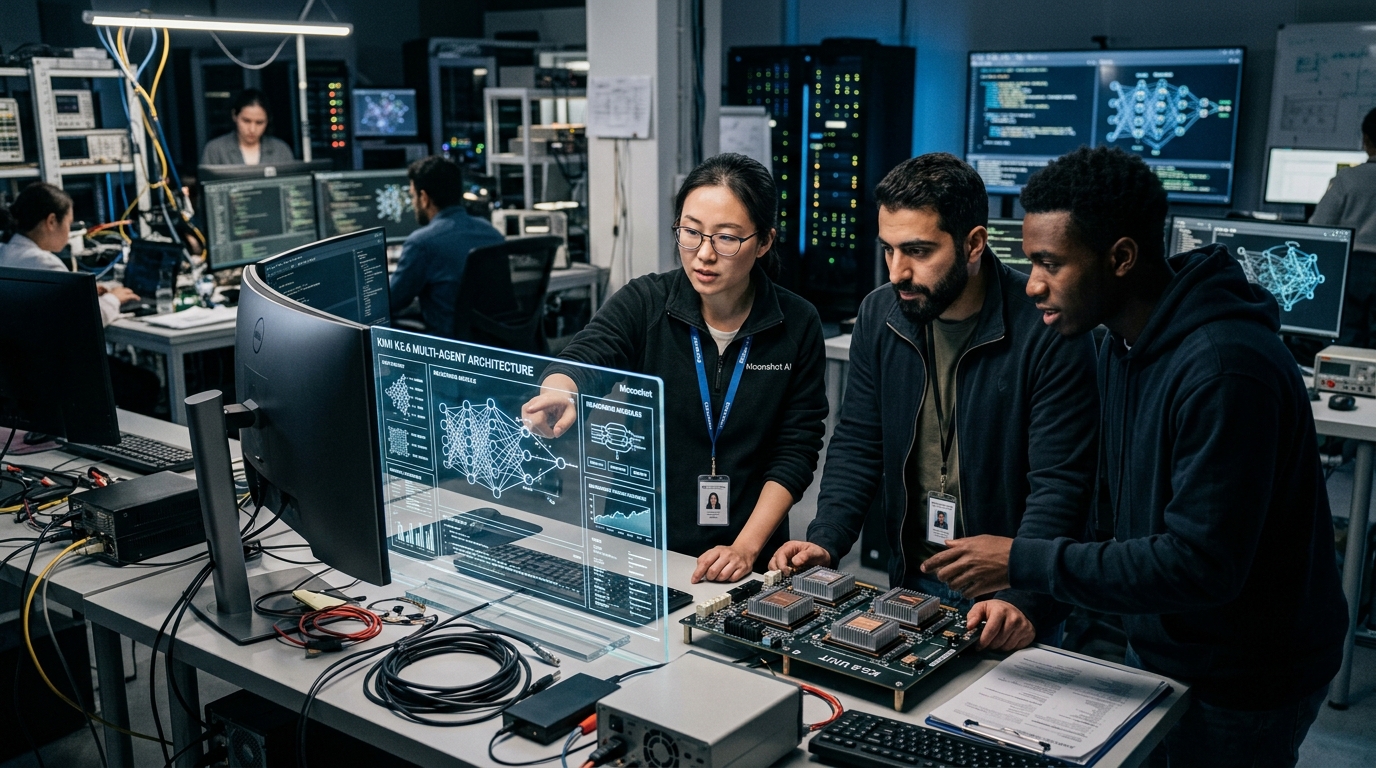
The core innovation of Kimi K2.6 lies in its native capability to manage agentic workflows. While previous models often 'lost the thread' in lengthy dialogues or failed to coordinate distinct sub-tasks, K2.6 employs a novel hierarchical reasoning method. This allows the system to assign roles to different instances of itself: one agent might handle research, another data verification, and a third synthesis, with a central 'orchestrator' ensuring overall coherence.
According to the technical specifications released, the model shows a dramatic improvement in context window management, allowing for the processing of vast datasets without information loss. This is particularly critical for sectors such as law and medical research, where precision is not just a preference but a requirement. The decision to open-source means that developers worldwide can now unlock these capabilities and tailor them to their specific needs, bypassing the closed ecosystems of Silicon Valley.
Geopolitics and Open Source: China's Strategic Play
Moonshot AI's move cannot be viewed in isolation from the broader geopolitical context. As the US continues to tighten restrictions on advanced semiconductor exports, Chinese firms are pivoting toward the open-source community to build an alternative development paradigm. With Kimi K2.6, Moonshot follows the trajectory of DeepSeek and Alibaba (Qwen), creating a 'wall' of innovation built on collective improvement rather than isolation.
- Democratization of Power: Small startups now have access to GPT-5 level technology without the burden of expensive subscription costs.
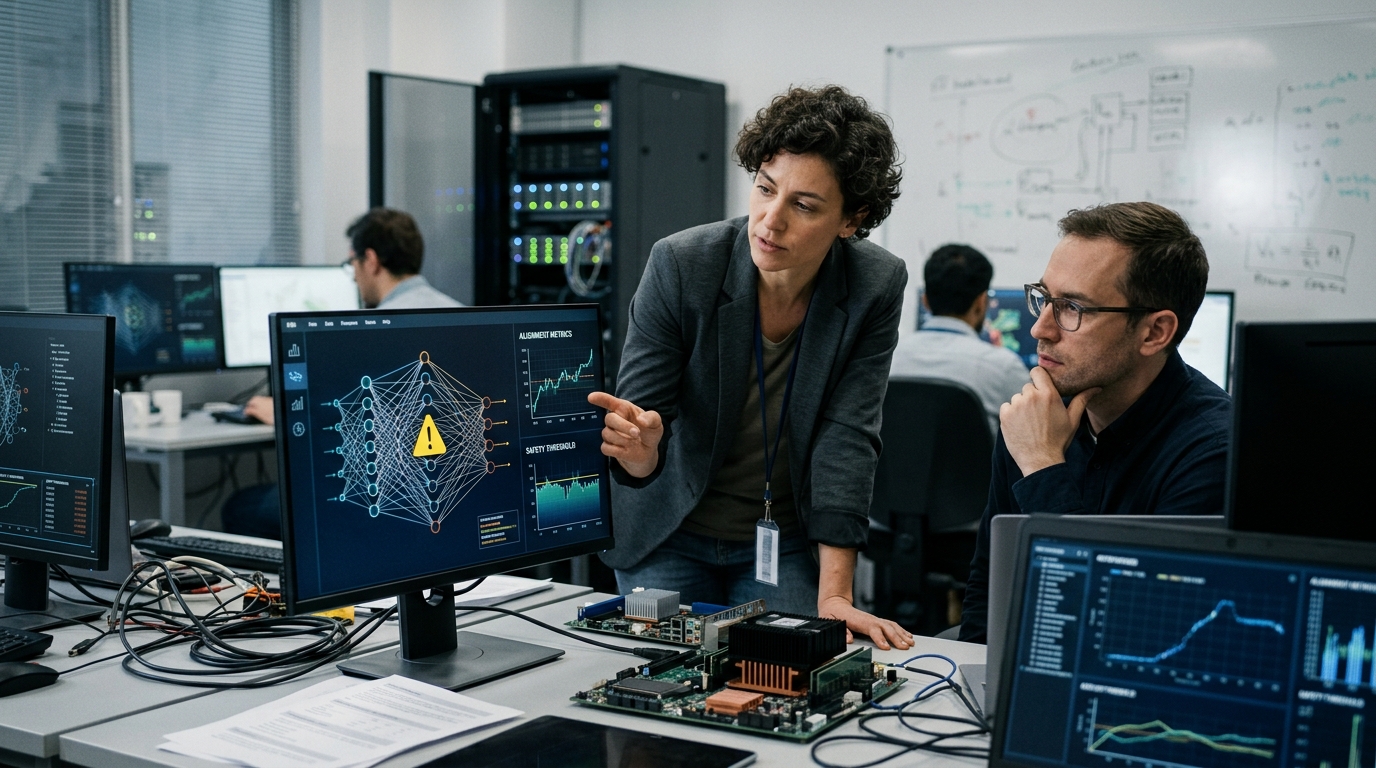
- Safety and Transparency: Open-sourcing allows for the auditing of algorithms for bias or security flaws, a key requirement for EU regulatory compliance.
- Velocity of Evolution: The global community can patch bugs and add features far faster than any internal R&D team.
However, the challenge remains: how will Moonshot maintain profitability while giving away its crown jewel? The answer lies in value-added services and specialized enterprise (B2B) solutions built atop the K2.6 foundation.
The Future of Autonomous Systems
Looking ahead, Kimi K2.6 lays the groundwork for what many are calling the 'Agent Economy.' Imagine a future where your business doesn't run on isolated software programs, but on a team of AI agents that negotiate with other agents for raw materials, manage marketing campaigns, and handle customer service. K2.6 is the engine that could power these agents.
"We are not just building a language model; we are building a digital fabric of collaboration," a Moonshot AI executive stated during the launch. "K2.6 is the first step toward an intelligence that doesn't just answer questions but solves real-world problems."
In conclusion, Moonshot AI's Kimi K2.6 offers more than just code. It offers a vision for a more open, collaborative, and efficient Artificial Intelligence. In a world often divided by technological walls, choosing the open path might prove to be the most revolutionary act of the decade.