At the dawn of the Fourth Industrial Revolution, a pervasive fear haunts the global labor market: the total displacement of the human workforce by "intelligent" machines. However, a comprehensive new study, recently highlighted by Earth.com, challenges this dystopian narrative, offering a more nuanced and hopeful perspective. The research findings underscore that Artificial Intelligence (AI) systems are not destined to operate in a vacuum; rather, they achieve peak performance when humans remain an integral part of the process.
The Illusion of Full Automation
For decades, science fiction and technocratic forecasts have prepared us for a world where algorithms make decisions with absolute precision, free from human error. Reality, however, is proving to be far more complex. The study demonstrates that while AI possesses a staggering ability to process vast amounts of data in fractions of a second, it lacks essential qualitative traits inherent to humans: intuition, ethical judgment, and contextual understanding.
When businesses attempt to implement "blind" automation models, they often encounter "algorithmic hallucinations" or the amplification of systemic biases. The research shows that the absence of human oversight leads to systems that are fast but often rigid and incapable of handling edge cases not present in their training data. In contrast, the "Human-in-the-loop" (HITL) model allows AI to perform the heavy lifting of analysis while the human retains control over the final decision and strategic direction.
Complementarity of Skills
The key to success, according to the researchers, lies in complementarity. AI excels at pattern recognition and raw computational power, whereas humans excel at creative problem-solving, empathy, and critical thinking. When these two forces are combined, the result is an "augmented intelligence" that surpasses the capabilities of either party acting alone.
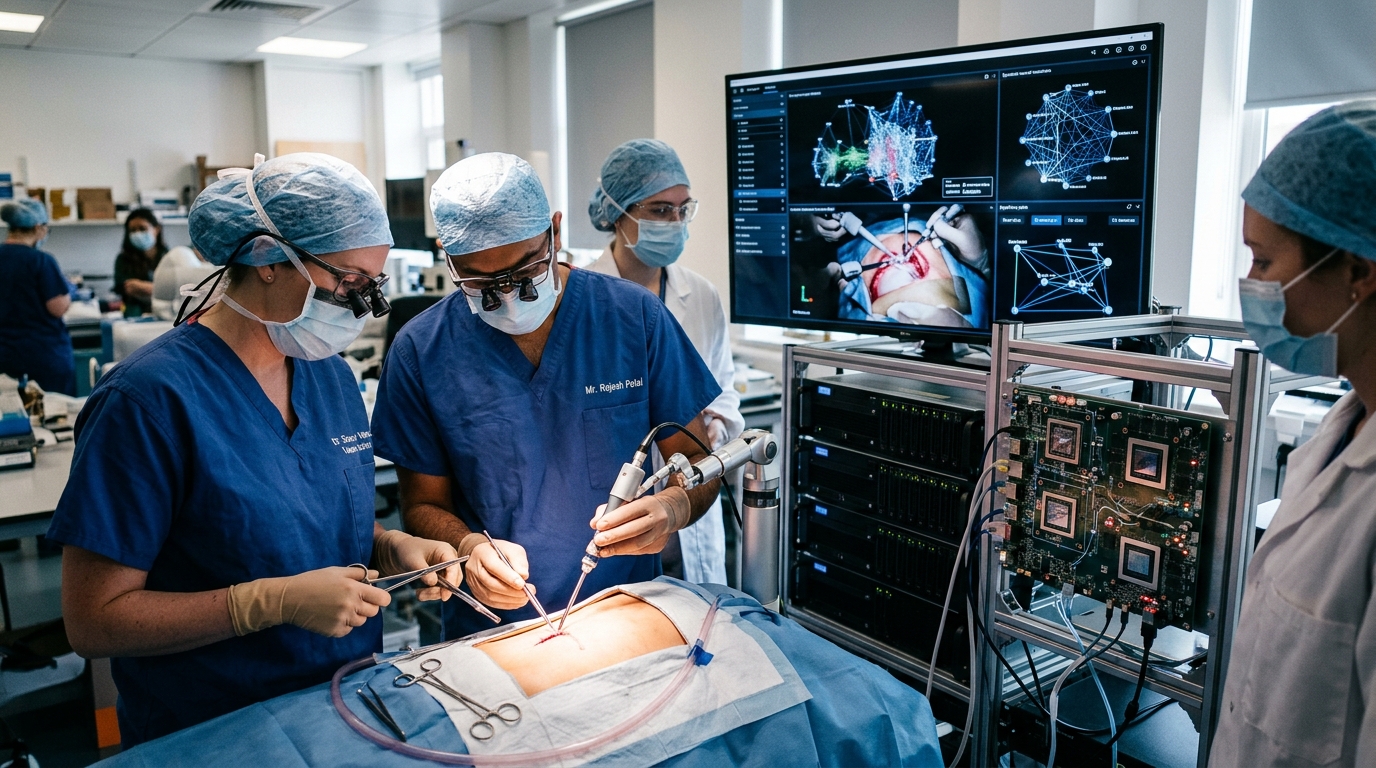
- In Medicine: Algorithms can identify anomalies in X-rays with greater speed, but the physician is the one who integrates that finding with the patient's history and provides the necessary emotional support.
- In the Legal Sector: AI can comb through thousands of documents for precedents, but the lawyer builds a persuasive argument based on the subtle nuances of the law.
- In Creative Industries: Generative AI tools can offer drafts and concepts, but the ultimate vision and aesthetic signature remain human prerogatives.
The study emphasizes that the most successful organizations are not those that replaced employees with bots, but those that invested in training their staff to use AI as an empowerment tool. This shifts the conversation from "job loss" to "role evolution."
Challenges and the Future of Work
Despite the positive findings, the transition to a human-machine collaboration model is not without obstacles. It requires a radical overhaul of educational systems and corporate structures. Workers must develop new skills, such as effective prompting and the critical evaluation of AI outputs. Furthermore, there is a risk of over-reliance, where humans might stop questioning machine suggestions, leading to a new form of cognitive inertia.
"AI will not replace humans. But humans who use AI will replace those who do not."
This phrase, frequently echoed in Silicon Valley circles, is validated by the study's data. The challenge for society and political leadership is to ensure that this technological evolution leads to a fairer and more productive reality, where technology serves human well-being rather than undermining it. The conclusion is clear: the intelligence of the future is hybrid.