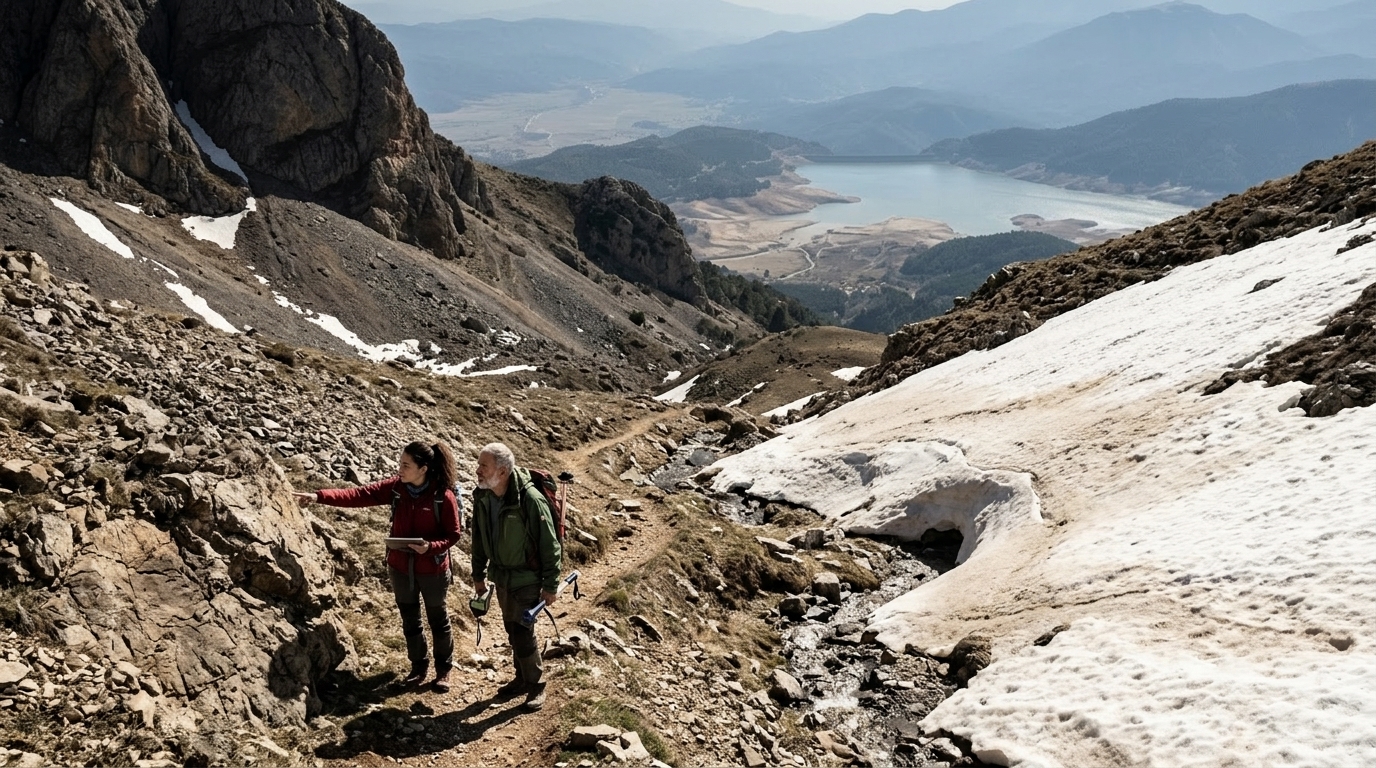
The sight of the snow-capped peaks of Pindus, Olympus, and Taygetus is not merely an aesthetic feature of the Greek landscape; it is the country’s natural water "battery." However, a revealing new international study sounds a dire alarm: snow cover on Greek mountains has plummeted by a staggering 58% over the last 40 years. This "invisible" crisis does not only concern ski enthusiasts or mountain tourism; it represents an existential threat to Greece’s water balance, agricultural production, and water resource security for decades to come.
The Science Behind the Shrinkage
The research, based on four decades of satellite data and on-site measurements, shows that the climate crisis is hitting the Mediterranean at rates faster than the global average. The reduction in snow cover is not just a result of fewer snowfalls but also of faster melting due to increased temperatures during the spring months. Instead of remaining on the peaks and gradually feeding aquifers and rivers until summer, the snow melts prematurely and violently, often leading to flash floods followed by prolonged periods of drought.
According to researchers, this trend is particularly pronounced in the mountains of central and southern Greece. The duration of snow cover has decreased significantly, with winter "shrinking" and spring aggressively invading the calendar. This means that natural water reserves, traditionally stored as ice and snow, are lost to the sea through torrents long before the peak demand for irrigation begins.
Impacts on Economy and Agriculture
Thessaly, the granary of Greece, is on the front line of this crisis. The plain’s dependence on water flowing down from the Pindus range is absolute. With the reduction of snow, groundwater levels are receding, forcing farmers to conduct deeper and more expensive boreholes. The lack of "gradual melting" means that in summer, when crops are in greatest need, rivers like the Peneus appear depleted.
- Hydroelectric Power: Reduced river flow directly affects power generation from PPC dams, increasing dependence on more expensive or less ecological sources.
- Urban Water Supply: Even Athens, supplied by the Mornos and Evinos reservoirs, is beginning to feel the pressure, as the mountains feeding these reservoirs now host significantly less snow.
- Biodiversity: The rare ecosystems of Greek alpine zones are under threat, as many flora and fauna species depend on the moisture provided by snow during the spring.
Towards a New Water Management Strategy
Greece can no longer rely on the practices of the past. The need for a radical redesign of water policy is imperative. Scientists suggest the creation of small, scattered ponds to retain rapid-melt water, the reforestation of mountain massifs to hold moisture, and, most importantly, the adoption of "smart" irrigation technologies in agriculture.
"Snow is the silent regulator of our lives. Its 58% loss is not a statistical detail, but a foretold disaster for the Greek countryside if we do not act immediately," a member of the research team notes.
Climate adaptation requires political will and investment in infrastructure that is not just "concrete," but nature-based solutions. The reduction in snow cover is a warning from nature that the development model ignoring the limits of natural resources has reached its end. The question is no longer whether the climate will change, but whether we can change fast enough to survive in the new conditions.