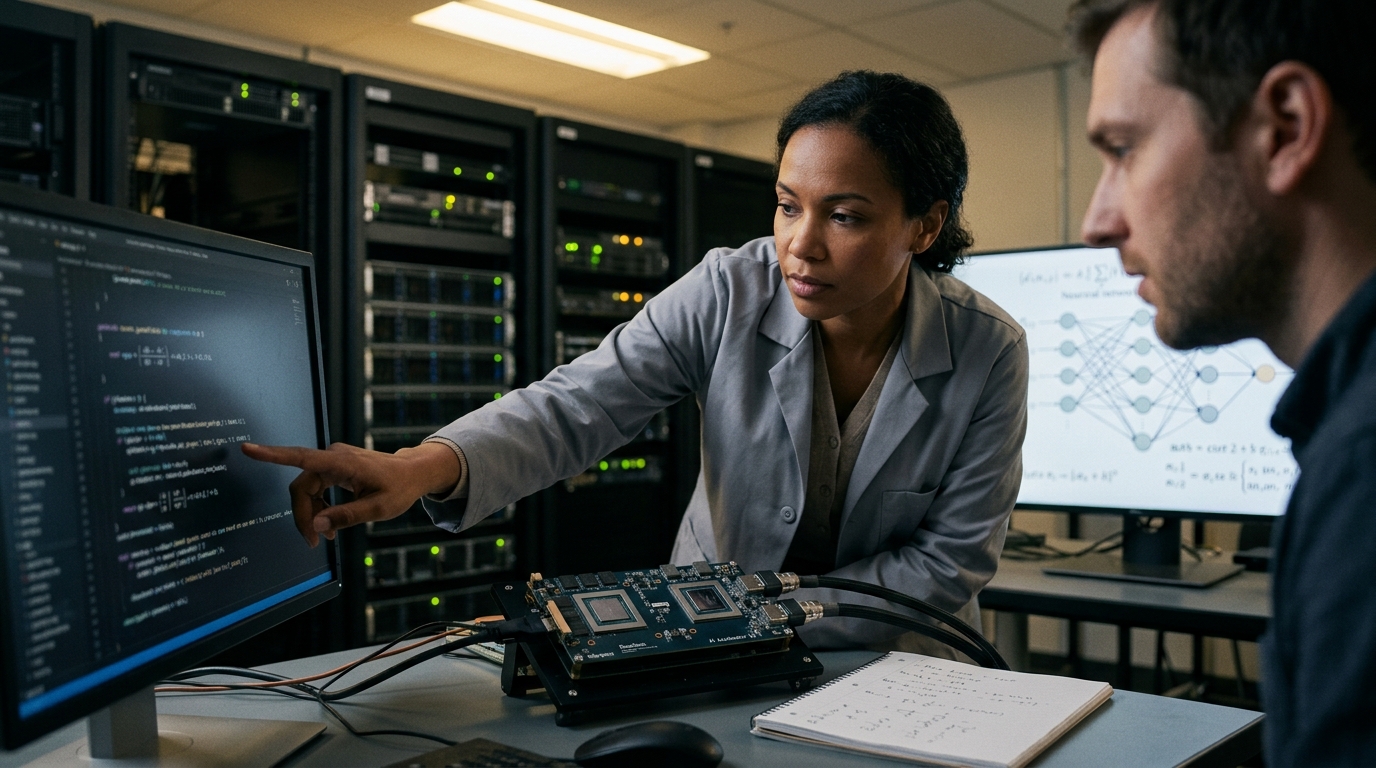
The recent announcement by Google regarding the use of Artificial Intelligence (AI) by criminal hacking groups to identify severe software flaws is not merely a technical update; it is a clarion call for a new era of digital warfare. According to a report by Google’s Threat Analysis Group (TAG) and its subsidiary Mandiant, we have witnessed the first successful leverage of Large Language Models (LLMs) to discover zero-day vulnerabilities—software bugs unknown to the developers, making them impossible to defend against immediately.
From Theoretical Threat to Practical Reality
Until recently, the discourse surrounding AI in cybersecurity focused largely on its role in crafting convincing phishing emails or marginally improving malware code. However, this new revelation indicates that attackers have moved to a significantly more complex level: code analysis at scale. AI can "read" and synthesize millions of lines of code in seconds, identifying patterns that suggest memory management weaknesses or logic flaws that would take a human analyst weeks or months to uncover.
Google emphasizes that this evolution democratizes high-level cyber-attack capabilities. In the past, discovering a zero-day required specialized expertise and vast resources, typically reserved for state-sponsored intelligence agencies. Now, with AI assistance, even less sophisticated criminal organizations can identify and exploit critical gaps in globally ubiquitous software, such as web browsers and operating systems.
The Arms Race: Project Big Sleep vs. Malicious AI
Google’s response to this escalating threat is both defensive and preemptive. The company recently unveiled "Project Big Sleep," a collaboration between Google DeepMind and Project Zero. This is an AI-driven system specifically designed to find vulnerabilities before hackers do. The irony is stark: the same technology used to breach systems is the only force capable of securing them effectively.
- AI can automate the process of "fuzzing," testing millions of inputs to a program to see where it breaks.
- It can analyze the history of past vulnerabilities to predict where new ones might emerge in updated codebases.
- It allows for the near-instant generation of patches once a flaw is found, drastically reducing the window of exposure for users.
"We are entering an era where the speed of the attack is beginning to outpace the speed of human defense. Our only hope is to grant the defense the same superpower: Artificial Intelligence," state Mandiant analysts.
Geopolitical Implications and Corporate Responsibility
The use of AI by hackers is not just a technical issue; it is deeply political. Many of the groups tracked by Google have ties to state actors, particularly from China, Russia, and North Korea. The ability of these nations to automate cyber-espionage via AI shifts the global balance of power. If a nation can paralyze another's infrastructure by using algorithms that discover holes in power or water control systems, warfare takes on a new, invisible dimension.
Simultaneously, questions arise regarding the responsibility of the corporations developing these AI models. Although Google, Microsoft, and OpenAI have implemented safeguards to prevent their models from assisting in cyberattacks, hackers find ways to bypass these restrictions through "jailbreaking" or by utilizing open-source models that lack such ethical guardrails. The need for international cooperation and regulation regarding AI's role in cybersecurity has never been more urgent.
Conclusion: Toward a New Security Paradigm
The discovery that AI is already being deployed in the zero-day battlefield must serve as a wake-up call for businesses and organizations worldwide. The traditional "reactive" approach to security is no longer sustainable. The future of cybersecurity belongs to proactive, automated analysis and the integration of AI at every level of software development. Security can no longer be an afterthought or a secondary feature; it must be baked into the code itself, verified by algorithms that never sleep.