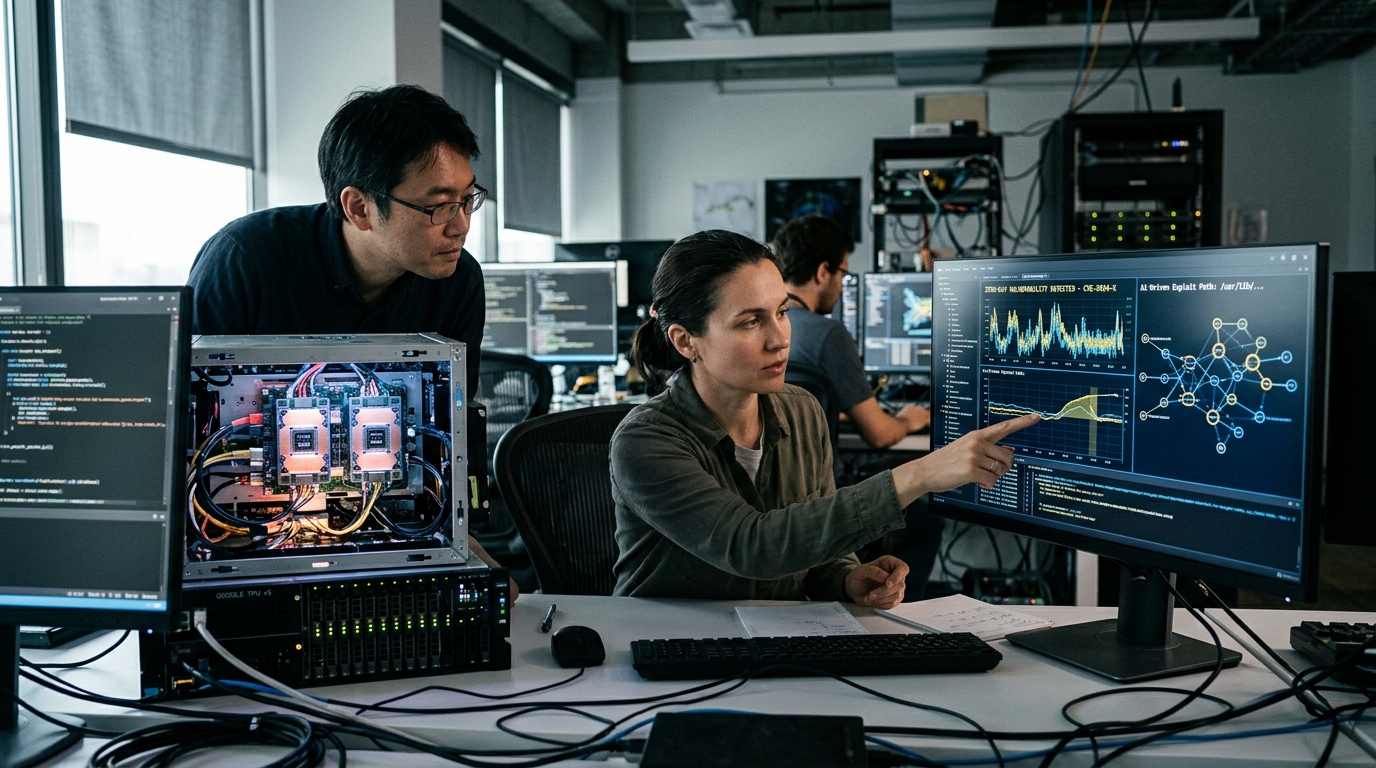
May 12, 2026, will be remembered in the annals of technology as the day a theoretical threat transformed into a tangible reality. Google, through its Threat Analysis Group (TAG) and Project Zero, has confirmed what experts have long feared: Artificial Intelligence (AI) is no longer just a tool for writing code or generating content, but a highly capable hunter of zero-day vulnerabilities. This discovery marks the beginning of a new, perilous era in digital warfare, where the speed and precision of algorithms surpass human analytical capabilities.
The Anatomy of a New Threat
According to the released report, traces of activity from sophisticated attackers were identified, showing they utilized Large Language Models (LLMs) to analyze vast amounts of source code in popular open-source software. This process did not involve traditional "fuzzing" (the random injection of data until a system crashes), but rather a targeted, logical analysis of code architecture. The AI succeeded in identifying a zero-day vulnerability—a security flaw unknown to the software's creators—that could allow for remote code execution.
The concerning element is not just the discovery of the flaw, but the AI's ability to synthesize a functional exploit in fractions of a second. What previously required weeks of research by elite hacking teams can now be achieved with a few prompts to a specialized model. Google notes that attackers likely used customized versions of models, specifically trained in cybersecurity and reverse engineering.
Project Big Sleep: The Defense Strikes Back
Google's response to this challenge is not merely defensive. Through the research initiative "Big Sleep" (a collaboration between Google DeepMind and Project Zero), the tech giant is using AI to preempt malicious actors. Big Sleep recently identified a critical security gap in the SQLite library, one of the most widely used database engines in the world, before it could be exploited in the wild.
- Automated Analysis: AI can "read" millions of lines of code daily, spotting patterns that escape the human eye.
- Proactive Patching: Once a gap is found, AI immediately suggests corrective code (patches), reducing user exposure time.
- Cost Reduction: Finding zero-days was historically an expensive process. AI makes it accessible, which is a double-edged sword.
However, Google warns that the balance of power remains fragile. While defenders have the advantage of accessing their own products' source code, attackers have the advantage of surprise and a lack of ethical constraints in how they deploy their models.
Geopolitical Implications and the Future of Software
The use of AI for zero-day discovery is not just a technical issue; it is a deeply political and economic problem. Nation-states and intelligence agencies are investing billions into developing "offensive AI." If a state actor succeeds in automating the production of cyber-weapons, traditional security infrastructures for banks, energy grids, and government agencies could become obsolete overnight.
"We are at a point where software security can no longer rely on human vigilance. We need self-healing systems," said a senior Google executive.
The solution, according to many experts, lies in transitioning to memory-safe programming languages, such as Rust, and integrating AI into every stage of the software development lifecycle. The era when code was written and audited exclusively by humans is gone. From now on, the battle for digital sovereignty will be fought between algorithms, with humans serving as supervisors and strategic analysts.