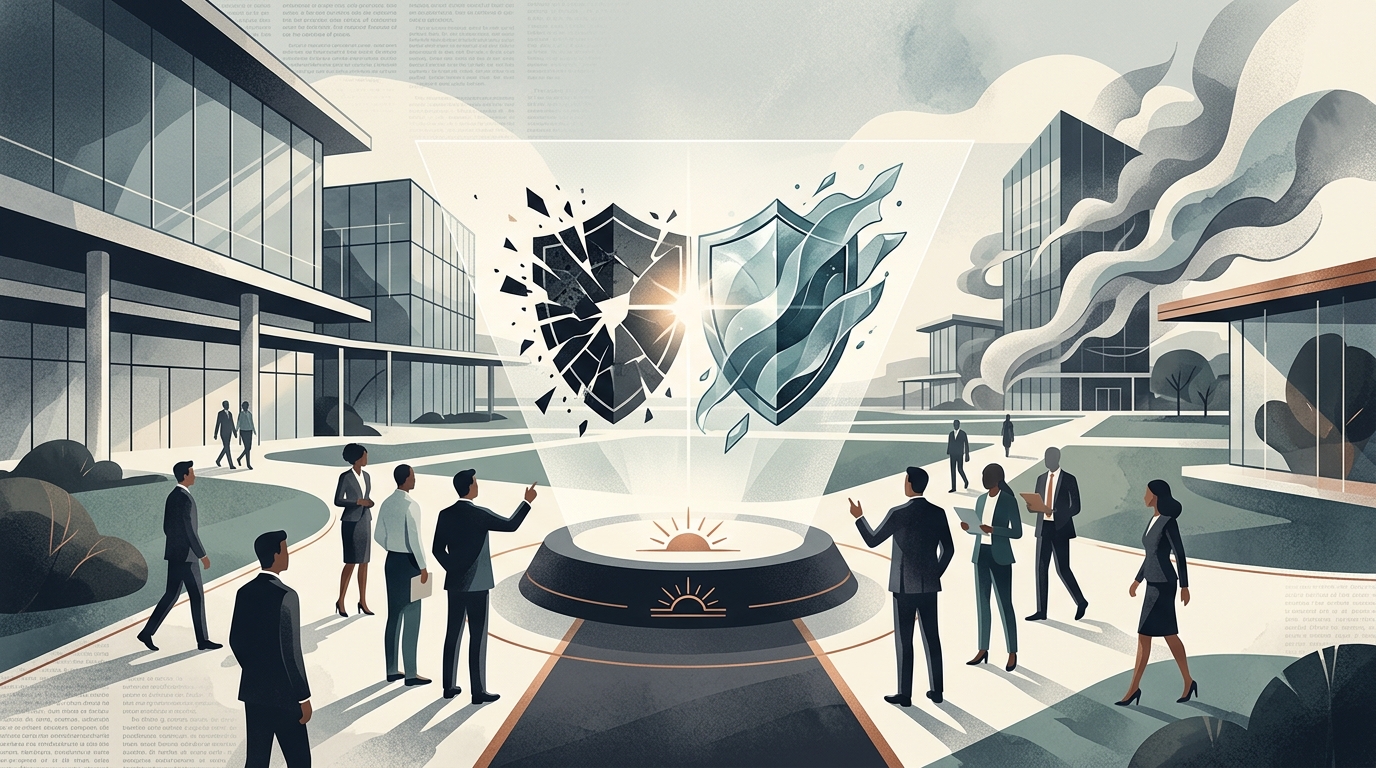
In a move set to redefine the digital security landscape, OpenAI has announced the launch of Daybreak, a comprehensive AI initiative focused on proactive software hardening. Daybreak is not merely a code auditing tool; it is a dynamic ecosystem powered by the Codex Security AI agent—which debuted last March—promising to seal vulnerabilities before attackers even realize they exist.
This announcement serves as a direct counter-offensive to Anthropic’s Claude Mythos, which had until recently been considered the gold standard for enterprise-grade code security. With Daybreak, OpenAI aims to reclaim leadership in the enterprise AI market, offering more than just generative intelligence: it offers self-sustaining digital infrastructure.
The Architecture of Daybreak: How Codex Security Operates
At the core of Daybreak lies the Codex Security AI agent. Unlike traditional Static Analysis Security Testing (SAST) tools that often overwhelm developers with false positives, Codex Security employs a "threat modeling" approach. It analyzes an organization's entire architecture, understanding the intricate interdependencies between various services and databases.
- Autonomous Mapping: The system creates a digital twin of the infrastructure and simulates thousands of attack vectors per second.
- Vulnerability Validation: It doesn’t just report a potential hole; it attempts to exploit it within a controlled sandbox environment to prove its severity.
- Automated Patching: Once a vulnerability is confirmed, Daybreak generates and, upon approval, deploys the necessary remediation code.
This process drastically reduces the Mean Time to Remediation (MTTR)—which traditionally took weeks or months—to mere minutes. OpenAI claims that Daybreak can predict "attack paths" that even the most seasoned security analysts might overlook.
OpenAI vs. Anthropic: The War of Fortresses
The rivalry between OpenAI and Anthropic has shifted from which model writes better poetry to which model can protect critical national infrastructure and banking systems. Claude Mythos had gained market trust through Anthropic's "Constitutional AI" framework, which offered a more controlled and safety-first approach to code generation.
"Daybreak is not just a response to competition; it is the realization that AI must become its own guardian," an OpenAI spokesperson stated.
OpenAI, however, is betting on its massive computational power and the vast data it accesses through the GitHub ecosystem (via Microsoft). Daybreak's advantage lies in its ability to learn from billions of lines of code and real-world breach incidents recorded globally. While Mythos focuses on ethical alignment, Daybreak focuses on raw efficiency and aggressive defense.
The Ethics of Autonomous Defense and the Risks Involved
Despite the promises, the release of Daybreak raises significant concerns. Creating an agent so proficient at finding and fixing vulnerabilities means it is inherently capable of exploiting them. The "dual-use" nature of this technology remains the primary headache for regulators. What happens if a variant of Codex Security falls into the hands of state-sponsored hackers or criminal syndicates?
Furthermore, there is the risk of over-reliance. If corporations leave their security entirely in the hands of AI, human cybersecurity skills may atrophy. In the event of a system failure or an AI "hallucination" that introduces new bugs instead of fixing existing ones, the consequences could be catastrophic.
OpenAI assures that safeguards are in place, with Daybreak requiring "human-in-the-loop" confirmation for critical core system changes. However, at the speed of the 2026 digital world, human intervention often feels like a bottleneck, and the pressure for full automation will be immense.
Conclusion: The Dawn of a New Digital Reality
Daybreak marks the end of the era of "passive" security. From now on, organizations will not wait to be attacked before reacting. Cybersecurity is transforming into a continuous chess match between algorithms. OpenAI’s move to integrate security into the heart of its product offering demonstrates that the future of AI is not just about content creation, but about ensuring the very functioning of our society in an increasingly volatile digital world.