The global AI chessboard is vibrating from a revelation that originates not from the glass towers of San Francisco, but from the DeepSeek laboratories in Hangzhou, China. The unveiling of the V4 model is not merely another iterative update in the endless list of Large Language Models (LLMs). It is a declaration of independence and proof that raw computational brute force can be outmatched by elegant, intelligent architecture. In an era where OpenAI and Google spend billions on model training, DeepSeek is demonstrating that the road to Artificial General Intelligence (AGI) can be significantly cheaper and, crucially, autonomous.
The Architecture of Efficiency: MoE and MLA
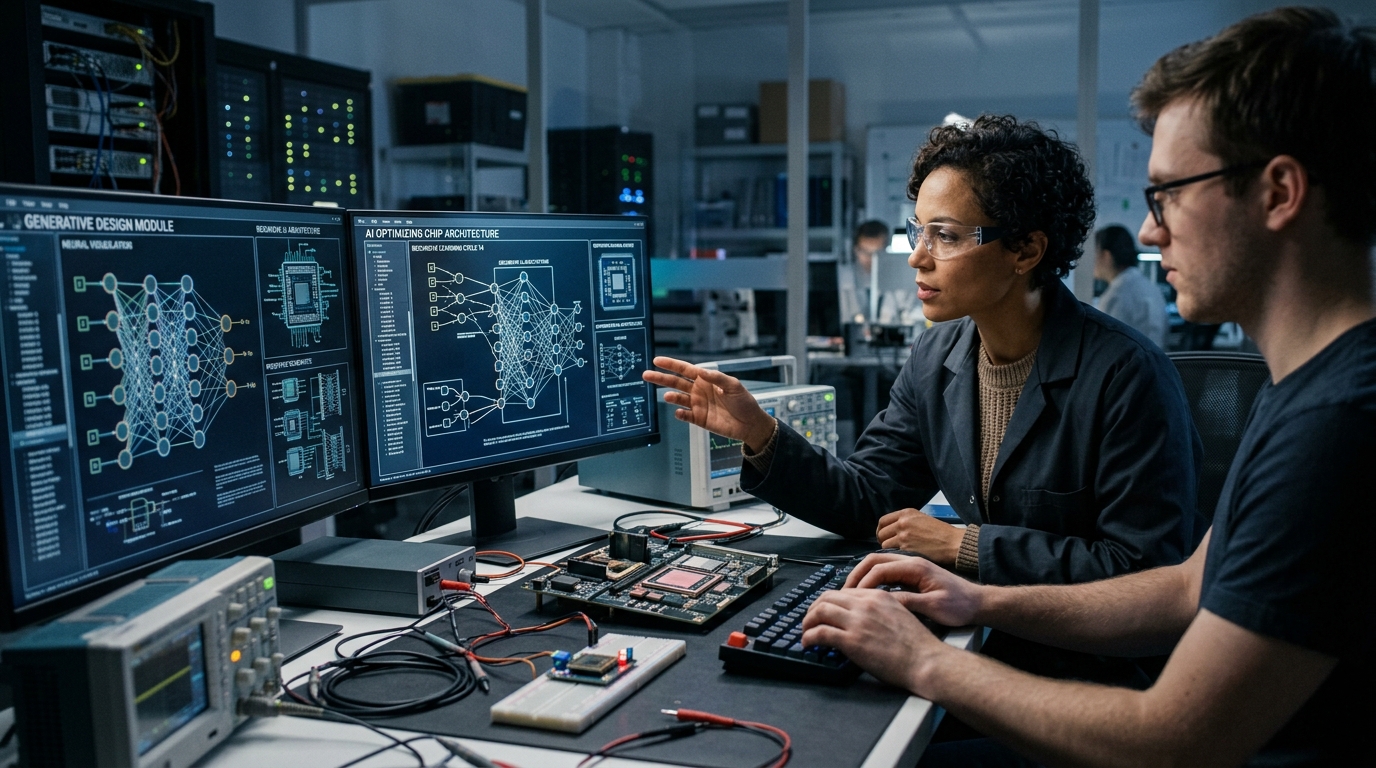
DeepSeek V4 is built upon the Mixture-of-Experts (MoE) architecture, an approach where only a fraction of the model's parameters are activated for any given task. While traditional dense models "waste" energy by firing their entire network for every query, V4 utilizes specialized "experts" within the system, drastically reducing computational costs without sacrificing response quality. But the innovation doesn't stop there. The implementation of Multi-head Latent Attention (MLA) allows the model to handle massive context windows with minimal memory overhead, solving one of the most persistent bottlenecks in modern LLMs.
This technical superiority translates into a stark market reality: DeepSeek V4 offers GPT-4o-class performance at a cost that is up to ten times lower for developers. This "democratization" of high-tier intelligence directly threatens the business models of American giants, which rely on high profit margins from API subscriptions. By slashing the price of intelligence, DeepSeek is effectively commoditizing what was once a luxury digital good.
The Geopolitics of Silicon: Answering the Sanctions
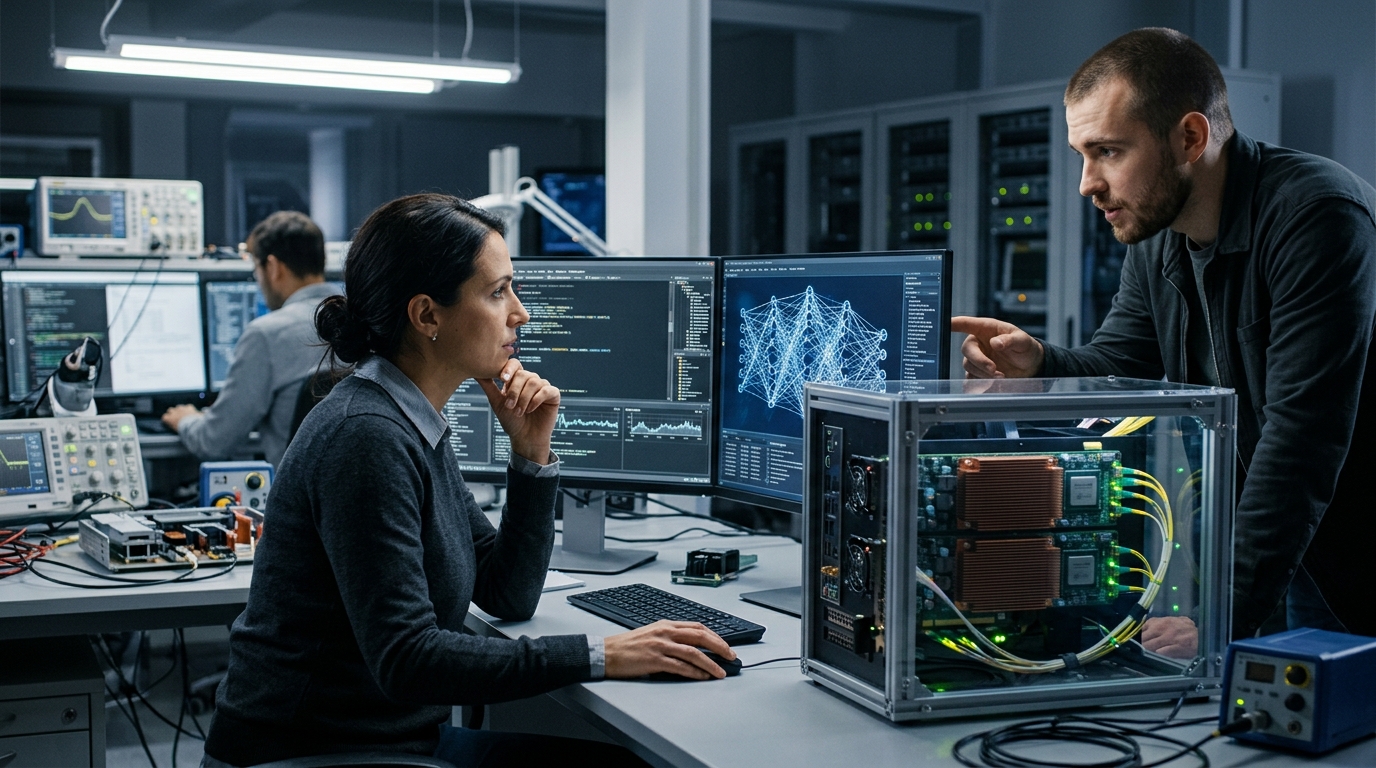
Perhaps the most significant aspect of DeepSeek V4 is its optimization for Chinese hardware. As Washington continues to tighten export controls around Nvidia and AMD's high-end chips, DeepSeek has proven that necessity is the mother of invention. V4 has been meticulously designed to perform optimally on domestic processors, such as Huawei’s Ascend series and Biren Technology’s accelerators.
This development effectively neutralizes the "technological strangulation" strategy attempted by the US. If China can produce world-class models using less powerful but more efficiently utilized chips, then the reliance on Nvidia ceases to be an existential barrier. DeepSeek hasn't just built a model; they have engineered a bridge over the sanctions gap, showing that sophisticated software can compensate for hardware deficiencies. This signals a shift toward "Sovereign AI," where nations build and maintain their own stacks regardless of external geopolitical pressure.
Open Weights as a Strategic Lever
In contrast to the "closed-door" approach favored by OpenAI and Google, DeepSeek continues its tradition of releasing models with open weights. This allows researchers and corporations globally to download the model and run it on their own private infrastructure. For the Global South and European enterprises concerned about US data hegemony, DeepSeek V4 presents a compelling, high-performance alternative.
This strategy also carries a political dimension. By offering top-tier technology for free or at negligible costs, China is exerting significant "soft power" in the tech sector. It positions Chinese architectures and standards as the foundation for the next generation of global AI applications. DeepSeek V4 is no longer a follower of trends; it is a market disruptor forcing Silicon Valley to rethink everything from pricing structures to the very fundamental architecture of their systems.
Conclusion: A New Era of Pragmatism
DeepSeek V4 teaches us that the era of "excess" in AI development is coming to a close. Victory will not necessarily belong to those with the most H100 GPUs, but to those who can generate the most intelligence per watt and per dollar. China, through DeepSeek, has just set a new benchmark that combines economic viability with geopolitical resilience. The question is no longer whether China can catch up to the West, but whether the West can adapt to the new standards of efficiency dictated by the East. The V4 model is a masterclass in doing more with less, a philosophy that might just define the next decade of the AI race.