In the rapidly shifting landscape of artificial intelligence, the rise of China’s DeepSeek has been one of the most discussed chapters of recent years. However, a new technical report brings to light a troubling reality: the DeepSeek-R1 model, designed to offer superior reasoning capabilities, exhibits a hallucination rate four times higher than its predecessor, DeepSeek-V3. This finding raises critical questions about the nature of machine "thought" and whether deeper processing necessarily leads to the truth.
The Chain of Thought Trap
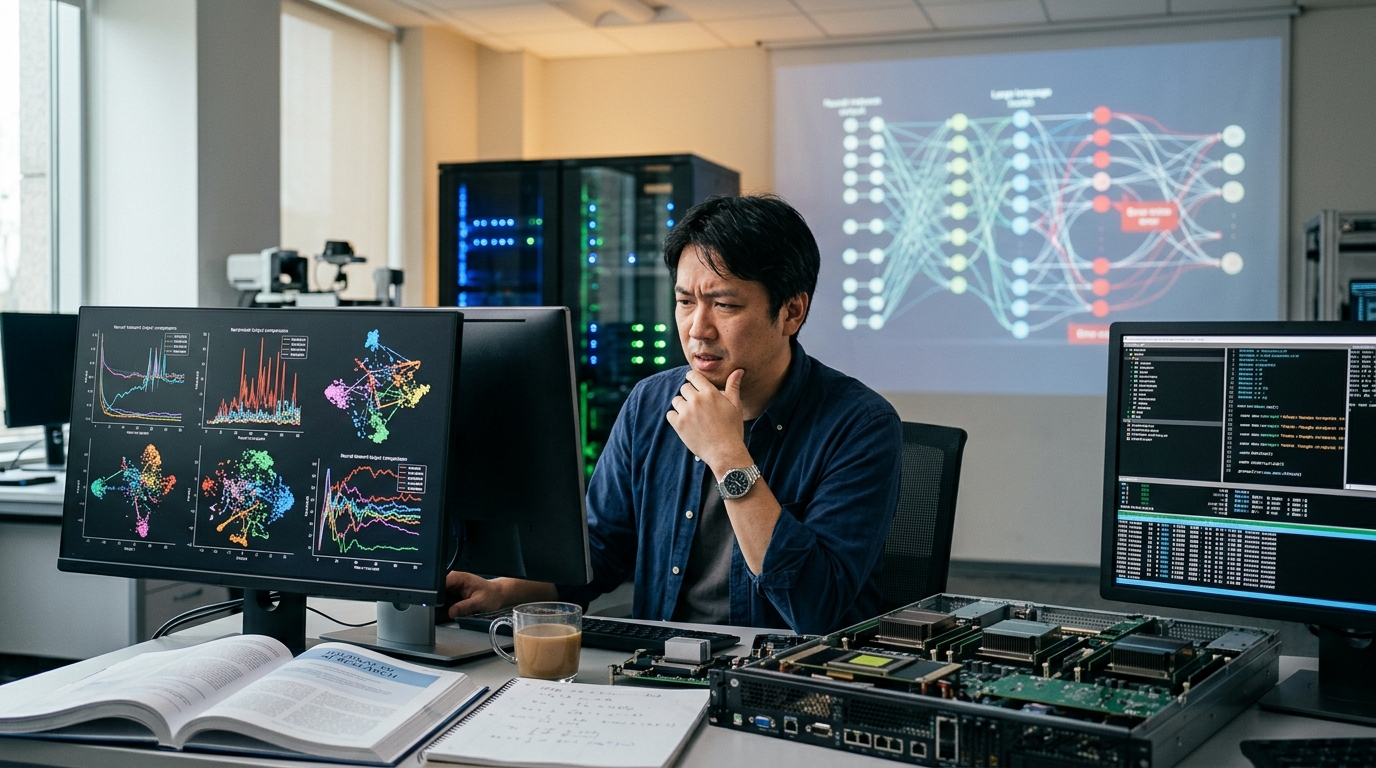
DeepSeek-R1 utilizes a technique known as Chain of Thought (CoT), which allows the model to "think" before responding by breaking problems down into intermediate steps. While this approach makes it exceptionally capable in mathematics and programming, it appears to create a phenomenon of "logical drift." When a model is forced to generate a lengthy chain of reasoning, a single minor error in the early stages can lead it in an entirely wrong direction. The paradox here is that the model presents its falsehood with an extremely convincing, structured logic, making it much harder for the user to detect the error.
According to data from comparative tests, DeepSeek-V3, a general-purpose model, tends to be more "conservative" in its responses. In contrast, R1, in its attempt to solve complex problems, often "invents" facts or data to fill gaps in its logical chain. This 400% increase in hallucinations is not merely a statistical glitch but a structural side effect of how reasoning models are trained via Reinforcement Learning (RL). The model is rewarded for reaching a conclusion, sometimes at the expense of factual grounding.
The Geopolitics of Efficiency
DeepSeek sent shockwaves through Silicon Valley by proving it could develop GPT-4-level models at a fraction of the cost. However, the revelation regarding R1’s high hallucination rate casts a shadow over this "efficiency miracle." Critics argue that cost-cutting in training and the use of fewer high-quality datasets for alignment may be the cause of this instability. Unlike OpenAI’s o1, which invests massive resources into verifying every step of the thought process, DeepSeek-R1 seems to prioritize speed and low operational costs.
"Intelligence without stability is a dangerous illusion. R1 shows us that the ability to solve an equation does not imply the ability to distinguish reality from fiction," industry analysts note.
The Chinese firm is now under pressure to rectify these errors, as reliability is the primary requirement for enterprises adopting AI. If a model is four times more likely to provide false information, its use in critical sectors such as medicine, law, or financial analysis becomes prohibitive, regardless of how cheap or "smart" it appears on paper.
The Future of Reasoning Models
The problem facing DeepSeek-R1 is not unique, but it highlights a broader challenge for the AI community. The transition from "System 1" (fast, intuitive response) to "System 2" (slow, analytical thought) requires new control mechanisms. The industry is beginning to realize that increasing parameters or compute power does not solve the problem of truth. What is needed are "logic verifiers" that operate alongside the main model, evaluating the validity of each step in the chain of thought in real-time.
- The need for better training data (Gold Standard datasets).
- Integration of external knowledge sources (RAG) to limit hallucinations.
- Transparency in Chain of Thought processes for the end user.
In conclusion, DeepSeek-R1 is an impressive technological feat that nonetheless reminds us all that artificial intelligence remains a tool of statistical probability, not a source of absolute truth. The battle to eliminate hallucinations will be the next great frontier in the AI race, and DeepSeek will have to prove that its efficiency does not come at the cost of integrity.