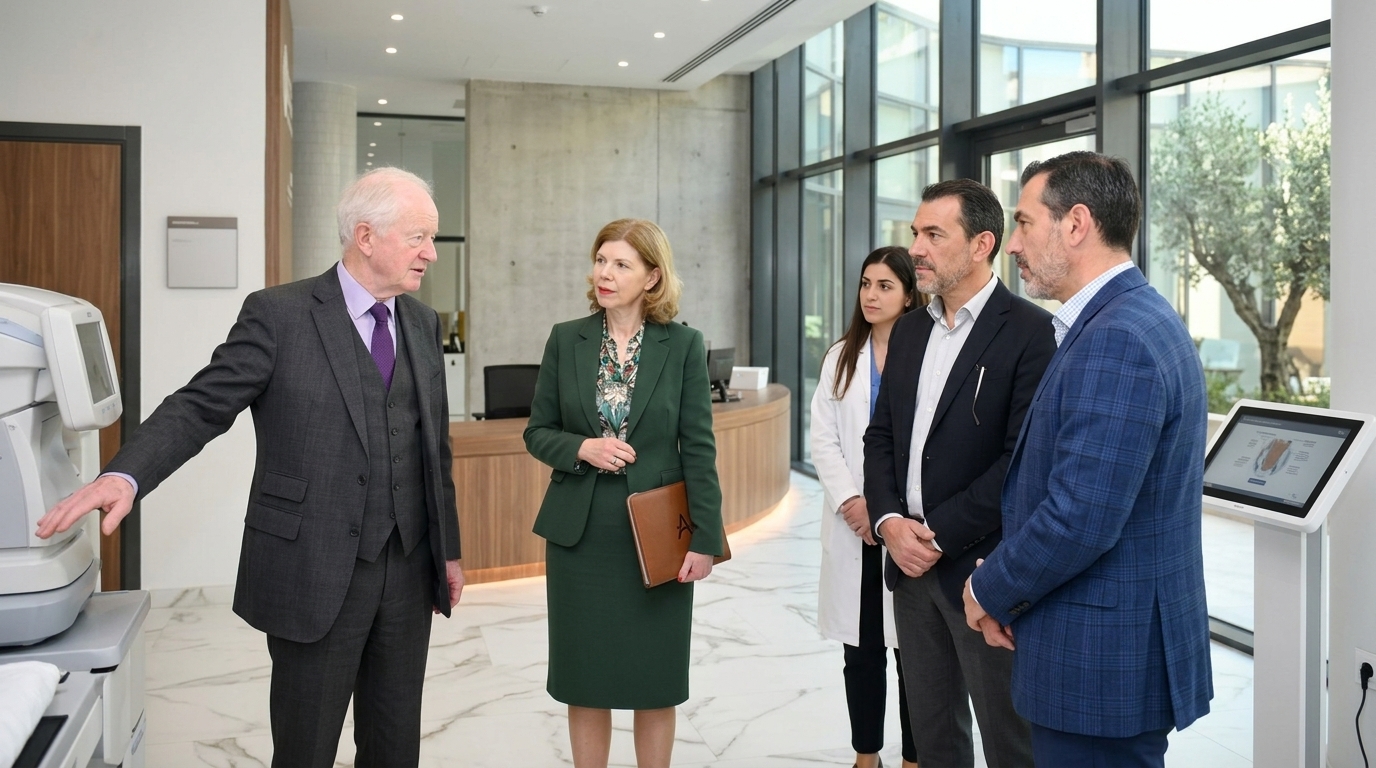
In an era where medical science is evolving at a geometric pace, the convergence of leading organizations is not merely a business move but a necessity for the survival and advancement of clinical practice. The 1st joint Oncology Symposium recently organized in Thessaloniki by the Athens Medical Group (AMG) and Imperial College Healthcare NHS Trust marks the culmination of a strategic partnership that aims to reshape the oncology care map in Southeastern Europe. This event was not just a series of lectures, but a statement of intent: Greece is ceasing to be a mere observer of developments and is becoming an active hub for the transfer of expertise and innovation.
The Architecture of an International Partnership
The collaboration between Athens Medical Group and Imperial College Healthcare NHS Trust is not a sudden development, but the fruit of long-term planning. Imperial College, one of the world's leading academic and hospital organizations, brings with it a tradition of cutting-edge research and rigorous clinical protocols. On the other hand, Athens Medical Group, with its long-standing presence and investments in latest-generation technology, provides the ideal platform for implementing these standards in practice.
At the heart of the collaboration lies the exchange of scientific knowledge and the possibility of providing a "second opinion" from top British oncologists for patients hospitalized in Greece. This drastically reduces the need for patients to travel abroad for specialized treatments, while simultaneously offering the same level of care within national borders. During the symposium, particular emphasis was placed on new radiotherapy methods, robotic surgery, and personalized immunotherapy—fields where Imperial is considered a global leader.
Personalized Medicine: The New Paradigm
21st-century oncology no longer treats cancer as a single disease, but as a series of molecular disorders that vary from patient to patient. The collaboration between the two organizations focuses precisely on this: precision medicine. Through access to advanced diagnostic tests and genetic analyses, AMG physicians, in direct consultation with their colleagues from London, can design treatment regimens tailored to the specific needs of each patient.
- Application of Artificial Intelligence in diagnosis and prognosis.
- Use of biomarkers for selecting the most appropriate immunotherapy.
- Development of minimally invasive techniques that reduce recovery time.
This approach not only improves survival rates but also the quality of life for patients. As emphasized by the speakers in Thessaloniki, the goal is to transform cancer into a chronic, manageable disease through continuous monitoring and timely treatment adjustment.
Investing in Human Capital and Brain Regain
One of the most significant aspects of this partnership is education. The agreement provides for the continuous training of AMG's medical and nursing staff in London, as well as the organization of joint research programs. In a country that has suffered from the brain drain phenomenon, such initiatives act as a catalyst for "brain regain." Young Greek scientists now find incentives to stay or return to Greece, knowing they can work in an environment that meets international standards and offers access to the global medical community.
"Our collaboration with Imperial College Healthcare NHS Trust is not a simple service agreement, but a deep commitment to excellence. We are bringing the future of medicine to Greece today," stated a Group executive during the symposium's proceedings.
Furthermore, this partnership strengthens Greece's position on the medical tourism map. The ability to provide high-level oncology care, combined with the country's infrastructure, can attract patients from the wider Balkan and Middle Eastern regions, creating significant benefits for the national economy.
Challenges and Future Prospects
Despite the optimism, integrating such collaboration models is not without challenges. Harmonizing clinical protocols between two different healthcare systems requires time, resources, and constant effort. There is also the question of accessibility: how will these innovations become available to a broader range of the population and not just those with access to private healthcare?
However, the example of Athens Medical Group and Imperial shows the way. The partnership between the public and private sectors (at an international level) can serve as a pilot for broader reforms. The future of oncology is digital, personalized, and international. Through this collaboration, Greece gains a strong voice in this future, ensuring that Greek patients will not lag behind patients in the world's major metropolises.