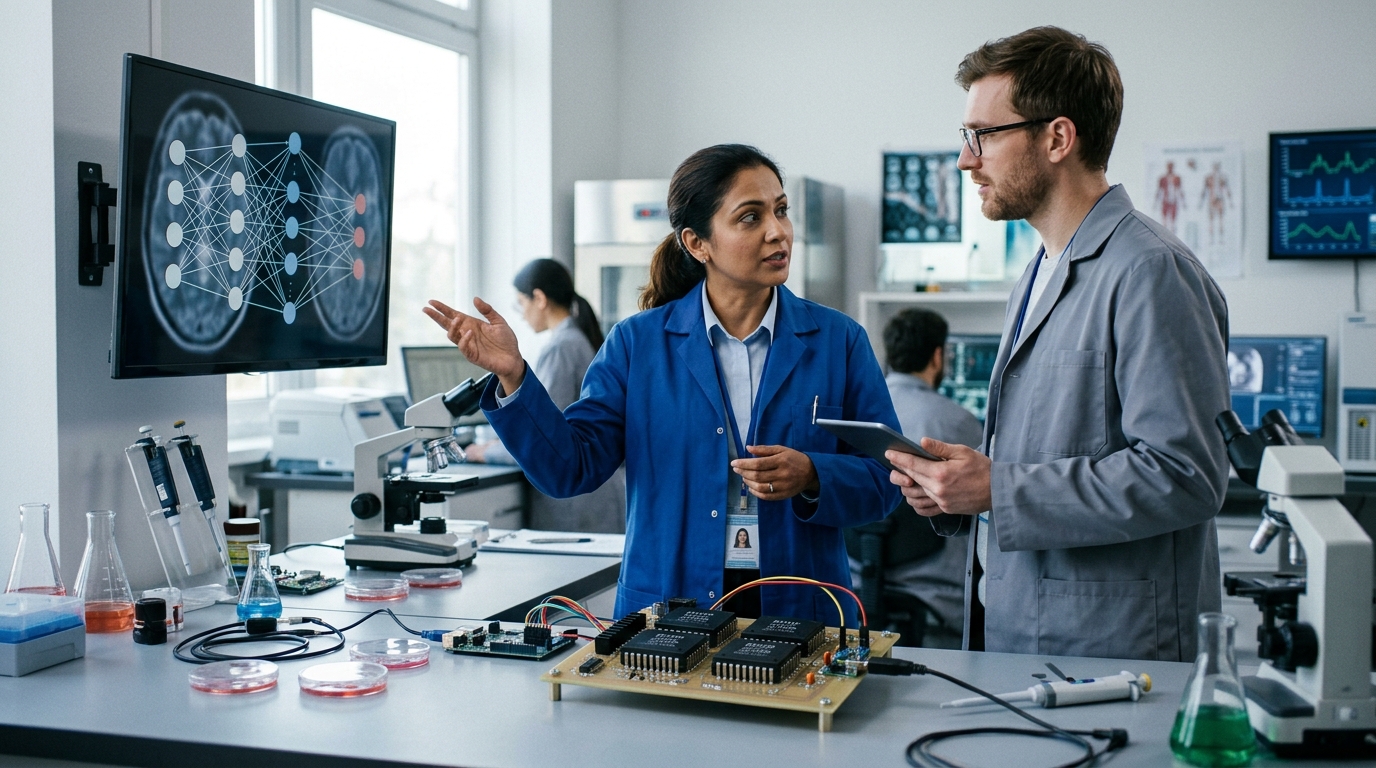
In an era where Artificial Intelligence (AI) is often portrayed as an abstract promise for the future, Kaiser Permanente's AIM-HI (Artificial Intelligence in Medicine – Healthcare Delivery Research Center) virtual showcase provided a refreshing dose of reality. The event focused on what experts call "the last mile" of medical AI: the successful integration of algorithms into daily clinical workflows, where decisions directly impact patient lives.
The Bridge Between Laboratory and Clinic
The AIM-HI research center, funded by the Gordon and Betty Moore Foundation, is not limited to developing new models. Instead, it focuses on evaluating existing algorithms in real-world settings. As Dr. Vincent Liu, the center's lead investigator, emphasized, the problem in medicine today is not a lack of data or models, but a lack of evidence that these tools work safely and effectively across diverse populations.
Five specific projects took center stage, covering a wide range of conditions from chronic kidney disease to heart failure. The common thread among all these efforts is the strive to reduce health disparities. Researchers acknowledged that algorithms trained on limited datasets often fail to serve minorities or underrepresented groups, leading to misdiagnoses or delayed treatment.
The Five Pillars of Innovation
- Kidney Failure: The University of Washington presented a model that predicts the progression of kidney disease, allowing physicians to intervene months before a patient requires dialysis.
- Heart Failure: At UC San Francisco, AI is used to analyze echocardiograms, identifying subtle changes that the human eye might overlook.
- Breast Diagnostics: Duke University focuses on reducing false positives in mammograms, alleviating the anxiety of thousands of women.
- Glaucoma: The University of Michigan is developing tools for the early detection of glaucoma in communities with limited access to ophthalmologists.
- Sepsis and Deterioration: Kaiser Permanente itself is evaluating early warning systems for sepsis, a leading cause of death in hospitals worldwide.
Challenges and Ethical Dilemmas
Despite the excitement, the showcase did not shy away from the hard questions. "Algorithmic stewardship" emerged as the keyword. Who bears responsibility when an algorithm makes a mistake? How do we ensure that doctors do not suffer from "alert fatigue," ignoring critical warnings due to the sheer volume of data?
"AI will not replace the doctor, but the doctor who uses AI will replace the one who does not," was a sentiment echoed throughout the presentations.
The global healthcare landscape must draw valuable lessons from these pilots. The transition from "black box" models to transparent, explainable AI is no longer a luxury but a requirement for clinical adoption. The focus is shifting from purely predictive accuracy to clinical utility—asking not just if the model is right, but if it actually changes the patient outcome for the better.
The Future of Care Delivery
The AIM-HI Showcase demonstrated that the success of AI in medicine is not judged by the complexity of the code, but by its acceptance by clinicians and patients. Transparency and explainability are essential for building trust. As we move toward 2027, the focus is shifting from "what AI can do" to "how AI can enhance the human touch in medicine," freeing up time for doctors to focus on the person, not just the data points.