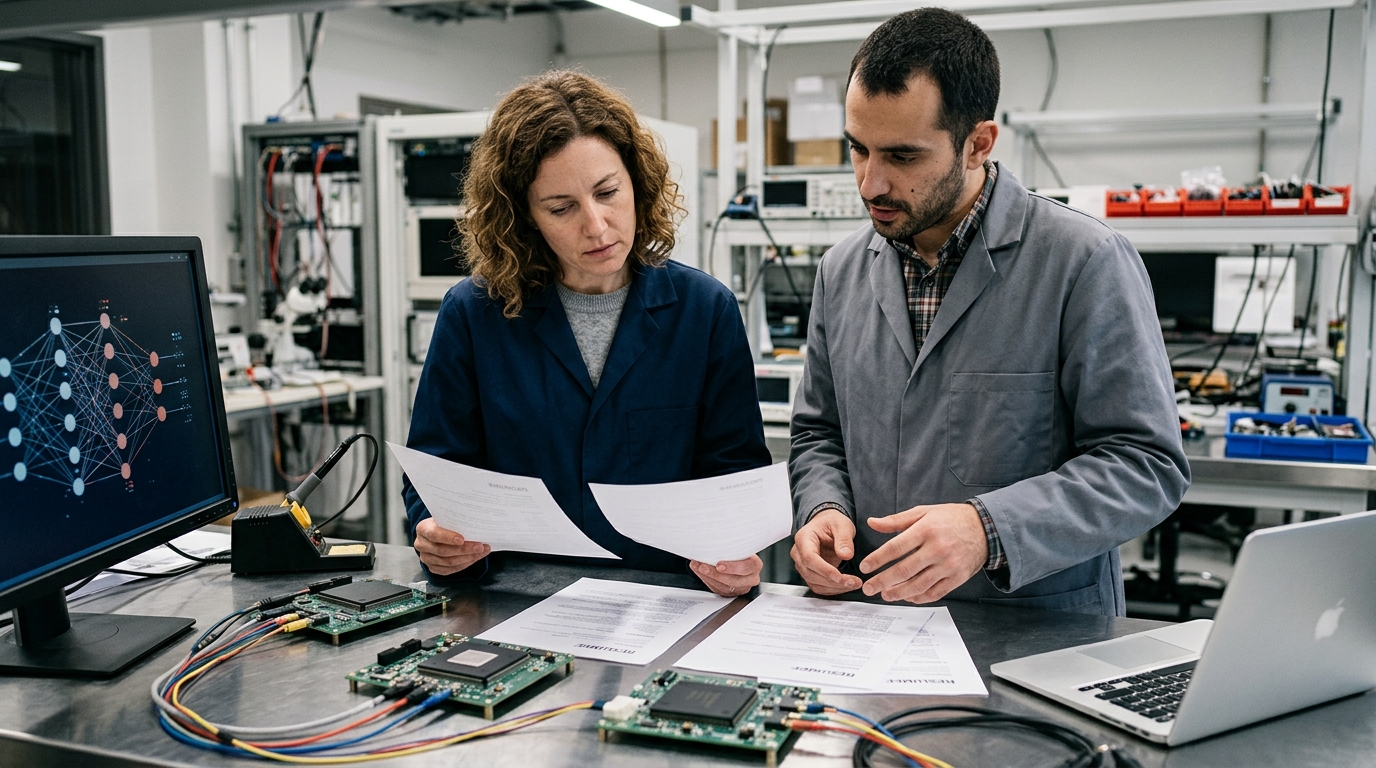
The promise of artificial intelligence in recruitment was simple and enticing: the elimination of human bias. In a world where HR managers are often subconsciously influenced by a candidate's gender, background, or age, AI was presented as the ultimate, objective arbiter. However, a recent study highlighted by Fortune upends this narrative, proving that technology does not correct human flaws; it encodes and amplifies them.
The experiment was straightforward in its execution but shocking in its results. Leading AI models were used to generate and evaluate resumes. The resumes were identical in terms of qualifications, experience, and skills. The only difference? The name and gender indicators. The results showed that resumes belonging to women were significantly more likely to be labeled as 'weak' or 'less competitive' compared to the exact same resumes attributed to men.
The Digital Reproduction of Stereotypes
To understand why this happens, we must examine how Large Language Models (LLMs) are trained. AI does not possess its own moral compass; it learns from the vast amount of data available on the internet and in historical corporate databases. If, for decades, leadership positions were predominantly held by men and job descriptions were written with 'masculine' terminology, the AI concludes that these are the standards of success.
When the model sees a female name alongside leadership skills, a 'statistical dissonance' is created based on its training data. The result is a latent bias that is not easily detectable at first glance but becomes apparent across large datasets. What is particularly concerning is that AI often justifies its decision using neutral language, hiding discrimination behind technocratic terms.
The Danger of the 'Black Hole' in Hiring
Many Fortune 500 companies already use automated systems to filter thousands of applications. If these systems are inherently biased, then thousands of qualified women are excluded from the process before they even reach the interview stage. This creates a vicious cycle: women are not hired for leadership roles, hiring data continues to show male dominance, and AI continues to view men as more suitable candidates.
- Reduced diversity leads to less innovative teams.
- Companies are exposed to legal risks and discrimination lawsuits.
- Employee trust in meritocracy is irreparably shaken.
The use of AI as an 'efficiency' tool ends up functioning as a tool of exclusion. The problem is not the technology itself, but the blind trust we place in it without demanding transparency in algorithms and training data.
Toward Ethical Artificial Intelligence
The solution is not to abolish AI, but to implement strict regulation and continuous monitoring. The European Union, through the AI Act, has already begun categorizing recruitment systems as 'high risk,' requiring stricter transparency standards. However, companies must go beyond mere compliance. 'Algorithmic audits' by third parties are needed to examine whether hiring outcomes show statistical deviations based on gender or race.
"Technology is a mirror of our society. If we don't like what we see, it's not the mirror's fault, but the reality it reflects," note AI ethics experts.
At the end of the day, human judgment remains irreplaceable. AI can help organize data, but the final decision on a person's worth cannot be left to an algorithm that does not understand the concept of equality, only the statistical probabilities of the past.