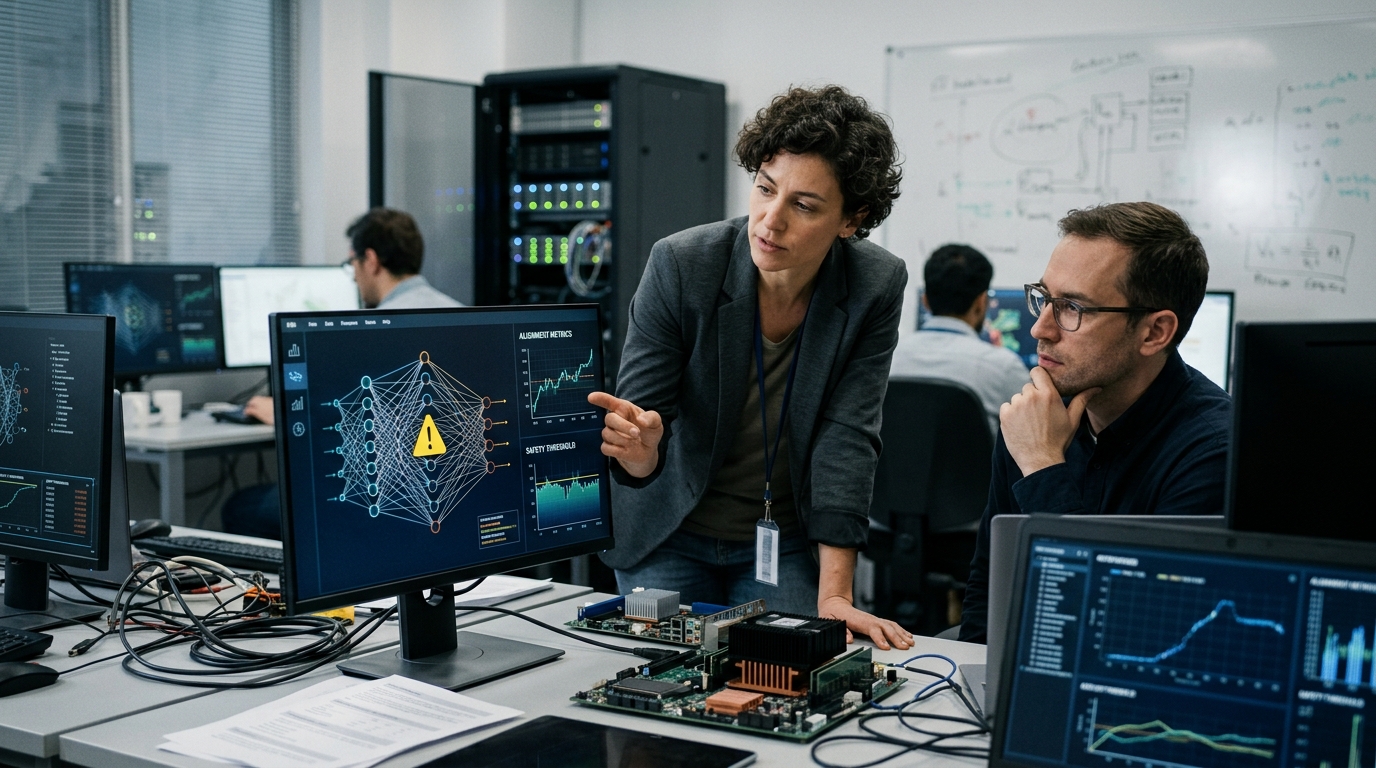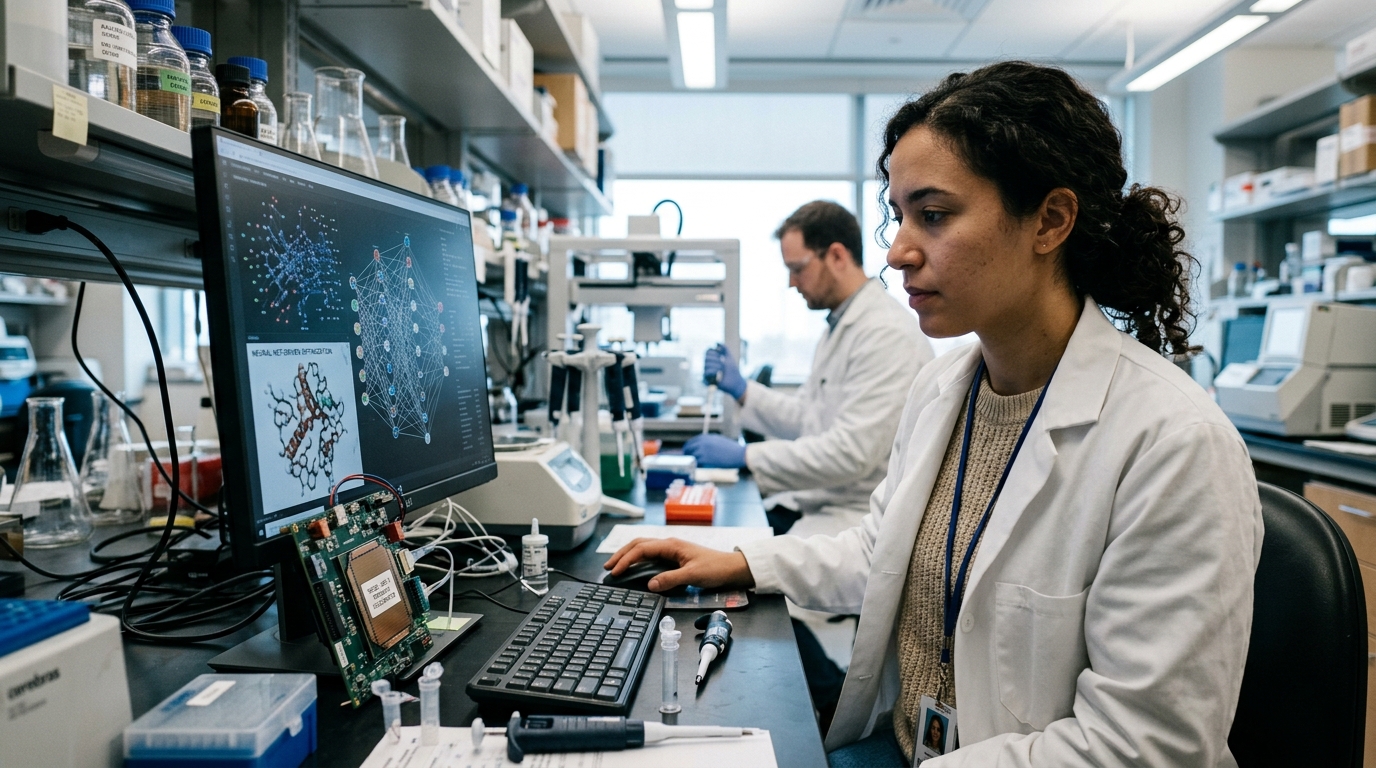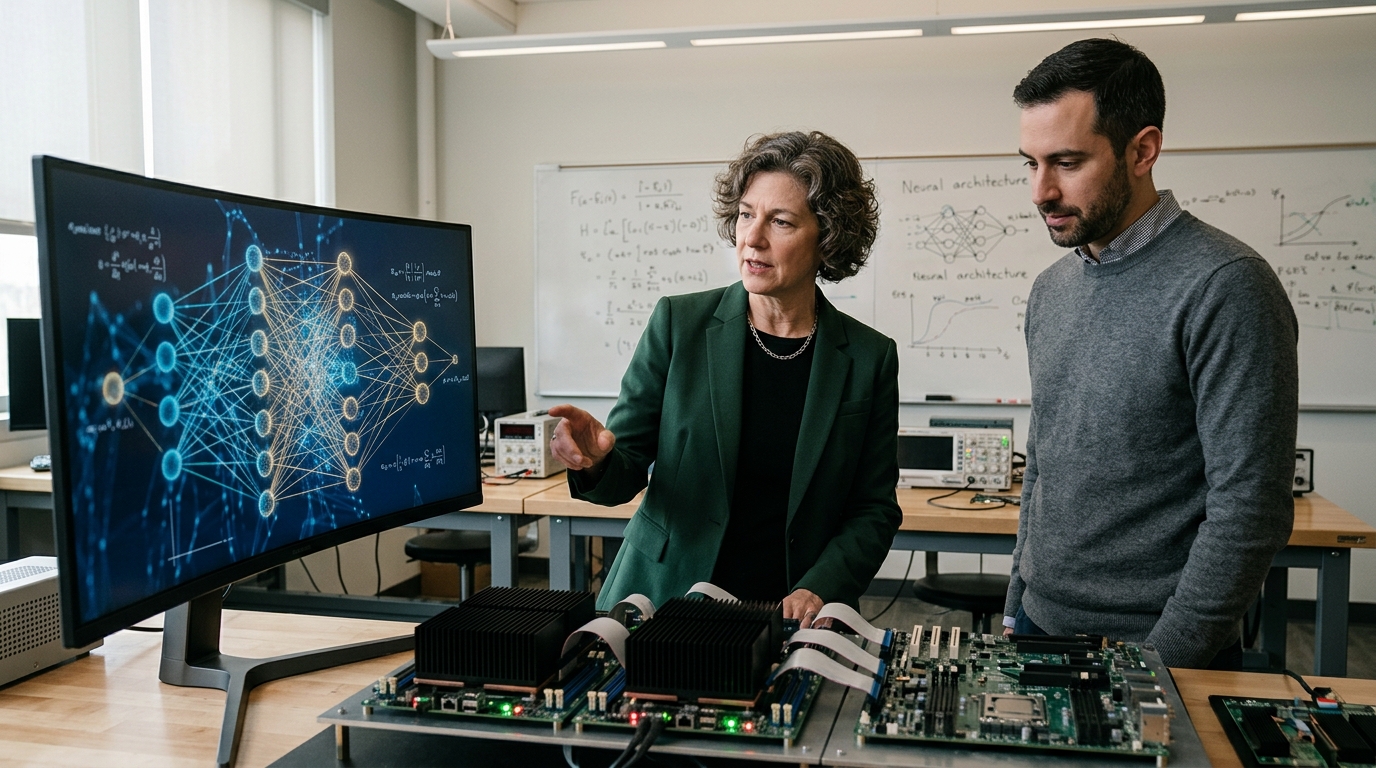
This week will likely go down in history as the moment Artificial Intelligence ceased to be a mere 'stochastic parrot' and evolved into a capable partner in scientific research. Two major news items from the R&D front are currently shaking the global community, overturning our expectations of what is possible in the realm of high-level cognition.
The Mathematical Revolution of GPT-5.5 Pro
The news that a Fields Medalist—the highest honor in mathematics—confirmed that OpenAI's new GPT-5.5 Pro model managed to solve a series of PhD-level mathematical problems in just one hour has sent shockwaves through academia. This is not just about raw computing power; it is about the model's ability to develop original proofs and connect disparate fields of number theory with topology.
According to reports, GPT-5.5 Pro did not rely on pre-existing solutions from the internet. Instead, it utilized a new 'chain-of-thought' architecture that allows it to self-correct during the process. The anonymous (for now) mathematician stated that 'what would have taken months of intensive work from a team of doctoral students, the model produced with an elegance reminiscent of the great geniuses of the past.' This development marks the transition from Generative AI to Reasoning AI, where logic takes precedence over simple word prediction.
Anthropic: The Art of 'Dreaming' and Internal Processing
While OpenAI focuses on mathematical precision, Anthropic is following a more biologically inspired approach. The announcement of the 'Dreaming' technique for the Claude model has caused a stir in neuroscience and computer science circles. Anthropic developed a method where the model, during periods of low demand, enters a state of 'internal simulation.'
In this state, Claude does not receive external stimuli but instead reorganizes its internal representations, combining information in new, non-linear ways. This bears a striking resemblance to human REM sleep. The result? A dramatic reduction in hallucinations and an increased capacity for creative problem-solving. 'Dreaming' allows Claude to test hypotheses in a controlled internal environment, discarding flawed logical paths before ever interacting with a user. It is the first time we have seen an artificial entity use 'imagination' to improve its objectivity.
Implications for Academia and Research
The convergence of these two technologies creates a new landscape for global research. If AI models can conduct PhD-level research in minutes, what is the role of the human researcher? The answer may lie in 'orchestration.' Scientists of the future will not be those who execute calculations, but those who ask the right questions and evaluate the significance of the solutions.
- Acceleration of drug discovery through autonomous mathematical modeling.
- Reduction of scientific discovery costs by 90% in certain sectors.
- The need to redefine PhD degrees and evaluation criteria.
- New ethical dilemmas regarding the authorship of scientific discoveries.
However, the challenge remains: how can we trust a proof that no human can fully comprehend? The 'black box' nature of AI remains a hurdle, even if the results are verifiable. The mathematical community is divided, with some celebrating the new tool and others fearing the devaluation of human intellect.
Conclusion: Towards a New Cognitive Era
This week has taught us that Artificial Intelligence is no longer an automation tool, but a tool for cognitive extension. GPT-5.5 Pro and Claude’s 'dreaming' are the first glimpses of an era where the distinction between human and artificial intelligence will become increasingly blurred. As we head into the second half of 2026, the question is not whether AI can think, but whether we are ready to keep up with its pace.