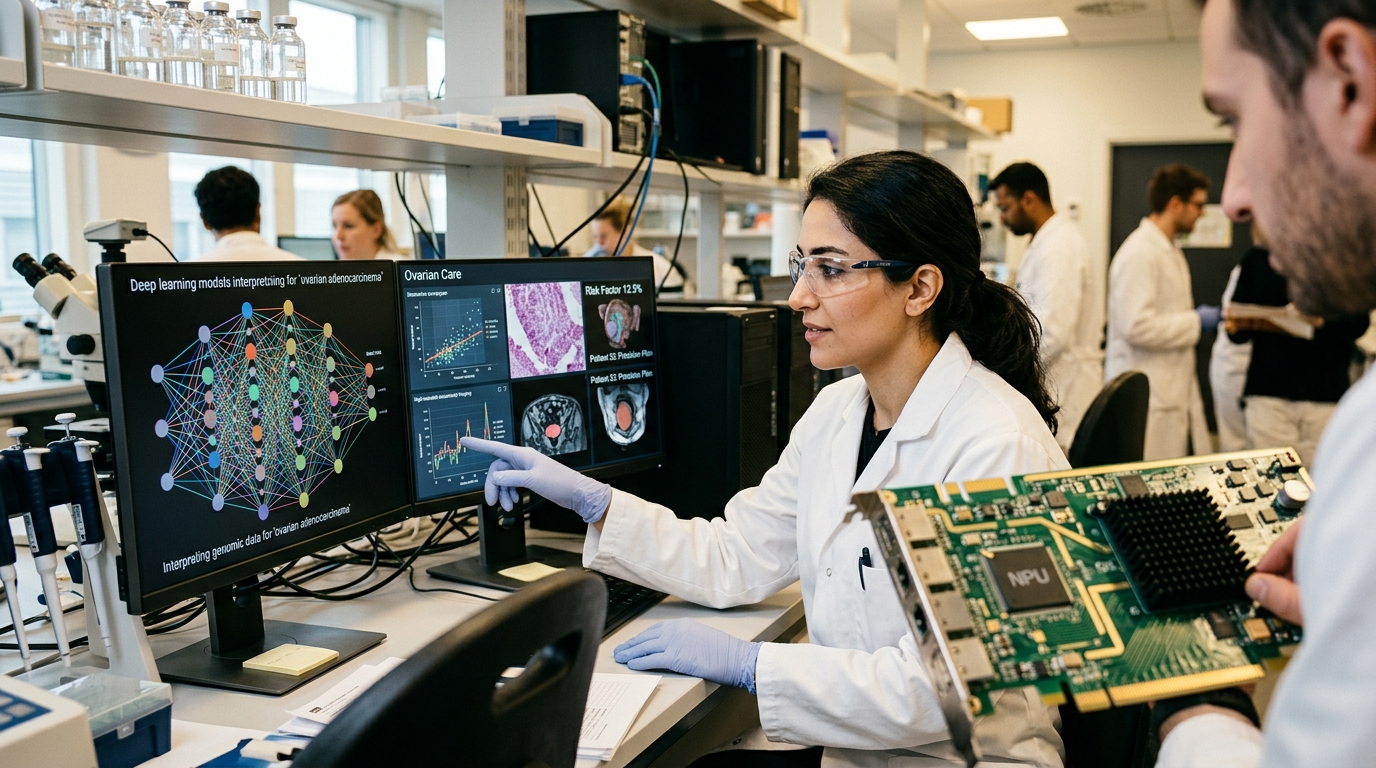
Gynecological oncology is on the cusp of a historic transformation. For decades, ovarian cancer has been dubbed the "silent killer" due to its lack of specific symptoms and the inherent difficulty of early detection. However, recent studies published in the European Medical Journal (EMJ) highlight Artificial Intelligence (AI) as the catalytic factor capable of altering the disease's trajectory, offering tools for more precise diagnosis and radically personalized care.
The Challenge of Early Detection and Algorithmic Superiority
The primary obstacle in managing ovarian conditions is the complexity of the anatomy and the subtlety of early lesions. Traditional imaging methods, such as ultrasound and Magnetic Resonance Imaging (MRI), rely on human observation, which—no matter how experienced—is subject to subjectivity and fatigue. This is where AI steps in. Through Machine Learning, algorithms are trained on thousands of images, learning to recognize patterns invisible to the human eye.
According to the EMJ findings, AI systems can distinguish between benign and malignant tumors with exceptional accuracy, drastically reducing false positives. This is not merely a technical improvement; it is a life-saving evolution, as it prevents unnecessary and invasive surgeries while ensuring that patients who are truly ill receive immediate care.
Radiomics and Genomics: The Convergence of Data
The true power of AI in ovarian care lies in its ability to synthesize heterogeneous data. "Radiomics"—the extraction of quantitative data from medical images—is now being combined with the genomic analysis of the tumor. Algorithms can predict how a specific tumor will respond to different chemotherapy regimens or newer targeted therapies, such as PARP inhibitors.
- Predicting treatment response based on biomarkers.
- Analyzing tumor micro-architecture to determine aggressiveness.
- Continuous monitoring of patient progress through AI-analyzed "liquid biopsies."
This multi-factorial approach allows oncologists to design treatment plans tailored to the individual patient, moving away from the "one-size-fits-all" logic that dominated the past.
Ethical Dilemmas and the Future of Clinical Practice
Despite the encouraging prospects, integrating AI into clinical practice comes with challenges. Algorithmic transparency (the so-called "black box" problem) remains a point of contention. Physicians must be able to understand why an AI system reached a specific diagnosis. Furthermore, the quality of training data is critical; if algorithms are trained on non-representative population samples, there is a risk of bias in the results.
"Artificial Intelligence will not replace the gynecologist, but the gynecologist who uses AI will replace the one who does not," experts noted in the EMJ.
In the future, AI is expected to play a decisive role in prevention as well. By analyzing family history and lifestyle factors alongside genetic data, we will be able to identify high-risk women long before any symptoms appear, offering truly proactive medicine.
Conclusion
Ovarian care is entering a new, more hopeful phase. Artificial Intelligence provides the tools to transform ovarian cancer from an unpredictable threat into a manageable, and often curable, condition. The challenge now shifts from the laboratory to the hospital: how can we ensure these technologies are accessible to all women, regardless of geographic or economic status?