In the fragile ecosystem of the Neonatal Intensive Care Unit (NICU), time is not merely a measurement; it is the thin line between life and death. Neonatal sepsis, a systemic infection affecting infants under 28 days old, remains a leading cause of mortality and long-term neurodevelopmental impairment worldwide. Despite leaps in modern medicine, early diagnosis remains a formidable challenge, as symptoms in newborns are often subtle, non-specific, and mimic other common conditions. However, a comprehensive review recently published in the journal Cureus reveals that Artificial Intelligence (AI) is poised to take on the role of an ever-watchful guardian over the incubator.
The Digital Shield: How Machine Learning Sees the Invisible
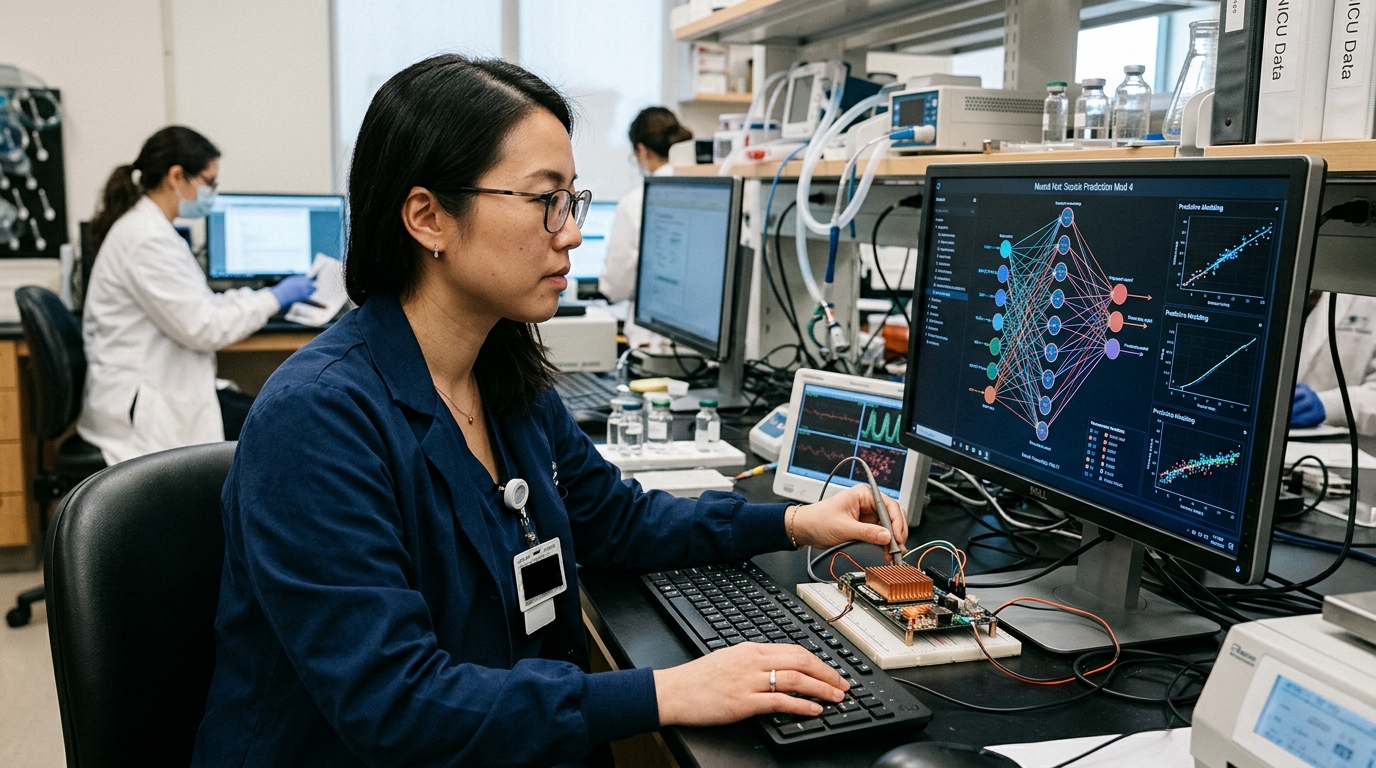
Traditional sepsis diagnosis relies on clinical observation and blood cultures, which can take up to 48 hours to yield results. In this critical window, a neonate’s condition can deteriorate with terrifying speed. Artificial Intelligence, however, operates on a different paradigm. By analyzing vast streams of data from Electronic Health Records (EHR) and continuous bedside monitoring, algorithms can detect infinitesimal patterns that escape the human eye.
According to the review, deep learning techniques and models such as Recurrent Neural Networks (RNNs) are particularly adept at time-series analysis. For instance, Heart Rate Variability (HRV) has emerged as one of the most potent indicators. When a neonate begins to develop sepsis, the autonomic nervous system reacts long before a fever or lethargy manifests. AI can identify this "loss of complexity" in the heart rate, offering clinicians a window of opportunity that previously did not exist.
Clinical Integration: From Theory to the Bedside
The challenge, of course, lies not just in creating an accurate algorithm, but in weaving it into the daily clinical workflow. The Cureus review emphasizes the necessity of "Explainable AI" (XAI). Neonatologists cannot rely on a simple "high risk" alert; they need to understand why the system flagged a particular infant. Transparency in modeling is essential for building the trust required for human-machine collaboration.
- Reducing Alarm Fatigue: One of the most significant hurdles in the NICU is the cacophony of false-positive alarms. AI promises to filter the noise, focusing only on events with true clinical significance.
- Personalized Care: Every neonate, particularly the preterm, has a unique physiological baseline. AI models can adapt to the individual characteristics of each patient, moving away from "one-size-fits-all" thresholds.
- Predicting Multi-Organ Failure: Beyond sepsis, emerging systems can predict secondary complications, allowing for a more holistic management of the neonate’s health.
Ethical Dilemmas and the Future of Pediatrics
Despite the optimism, the implementation of AI in pediatric care is not without ethical concerns. Data quality and representative training sets are paramount. If algorithms are trained solely on data from Western populations, they may lack accuracy for neonates in developing regions, where the burden of sepsis is highest. Furthermore, the question of liability remains: who is responsible if an algorithm fails to predict an infection or triggers an unnecessary intervention?
"Artificial Intelligence will not replace the neonatologist, but the neonatologist who uses AI will replace the one who does not," the study notes, echoing a growing sentiment in the medical community.
Looking ahead, the prospect of the "Smart NICU" is becoming a reality. The integration of multi-modal data—including genomics and potentially even wearable sensors for post-discharge monitoring—could provide a continuous shield of protection. Sepsis may be a formidable foe, but in the digital age, our most vulnerable patients are finally gaining a powerful ally.