The science of fertility is at a major turning point as the integration of Artificial Intelligence (AI) promises to provide solutions where human vision and patience fall short. For decades, a diagnosis of non-obstructive azoospermia—a condition where no sperm is detected in the ejaculate—was a final verdict for many men wishing to become biological fathers. However, a new technological approach is changing the landscape, allowing for the identification of 'hidden' sperm within tissue biopsies, offering a final, yet powerful, hope.
The 'Needle in a Haystack' Dilemma
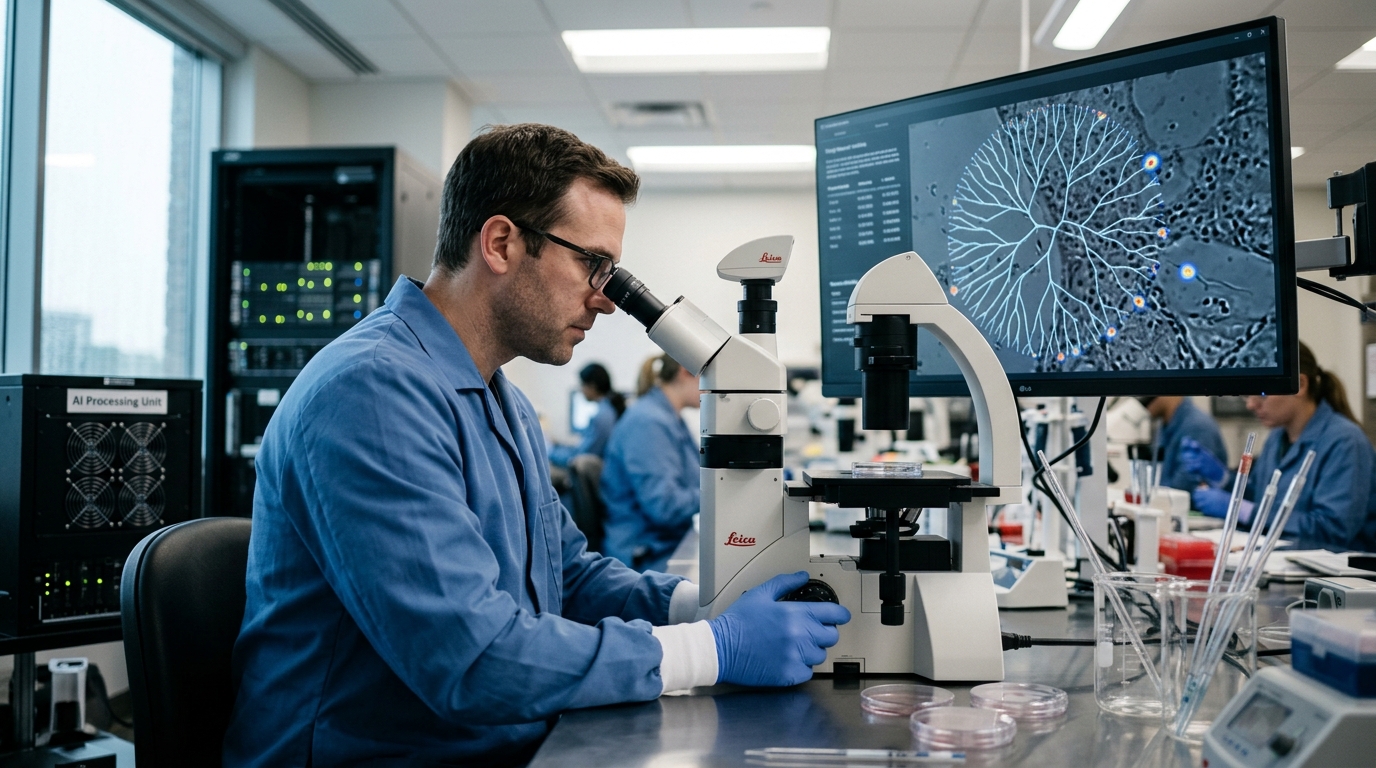
The current procedure for men with azoospermia is called Micro-TESE (Microsurgical Testicular Sperm Extraction). This is an extremely delicate surgical procedure where doctors collect tissue samples. The real drama, however, unfolds in the laboratory. There, an embryologist must examine thousands of cells under a microscope for hours—often up to six or seven hours per case—trying to locate even a single viable sperm cell.
Embryologist fatigue is the greatest enemy of success. After hours of observation, the human eye's ability to distinguish microscopic movement or the characteristic morphology of a sperm cell among millions of other cells decreases dramatically. This is exactly where AI steps in. Systems like SpermSearch, developed by researchers at international fertility centers, are trained through machine learning algorithms to recognize sperm in fractions of a second.
Algorithmic Precision and Speed
According to recent studies, AI systems can scan an entire digital sample slide in less than ten minutes—a process that would take hours for a skilled scientist. More importantly, it's not just about speed; it's about consistency. AI does not get tired, distracted, or affected by the stress of success. In trials, the software managed to identify sperm that had escaped human observation, increasing the success rates of IVF for couples who had almost given up.
"This technology does not replace the embryologist; it gives them a super-weapon. It's like having a metal detector in a vast minefield," says one of the lead researchers of the project.
The process involves taking thousands of images of the tissue sample. The algorithm, having been trained on thousands of examples of healthy and dysmorphic sperm, highlights areas of interest. Then, the embryologist is called to confirm the AI's findings, focusing only on the spots 'illuminated' by the software. This collaboration between human and machine minimizes the margin of error and maximizes the chances of finding material for fertilization.
Social and Psychological Implications
Male infertility remains a taboo subject in many societies. A diagnosis of infertility often deals a heavy psychological blow to a man's self-esteem and causes friction in couples' relationships. Having a technology that can 'unearth' life where others see a dead end has immense value, not just medically, but humanistically.
- Cost Reduction: Faster sample processing can lower laboratory costs in the long run.
- Reduced Invasiveness: If AI can find sperm in smaller samples, surgical procedures may become less extensive.
- Psychological Relief: Knowing that every technological possibility has been exhausted provides a sense of closure to the effort.
Despite the impressive prospects, challenges remain. Training these systems requires massive amounts of data, which must be protected and anonymized. Furthermore, access to such cutting-edge technologies is not yet universal, raising questions about the gap between wealthy and poorer fertility clinics. However, the path is set: AI is turning despair into possibility, proving that technology, when used correctly, serves life itself.