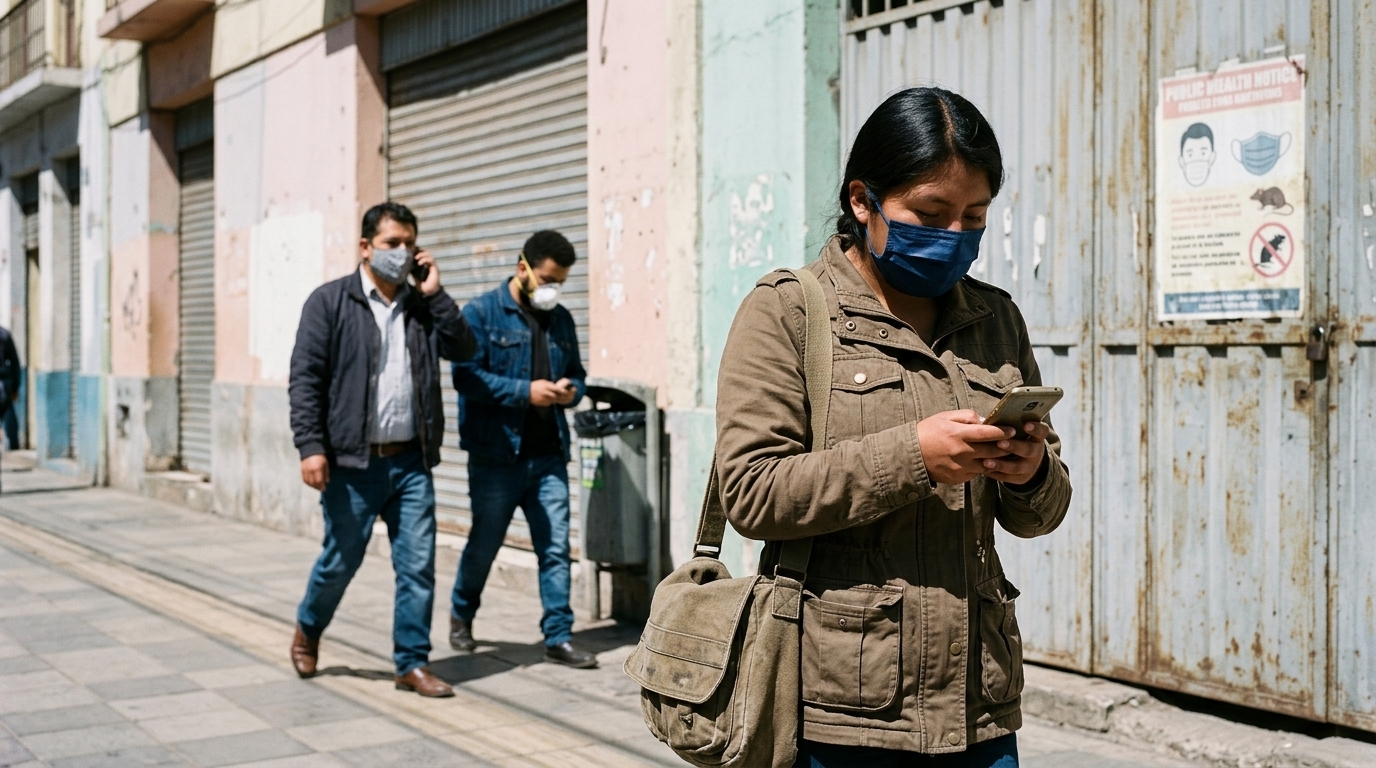
During the height of the COVID-19 pandemic, contact-tracing apps were hailed as the ultimate digital weapon against viral spread. Backed by tech giants like Apple and Google, millions of people downloaded software that used Bluetooth signals to log proximity to others. However, as the world shifts its focus to other emerging threats, such as Hantavirus, the promise of a "digital panacea" is beginning to crumble under the weight of biological and epidemiological reality.
Biological Incompatibility: Rodents vs. Respiratory Droplets
The primary reason contact-tracing apps are essentially useless for Hantavirus lies in its mode of transmission. While SARS-CoV-2 is a highly contagious virus that spreads from person to person through the air, Hantavirus is primarily a zoonotic disease. Humans typically become infected through contact with the urine, feces, or saliva of infected rodents, or by inhaling aerosols containing these secretions. Human-to-human transmission is extremely rare and has been observed almost exclusively in specific strains in South America, such as the Andes virus.
Therefore, an app based on the proximity between two smartphones cannot detect the actual source of risk: the presence of an infected mouse in a shed or the inhalation of dust during the cleaning of a long-vacant cabin. Bluetooth technology, no matter how sophisticated, fails to bridge the gap between human social behavior and ecological exposure to environmental pathogens. The "contact" being traced is fundamentally the wrong kind of contact.
The Paradox of Small Outbreaks and Statistical Errors
Even in those rare instances where human-to-human transmission is possible, digital apps face an insurmountable statistical barrier. Contact-tracing apps require a "critical mass" of users to be effective. In a global pandemic, the probability of encountering another user is high. In a small, localized outbreak of Hantavirus, that probability is negligible.
Furthermore, there is the issue of "false positives." In populations with a very low prevalence of a disease, even an app with high accuracy will produce more false alerts than genuine warnings. This leads to "notification fatigue" and undermines public trust in health authorities. For Hantavirus, where cases are often isolated and geographically dispersed, manual tracing by experienced epidemiologists remains the gold standard. It allows for a deep dive into the patient's environment and habits—contextual nuances that no algorithm can currently capture.
Privacy Concerns and Social Stigma
Another critical parameter is the protection of personal data within small communities. In the case of COVID-19, anonymity was easier to maintain due to the sheer volume of cases. In a Hantavirus outbreak, where there might be only two or three cases in an entire county, a mobile notification could easily de-anonymize the patient. This creates severe risks of stigmatization and social isolation, potentially discouraging people from seeking care or cooperating with health officials.
Experts emphasize that the obsession with "technological solutionism" often diverts resources and attention away from core public health infrastructure. Instead of investing in questionable apps, tackling Hantavirus requires better public education on hygiene, rodent population control, and strengthening diagnostic laboratories. Technology must function as a supplement to, not a substitute for, traditional medicine and epidemiological investigation. The story of Hantavirus serves as a reminder that, despite our digital progress, we remain part of a complex biological ecosystem that cannot always be simplified into a few lines of code.