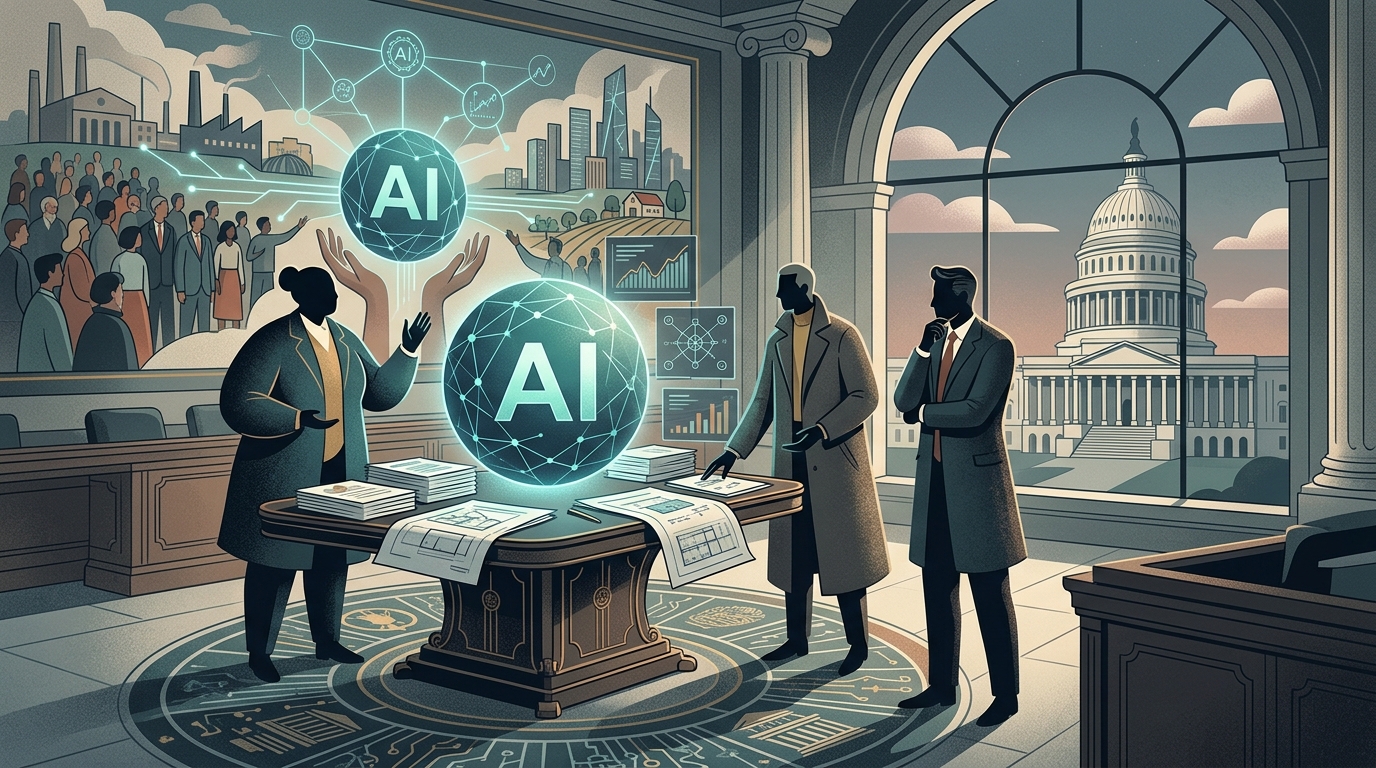
The governance of Artificial Intelligence has become one of the most contentious policy battlegrounds in Washington. As we navigate 2026, the pressure on the White House to implement rigorous vetting for so-called "frontier models" has reached a fever pitch. However, a compelling analysis recently featured in Tech Policy Press suggests that this approach, while well-intentioned, may be fundamentally flawed. The core argument is that AI safety is not a static problem that can be solved with a simple "seal of approval" before a model hits the market.
The Illusion of Pre-Release Certification
The White House’s current strategy leans heavily on the Executive Order on AI, utilizing the Defense Production Act to require companies to share safety test results with the government. The issue, however, lies in the nature of these tests themselves. "Red-teaming"—the process where experts attempt to provoke a model into harmful behavior—is a useful but inherently limited methodology. A model that appears safe in a sanitized, controlled environment can behave in entirely unpredictable ways when exposed to millions of users with diverse intentions and creative prompts.
Furthermore, AI is not a static product like a pharmaceutical drug or a motor vehicle; it is a dynamic system. Once a model is released, it can be fine-tuned by third parties, connected to external APIs, or used as a foundational layer for other applications that bypass initial safety guardrails. Focusing on pre-release vetting ignores these "post-deployment" risks, creating a false sense of security for the public and policymakers alike. It treats AI safety as a gate to be passed rather than a continuous process to be managed.
The Threat of Regulatory Capture
Another significant concern involves "regulatory capture." Major tech incumbents like OpenAI, Google, and Anthropic possess the vast financial and legal resources required to comply with complex and expensive vetting protocols. For smaller startups and the vibrant open-source community, such requirements could become an insurmountable barrier to entry. If the White House mandates a system where only government-vetted models are allowed to operate, it risks institutionalizing an oligopoly, shielding incumbents from competition without necessarily making the technology safer.
Critics point out that corporations often use the "safety" narrative to lobby for regulations that restrict access to weights and training data—the lifeblood of open-source innovation. This "safety theater" serves corporate interests by pulling up the ladder behind them, while the actual societal harms, such as algorithmic bias, mass surveillance, and the erosion of privacy, remain largely unaddressed by these static vetting processes.
Shifting Toward Continuous Monitoring and Liability
If pre-release vetting isn't the silver bullet, what is the alternative? Experts are calling for a shift in focus from preventive checks to robust liability frameworks and continuous monitoring. Instead of the government attempting to predict every possible failure mode, it should establish legal structures that hold developers and deployers accountable for the actual harms their systems cause in the real world. This would incentivize companies to invest in genuine, deep-seated safety engineering rather than mere compliance exercises.
- Continuous Monitoring: Implementing systems that track AI behavior in real-time post-deployment.
- Data Transparency: Mandating disclosure of training datasets and algorithmic methodologies to independent researchers.
- Strict Liability: Strengthening the legal right for individuals to seek damages for harms caused by AI systems.
In conclusion, the White House’s push to vet AI is a step toward recognition of the problem, but it remains an insufficient solution. Safety in the digital landscape of 2026 requires more than bureaucratic hurdles; it demands a radical re-evaluation of how we assign responsibility in the age of autonomous technology. Obsessing over vetting may ultimately prove to be a costly distraction from the structural challenges of our digital society.