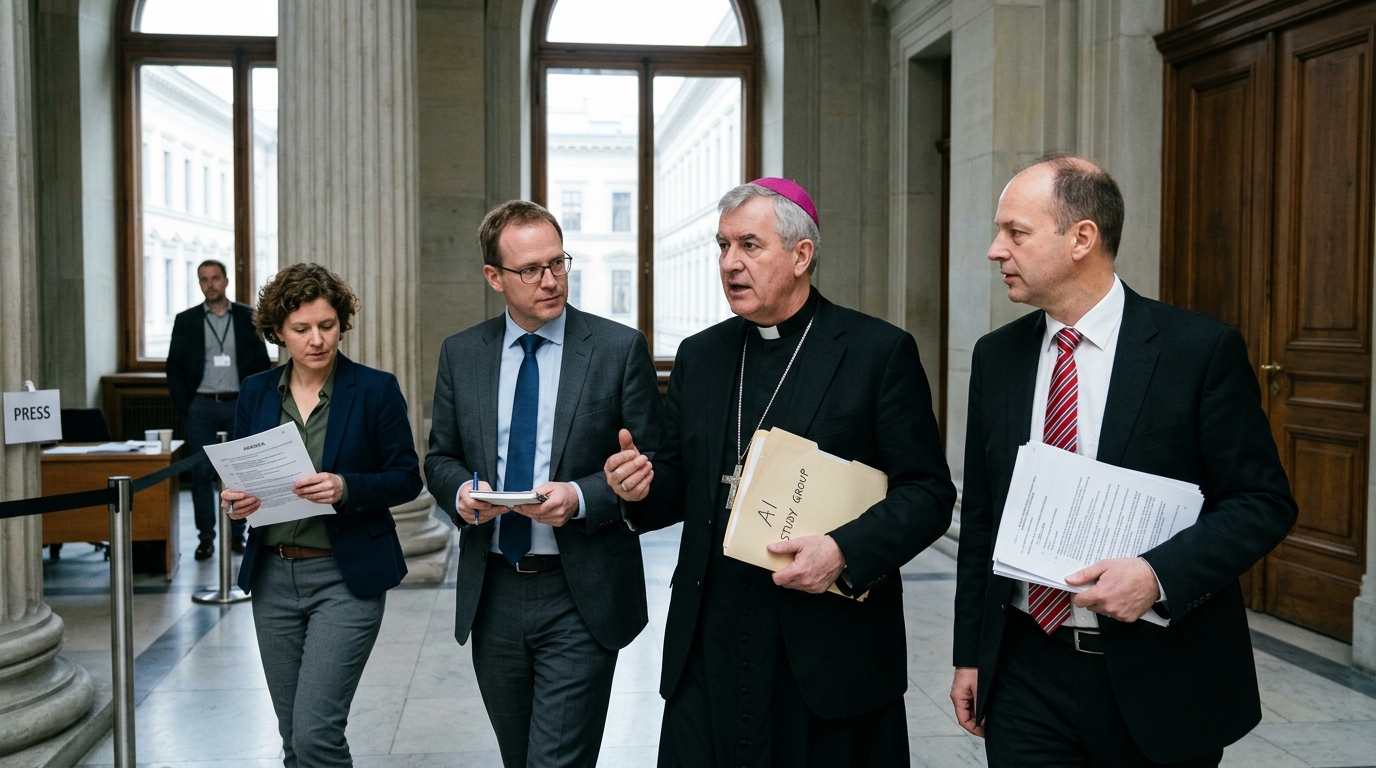
In the heart of Rome, where centuries of tradition meet the challenges of the future, the Vatican is taking a step that signals the seriousness with which the Catholic Church views the technological explosion. Pope Francis has announced the formation of a specialized study group on Artificial Intelligence (AI), an initiative that accompanies the forthcoming publication of the first papal encyclical dedicated exclusively to the ethical and social implications of algorithms. This move is not merely a reaction to a contemporary trend, but a profound theological and political intervention aimed at placing humanity at the center of the digital revolution.
The Formation of the Study Group: Theologians and Scientists in Dialogue
The new study group, which will operate under the Pontifical Council for Culture and Education, is not composed solely of clergy. The Vatican has invited leading computer scientists, ethicists, and representatives from the technology industry worldwide. The group's goal is to analyze how generative AI affects human cognition, religious faith, and social cohesion. The composition of this committee suggests a willingness for substantive dialogue, moving away from dogmatic constraints and recognizing that technology is a tool that can either elevate or degrade human dignity.
The group's work will focus on three key pillars: the spiritual dimension of creativity, algorithmic transparency, and the protection of vulnerable groups from automated discrimination. The Vatican appears particularly concerned about how AI might widen the gap between wealthy and poor nations, creating a new form of "digital colonialism." This focus on equity reflects the Pope's broader mission of social justice, now translated into the language of neural networks and data sets.
The Forthcoming Encyclical: A Moral Roadmap
The news causing the most significant stir is the preparation of a new Papal Encyclical. In Catholic tradition, an encyclical is the most important document a Pope can issue, addressed not only to the faithful but to the entire world. Following the influential "Laudato si'" on the environment in 2015, Francis seems to view artificial intelligence as the second great existential challenge of our time. The encyclical is expected to further develop the concept of "Algorethics," a term coined by the Vatican to describe the need for ethics embedded within the very design of algorithms.
According to sources close to the Holy See, the text will condemn the use of AI in autonomous weapons systems and warn against the "depersonalization" of human relationships through chatbots. The Church seeks to act as a global moral compass, reminding the world that progress is not measured solely by computational power, but by a society's ability to protect its most vulnerable members. The document will likely emphasize that while AI can simulate intelligence, it cannot replicate the human soul or the nuances of moral conscience.
Algorethics: The Vatican's New Line of Defense
The Vatican is no stranger to the field of technological ethics. The "Rome Call for AI Ethics," signed in 2020 by giants such as Microsoft and IBM, was the first major step. Now, the new study group and the encyclical represent an escalation of this strategy. Pope Francis has repeatedly emphasized that "it is not technology that is the problem, but its use without a moral compass." Algorethics proposes specific principles: transparency, inclusion, responsibility, impartiality, reliability, and security.
Particular weight is given to the concept of "accountability." Who is responsible when an algorithm makes a decision that ruins a life? The Vatican argues that the final decision must always remain in human hands—a position that aligns with recent regulatory efforts by the European Union (AI Act). By formalizing these views in an encyclical, the Church provides a philosophical foundation for regulators who are currently struggling to keep pace with the speed of innovation.
Geopolitical Influence and Global Dialogue
The Pope's intervention also has a clear geopolitical dimension. In a world divided between the American dominance of Silicon Valley and China's state-controlled tech model, the Vatican is attempting to carve out a "third way" based on humanism. The Pope's participation in the G7 summit in 2024 was a prelude to this effort. With the new study group, the Holy See gains a permanent body to monitor developments, allowing it to intervene in international forums with scientifically grounded positions.
In conclusion, the Vatican's move suggests that artificial intelligence is no longer a topic reserved for technocrats. It is a deeply political and spiritual issue that redefines what it means to be human. The upcoming encyclical is expected to be a reference text for decades to come, challenging governments and corporations to consider the true cost of unchecked innovation. As we move further into the age of the machine, the oldest institution in the West is asserting that the most important code is still the moral one.