In the contemporary digital landscape, the intersection of technology and finance has entered a volatile new chapter. While Artificial Intelligence (AI) promises a revolution in banking efficiency and data analytics, it simultaneously arms cybercriminals with tools of unprecedented power. Recent reports from international financial institutions have sounded the alarm: financial stability is no longer threatened merely by inflationary pressures or geopolitical strife, but by algorithms capable of paralyzing the global economic network in seconds.
The New Arsenal of Digital Crime
The rise of Generative AI has dramatically lowered the cost and technical expertise required to launch sophisticated attacks. Cybercriminals are now leveraging Large Language Models (LLMs) to craft phishing messages that are virtually indistinguishable from official banking correspondence, eliminating traditional red flags like grammatical errors. Even more disconcerting is the emergence of deepfakes. We have already witnessed instances where the voice or likeness of senior banking executives is spoofed via AI to authorize fraudulent wire transfers worth millions of dollars.
Furthermore, AI enables the automation of vulnerability discovery. Where it once took a team of experts weeks to find a backdoor in a banking system, an algorithm can now scan millions of lines of code in a fraction of the time, identifying weaknesses before organizations can patch them. This asymmetry between attacker and defender creates a state of perpetual siege for the global banking system.
Systemic Risk and the Illusion of Safety
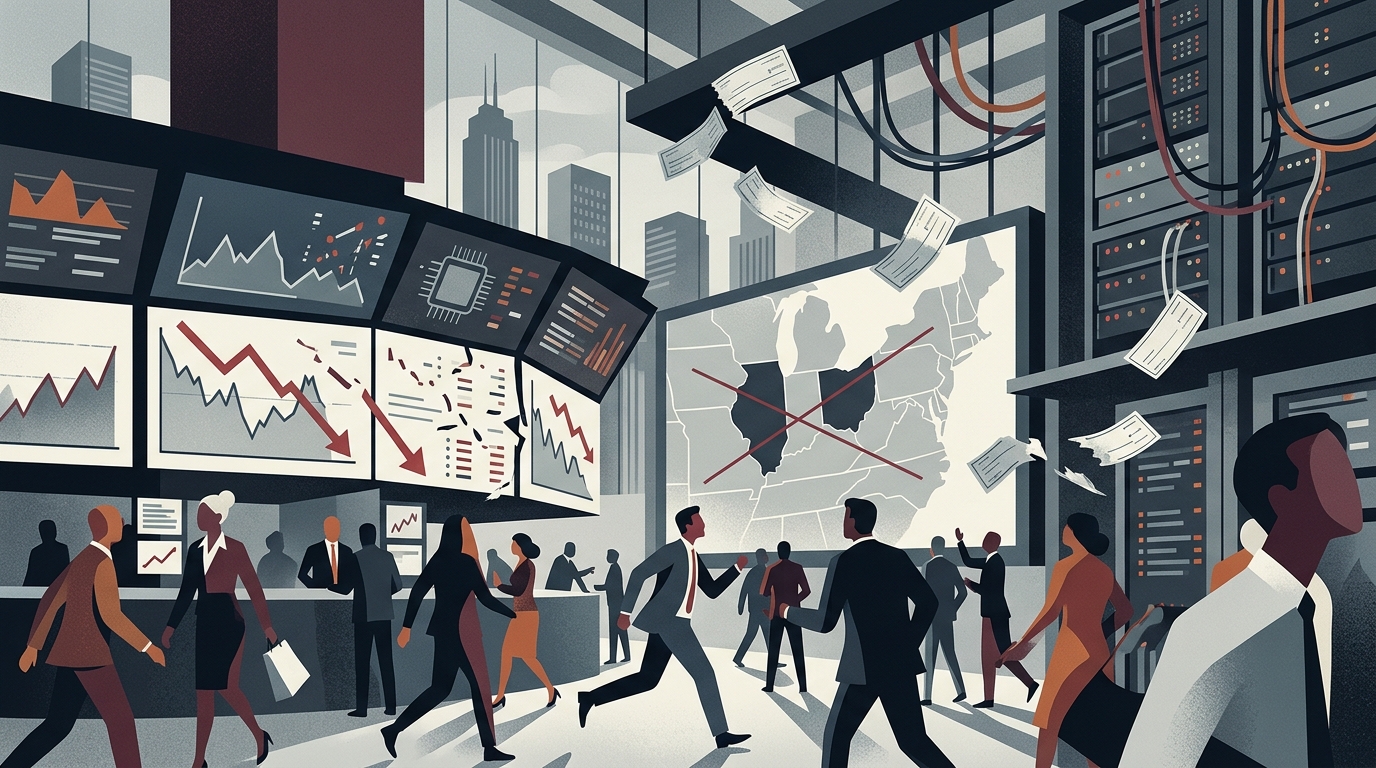
The primary concern for regulators, such as the European Central Bank and the International Monetary Fund, is systemic risk. Due to the high degree of interconnectedness among financial institutions, a successful attack on a systemically important bank or a critical infrastructure provider (such as SWIFT or cloud services) could trigger a domino effect. A loss of public confidence could lead to massive bank runs, driven not by financial insolvency, but by technological collapse.
The reliance on a handful of specialized AI and Cloud service providers creates a 'single point of failure.' If one of these tech giants is compromised, hundreds of banks worldwide could find themselves simultaneously exposed. This concentration of power and risk represents one of the most significant challenges for financial supervision in the 21st century.
The Economic Dimension: Costs and Competitiveness
Addressing these threats is not just a technical matter; it is profoundly economic. Banks are forced to invest billions in cybersecurity, a fact that impacts their profitability and, by extension, the cost of services for the end consumer. According to analysts, the global cost of cybercrime is projected to reach levels comparable to the GDP of major nations.
Simultaneously, there is the risk of a 'digital divide' between large banking groups with the resources to defend themselves and smaller institutions that remain vulnerable. In emerging markets, where infrastructure is often less fortified, the use of AI by criminal organizations can destabilize entire national economies, causing capital flight and currency devaluation.
Regulatory Response and the Path Forward
Governments and international bodies are racing to keep pace with these developments. The European Union's AI Act is a significant first step, but many argue that legislation moves at a snail's pace compared to the velocity of technological evolution. A new form of international cooperation is required, akin to arms control treaties, to set boundaries on the use of AI for offensive purposes.
The solution cannot rely solely on prohibition but must involve 'active defense.' Banks must utilize AI themselves to fortify their perimeters, creating systems that detect anomalies in real-time and self-heal. The war of the algorithms has already begun, and the stakes are nothing less than the integrity of global finance.