The global economic chessboard of 2026 is vibrating with the latest developments in transatlantic trade relations. The US administration's decision to proceed with the imposition of 25% tariffs on European vehicle imports is not merely a protectionist measure, but a move that threatens to completely reshape the industrial ecosystem of the Old Continent. While immediate attention is focused on automotive giants, analysts warn that the ripple effects will permeate every aspect of the European economy, from small and medium-sized component manufacturers to the labor market and investments in the green transition.
A Strike at the Heart of European Industry
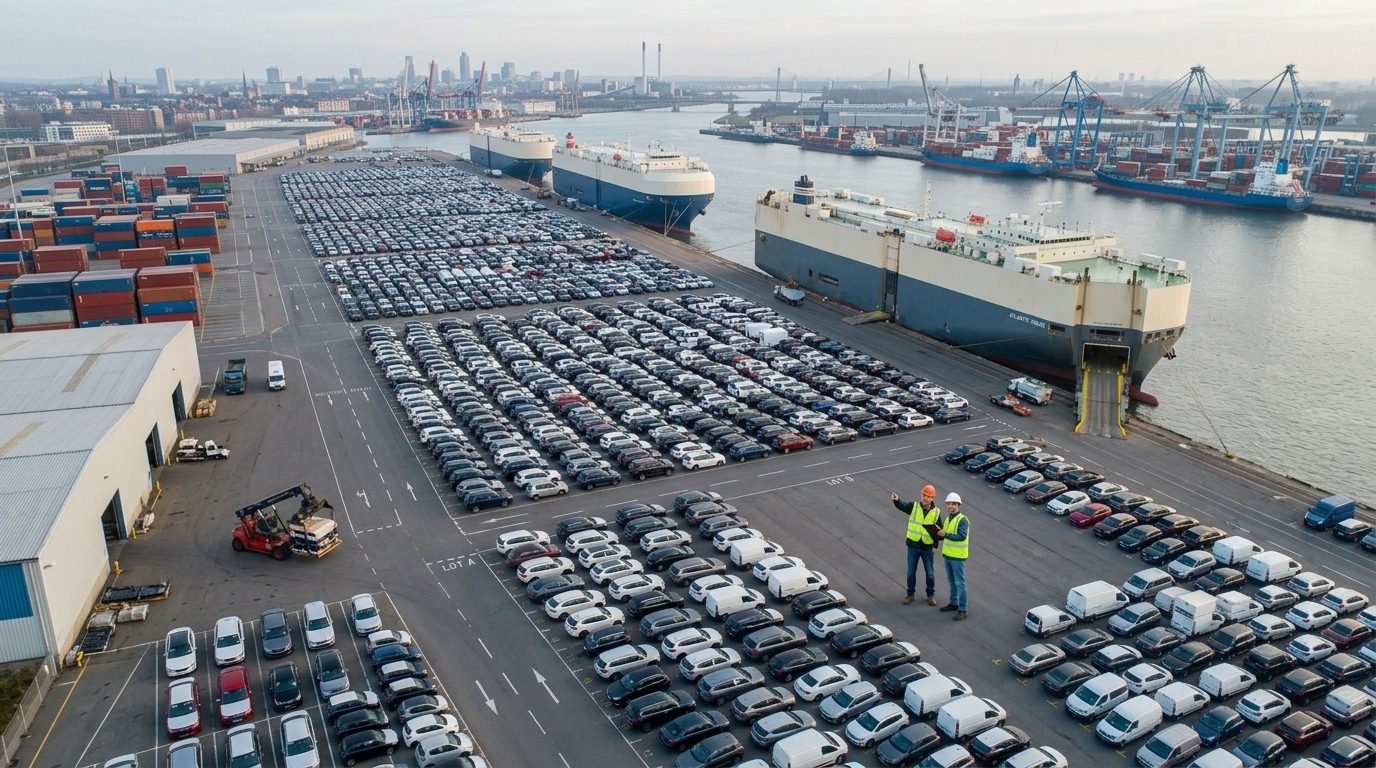
The automotive industry serves as the backbone of the European economy, directly and indirectly employing over 13 million people. The imposition of 25% tariffs acts as a "fiscal bomb" for Germany, which exports the majority of its production to the US. German companies such as Volkswagen, BMW, and Mercedes-Benz are already in a difficult transition phase towards electrification, facing intense competition from China. The new tariffs make European vehicles prohibitively expensive for the average American consumer, leading to an inevitable decline in sales and, consequently, production at European plants.
However, the damage is not limited to finished products. The "domino effect" begins with tier-one and tier-two suppliers. Thousands of SMEs in Italy, Poland, the Czech Republic, and Romania, which produce parts for German assembly lines, will face order cancellations. This interconnectedness means that a tariff imposed in Washington can lead to layoffs at a metal plant in Silesia or a car software company in Munich.
The Geopolitical Dimension and the EU Response
The European Union finds itself in an extremely difficult position. Responding with reciprocal tariffs on US products, such as technology and agricultural goods, risks escalating the situation into a full-scale trade war. Brussels must balance the need to protect its own interests with maintaining a functional relationship with its most important strategic partner. The concept of "Strategic Autonomy" is returning to the forefront, but with a sense of urgency that did not exist a few years ago.
Analysts point out that the real damage could be even greater due to the uncertainty caused in the markets. Investments in Research and Development (R&D) for AI in vehicles and new energy forms may "freeze" as companies attempt to preserve their liquidity. Furthermore, pressure on Europe to align with US sanctions against China complicates the landscape even further, as China remains a critical supplier of rare earths for electric vehicle batteries.
Artificial Intelligence as a Lifeline?
In this bleak environment, technology and automation are being promoted as the only tools that could mitigate losses. The adoption of advanced AI systems on the production line can reduce operating costs and increase productivity, allowing European companies to absorb part of the tariff costs without excessively increasing final prices. Nevertheless, technological upgrading requires capital, which is becoming increasingly scarce in an environment of high interest rates and trade barriers.
"We are not just facing a trade dispute, but a structural change in global trade, where geopolitics overrides economic logic," says a senior official from the European Central Bank.
In conclusion, US tariffs represent a severe blow to the European industrial heart. The real challenge for Europe in 2026 is not just dealing with immediate economic losses, but reshaping its strategy in a world where the old rules of free trade seem to have been permanently dismantled. The EU's ability to remain united and invest in innovation will determine whether it emerges from this crisis as a strong player or a weakened observer of developments.