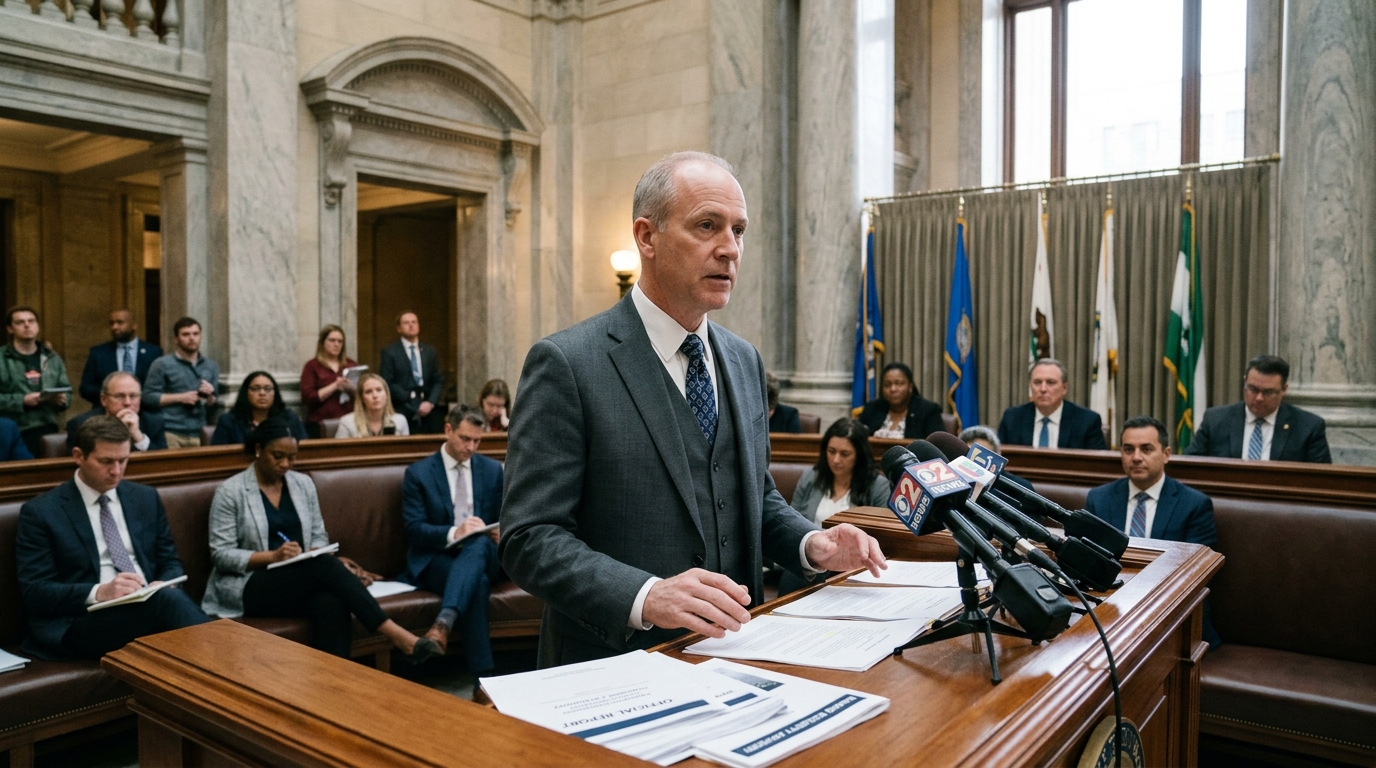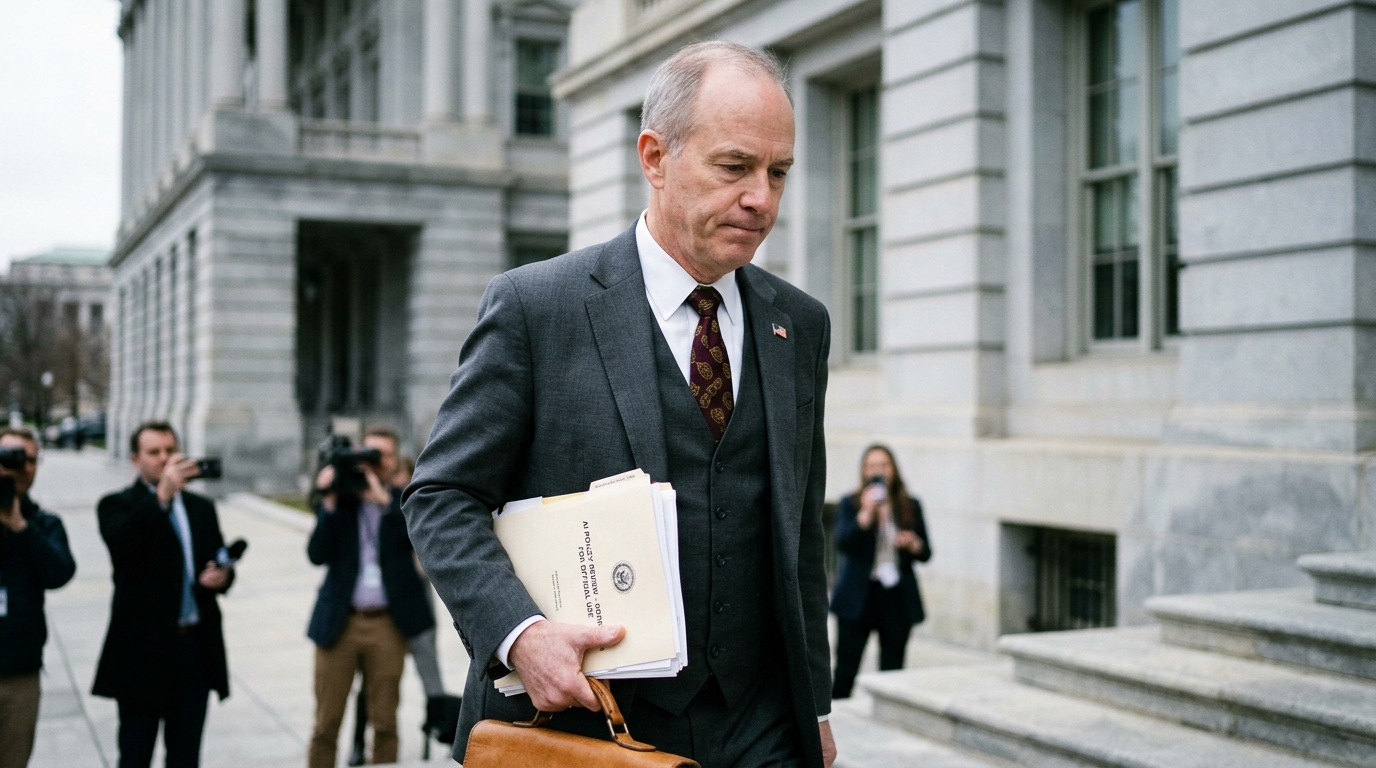
In a move destined to fundamentally reshape the global technological landscape, President Donald Trump has rescinded the landmark Executive Order on Artificial Intelligence established by the Biden administration. This decision, revealed through reporting by Politico, was not merely a political act of reversing a predecessor's legacy, but the culmination of an intense, strategic lobbying campaign by Silicon Valley elites, led primarily by venture capitalist David Sacks.
Executive Order 14110, once hailed as the most comprehensive framework for AI safety and governance, mandated rigorous reporting for companies developing models with massive computational thresholds. However, for the "accelerationist" wing of the tech industry, this order represented a "bureaucratic shackle" that threatened to cede innovation leadership to China while inadvertently favoring Big Tech incumbents over agile startups.
The 'Sacks Factor' and the Ideology of Permissionless Innovation
David Sacks, a prominent member of the "PayPal Mafia" and a close ally of Elon Musk, emerged as a pivotal figure in swaying the administration. According to sources close to the White House, Sacks argued that Biden’s mandates on AI "safety" and "equity" were effectively a backdoor for embedding "woke" ideology into algorithmic weights. His core argument centered on the concept of "regulatory capture"—the idea that giants like Microsoft and Google could easily absorb compliance costs, effectively pulling up the ladder behind them to stifle competition.
"Artificial Intelligence is the new frontier of American power. To encumber it with red tape is to gift the future to our adversaries," Sacks reportedly argued in high-level briefings.
This rhetoric resonated deeply with Trump’s broader deregulation agenda. By yanking the order, the administration is signaling a return to "permissionless innovation." The message is clear: the market, not the state, will dictate the trajectory of AI development. This implies fewer mandatory safety audits before release and a prioritized focus on deployment speed.
Safety vs. Innovation: The Existential Tug-of-War
The revocation has sent shockwaves through the AI safety community. Experts warn that removing federal oversight increases the risks associated with cybersecurity, bio-weapon synthesis via AI, and the proliferation of sophisticated deepfakes. The Biden order required companies to share "red-teaming" results—simulated attacks to find vulnerabilities—with the government. Now, that transparency is no longer a legal requirement, leaving safety protocols to the discretion of private boards.
Conversely, proponents of the move argue that open-source AI will be the primary beneficiary. By removing the threat of heavy-handed regulation, researchers and smaller enterprises can experiment with frontier-scale models without the looming shadow of federal litigation. This, they claim, will democratize the technology, breaking the oligopoly currently held by a handful of trillion-dollar corporations.
Geopolitical Implications: The Race Against Beijing
Trump’s decision is more than a domestic policy shift; it is a geopolitical gambit. In the ongoing tech cold war with Beijing, Washington is betting on unbridled innovation. The logic is straightforward: to outpace China, the U.S. must run faster, even if that means running with less protection. The administration views AI not as a risk to be managed, but as a weapon to be sharpened.
However, this regulatory vacuum in the U.S. may create a profound rift with the European Union, which recently implemented its own stringent AI Act. American firms might find themselves leading in raw capability but facing significant barriers to entry in the European market if their models fail to meet Brussels' safety standards. The central question of our era remains: is safety a hurdle to progress, or the very foundation upon which a stable future with super-intelligence must be built?