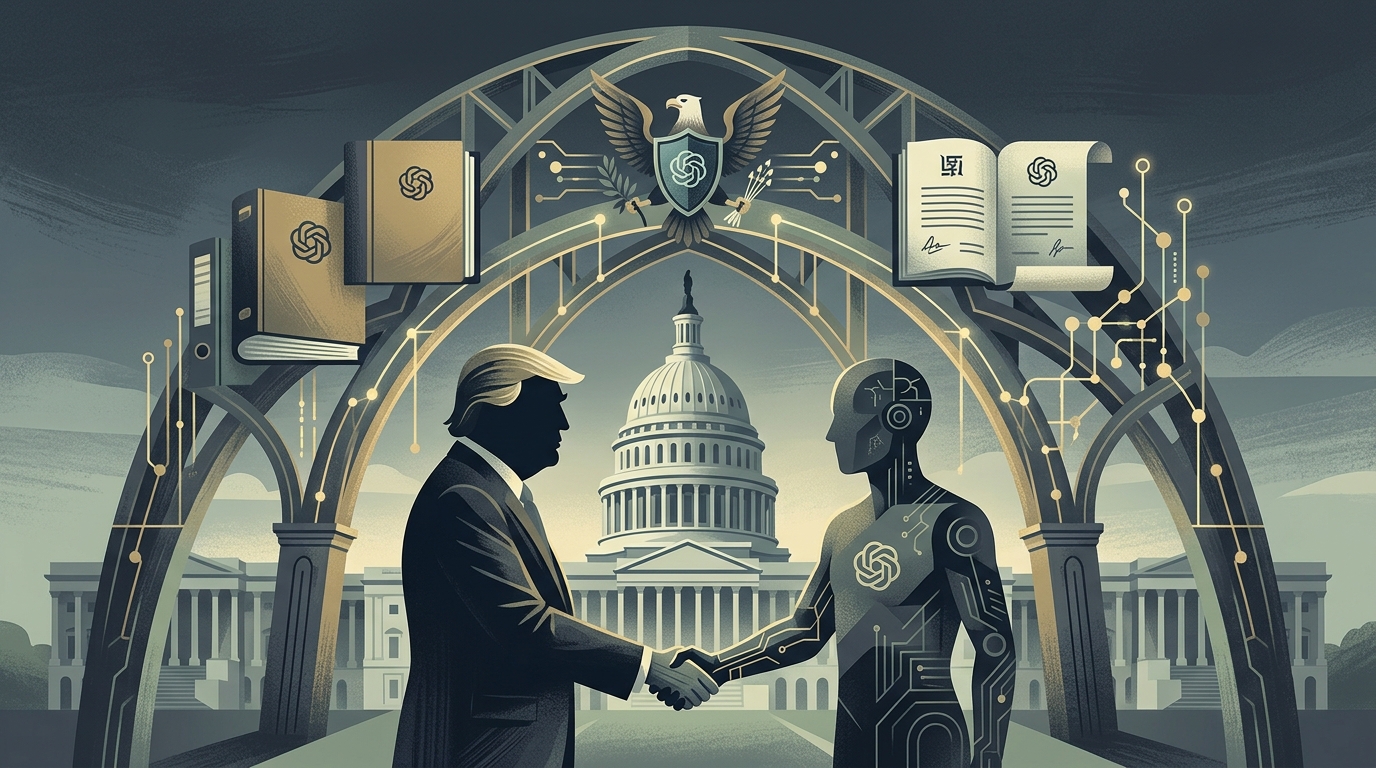
In a move that signals the dawn of a new era for the global economy, California Governor Gavin Newsom has signed a landmark executive order aimed at preparing the state's workforce for the inevitable disruptions caused by Artificial Intelligence (AI). As the world's fifth-largest economy and the home of Silicon Valley, California is positioning itself as a global laboratory for managing the transition to an automated society.
The Action Plan: Education and Anticipation
The executive order is not merely a statement of intent; it is a strategic roadmap with specific mandates. At its core is the creation of comprehensive retraining programs for the state’s hundreds of thousands of public employees, alongside deep collaborations with academic giants like the University of California (UC) and California State University (CSU). The objective is to foster an environment where AI does not replace human workers but augments their capabilities.
Under the order, state agencies are required to conduct rigorous assessments to identify sectors at the highest risk of displacement. Administrative roles, customer service, and entry-level analytical positions are currently in the crosshairs of automation. However, the Newsom administration argues that proactive intervention can transform this threat into an opportunity, paving the way for new job categories that are currently unimaginable.
The Social Dimension of Automation
California faces a dual challenge. On one hand, it must maintain its competitive edge in innovation, continuing to attract venture capital and top-tier talent. On the other, it has a moral and political obligation to protect its social fabric from potential spikes in unemployment and wealth inequality. The order places a significant emphasis on the "ethical use" of AI, ensuring that algorithms deployed in the public sector are transparent, accountable, and free from systemic bias.
- Training for 200,000+ state employees in AI literacy and ethics.
- Establishment of "Innovation Hubs" for private sector workforce reskilling.
- Strict procurement guidelines for state-acquired AI technologies.
- Collaborative frameworks with labor unions to define new workplace standards.
This initiative arrives at a time when the debate over Universal Basic Income (UBI) is resurfacing in policy circles. While Newsom’s order stops short of such radical measures, it lays the groundwork for the defining question of the next decade: How will the wealth generated by autonomous systems be distributed across society?
California as a Global Paradigm
The implications of this executive order extend far beyond the borders of the United States. If California successfully balances technological acceleration with labor stability, it will provide a blueprint for the European Union and the emerging economies of Asia. Failure, however, could exacerbate the divide between the tech elite and the broader populace, potentially triggering social unrest reminiscent of the early Industrial Revolution.
"We cannot stop progress, but we can and must direct it toward the benefit of the many, not just the few," Newsom stated during the signing ceremony.
In conclusion, California’s initiative is a formal recognition that the era of laissez-faire technological growth is over. The state is re-emerging as a regulator and protector, attempting to get ahead of the curve before the curve becomes a cliff. For the workforce, the message is clear: lifelong learning is no longer an optional pursuit; it is a prerequisite for survival in the AI-driven economy.