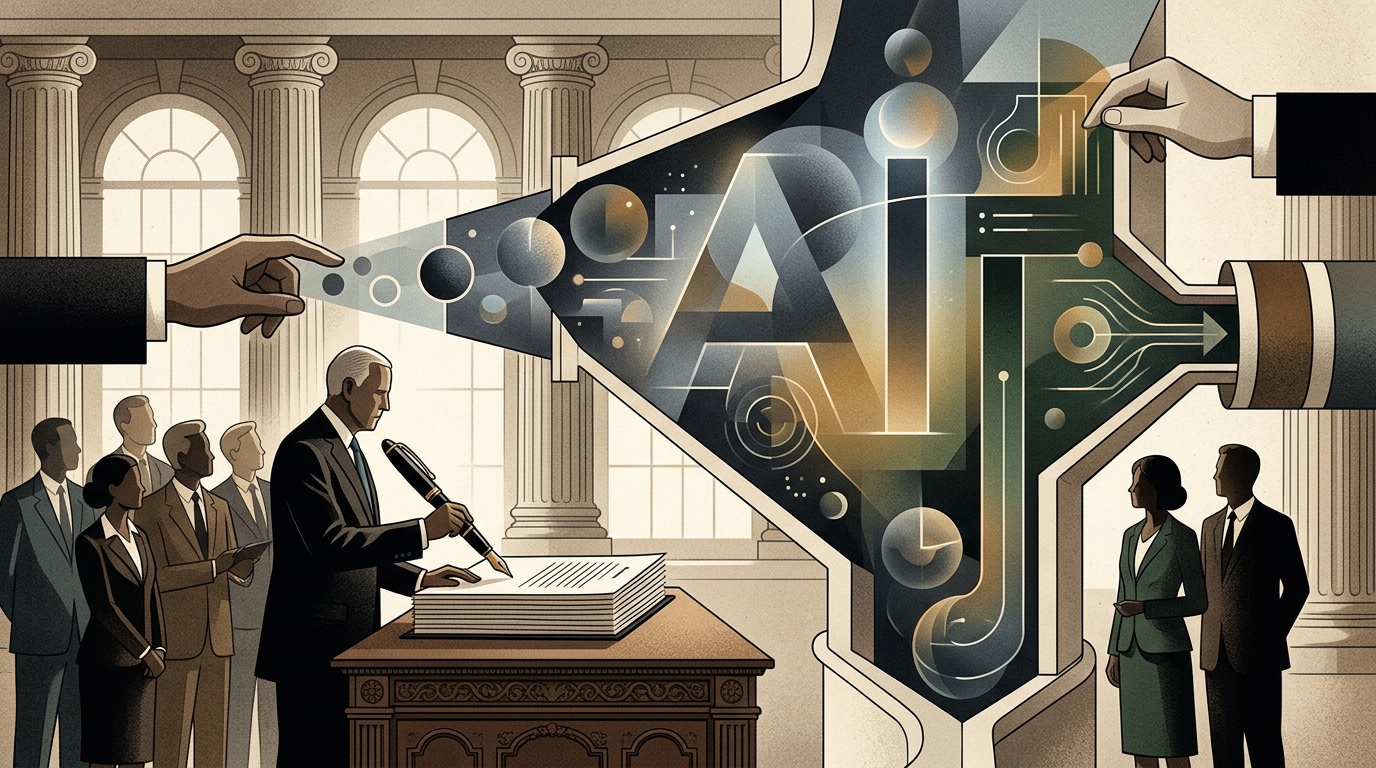
In a move poised to fundamentally restructure the American technological landscape, President Donald Trump has signed an executive order requiring artificial intelligence (AI) companies to submit their products for government review prior to public release. This decision marks a significant departure from Silicon Valley’s traditional “move fast and break things” ethos, positioning the state as a primary arbiter of innovation.
National Security and the 'Cultural Neutrality' Mandate
The executive order cites two primary justifications for this intervention: national security and the necessity for “ideological neutrality.” According to White House sources, the administration is concerned that large language models (LLMs) could be weaponized for cyberattacks or biological warfare if left unchecked. However, there is a distinct political dimension at play. President Trump has frequently accused tech firms of embedding “leftist biases” into their algorithms.
The new framework requires developers to demonstrate that their models are not “biased against American values.” This creates a new battlefield of interpretation, as the definition of such values remains subjective and politically charged. Companies will now be mandated to provide comprehensive technical documentation and source code access to a newly established government oversight committee.
Silicon Valley’s Fractured Response
The reaction from the tech sector has been swift and divided. While some industry giants, already equipped with massive compliance departments, view the order as a way to entrench their dominance by raising entry barriers for smaller competitors, startups are warning of an innovation stranglehold. “Bureaucracy is the death of velocity,” stated a senior AI executive in San Francisco.
- Mandatory submission for models exceeding specific computational thresholds.
- Screening for dual-use capabilities (civilian and military).
- Assessment of “cultural alignment” with national priorities.
- Strict penalties for firms attempting to bypass the review process.
The Geopolitical Race Against China
A central argument from the administration is that this oversight is essential to ensure American technology does not leak to foreign adversaries, specifically China. The order includes provisions restricting American scientists from collaborating with foreign institutions on critical AI research. Washington appears to be adopting a “digital fortress” mentality, asserting that protecting intellectual property is as vital as the development process itself.
“We cannot allow artificial intelligence to become a weapon in the hands of those who seek to dismantle our way of life,” the President remarked during the signing ceremony.
However, analysts warn that if the review process becomes overly sluggish or politicized, the U.S. risks losing its current competitive edge. China, despite its own internal restrictions, is moving rapidly to integrate AI into its industrial and military sectors. Any delay in the American ecosystem could prove catastrophic over the coming decade.
The Future of Free Speech in AI
Ultimately, the order raises profound questions regarding the First Amendment. If the government possesses the power to reject an AI model because its outputs are deemed “inappropriate,” the U.S. enters an era of state-sponsored algorithmic censorship. Legal challenges are inevitable, as civil liberty organizations prepare for a protracted battle over whether software code constitutes a protected form of speech.