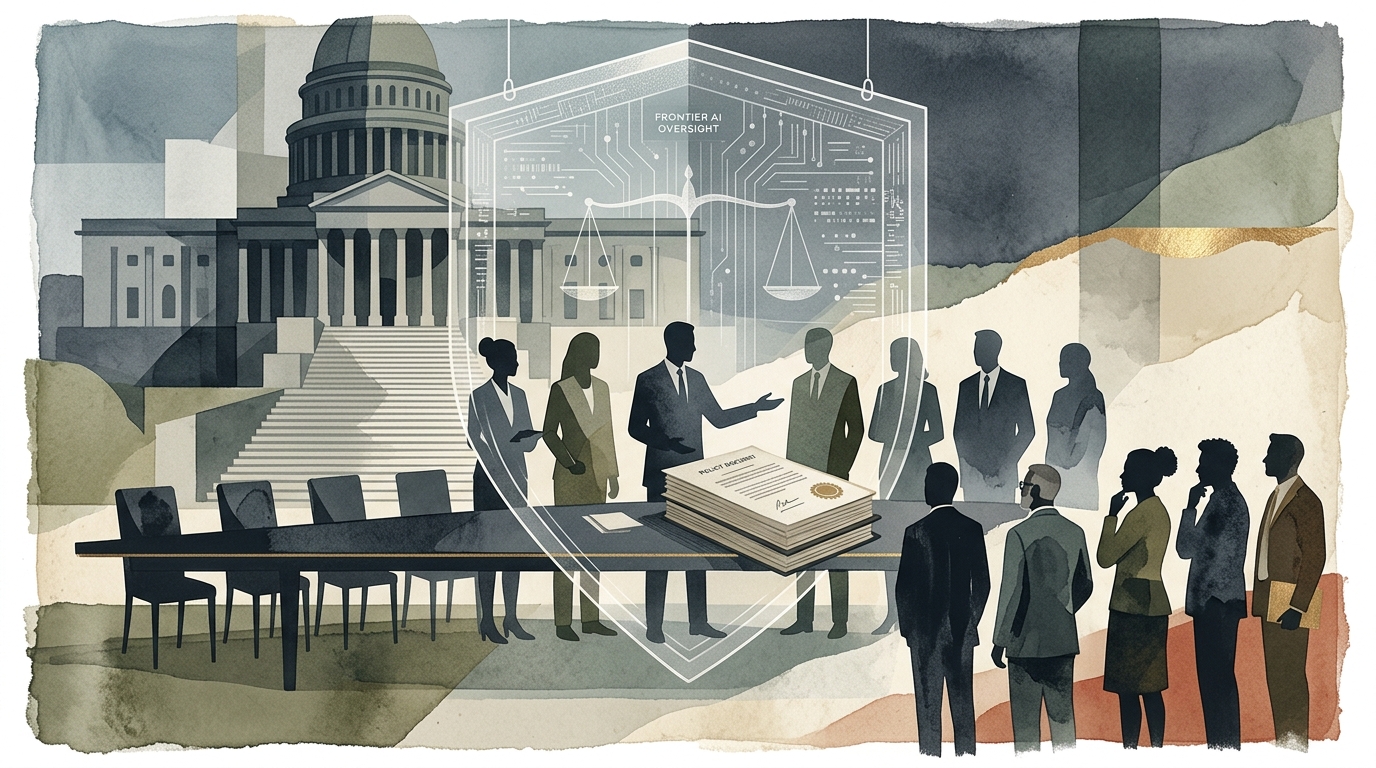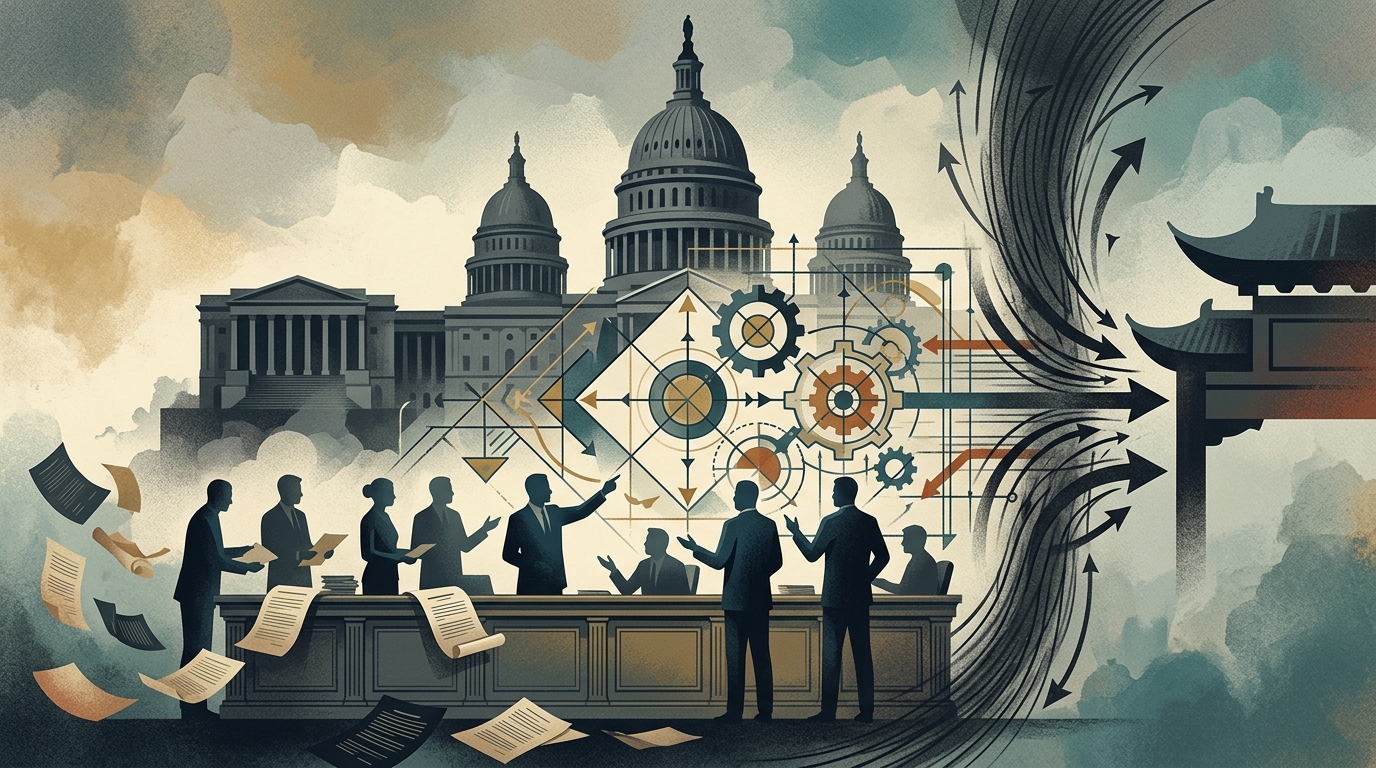
As we navigate the first half of 2026, the global geopolitical stage is dominated by a question that will define the 21st century: Who will control the "brain" of the next industrial revolution? A recent report by the Council on Foreign Relations (CFR) provides a roadmap for the Trump administration, suggesting a delicate balance between hard deterrence and necessary diplomacy. The "Targeted Dialogue, Maximum Pressure" approach is not merely a negotiating tactic, but an existential necessity in a world where Artificial Intelligence (AI) is transforming economic power and military supremacy.
The Architecture of Maximum Pressure
The "Maximum Pressure" strategy focuses on severing China's access to the resources required to train frontier models. This includes not only advanced semiconductors from Nvidia and AMD but also the photolithography equipment that enables their manufacture. The Trump administration is called upon to strengthen export controls, closing loopholes through third countries in Southeast Asia and the Middle East.
According to analysts, the pressure must also extend to the realm of talent. The leakage of expertise from American research labs to Chinese state entities is a red line. The proposal includes stricter visa controls for researchers in sensitive AI fields, a move that draws criticism from the academic world but is deemed essential for national security. The logic is simple: America cannot subsidize the rise of a rival seeking to overturn the liberal international order.
Targeted Dialogue: The Safety Valve
Despite the hardline stance, the CFR report emphasizes that complete silence between the two superpowers is dangerous. "Targeted Dialogue" should focus on three critical areas: nuclear command and control, biological weapons safety, and the avoidance of accidental escalation. There is a tacit admission that if AI spirals out of control, the consequences will be catastrophic for both sides, regardless of ideology.
- Nuclear Stability: Agreement to maintain "human-in-the-loop" control over decisions regarding the use of nuclear weapons.
- Biological Risks: Cooperation to limit the ability of AI models to design new pathogens.
- Algorithmic Transparency: Creating communication channels to report "hallucinations" or malfunctions in military AI systems that could be mistaken for aggressive acts.
This dialogue is not about friendship or cooperation; it is about risk management. It is a form of "Cold War diplomacy" adapted for the digital age, where red lines must be clear to avoid a total war resulting from an algorithm's miscalculation.
The Implementation Challenge
Implementing this dual strategy carries significant challenges. China is not standing idle. Beijing is investing billions in domestic chip production and developing alternative architectures that do not rely on Western technology. Furthermore, pressuring US allies—such as the Netherlands and Japan—to follow American sanctions tests the cohesion of Western alliances.
"Artificial Intelligence is the new fissile material. Whoever controls it, controls the future of global power," the report states.
For Trump, the challenge will be to wield US power without triggering a premature decoupling that would harm the American economy. AI is not an isolated product but a general-purpose technology that permeates every industry. The success of his strategy will be judged by his ability to convince the private sector—Silicon Valley—that national security objectives outweigh short-term profits from the Chinese market.
Conclusion
The CFR's proposal for "Targeted Dialogue and Maximum Pressure" is a realistic acknowledgment of the new reality. In the competition for AI, there is no room for complacency. America must lead technologically, protect its assets with vigor, but also keep the door of dialogue open to prevent global catastrophe. It is a high-stakes game where strategic acumen will be just as important as computational power.