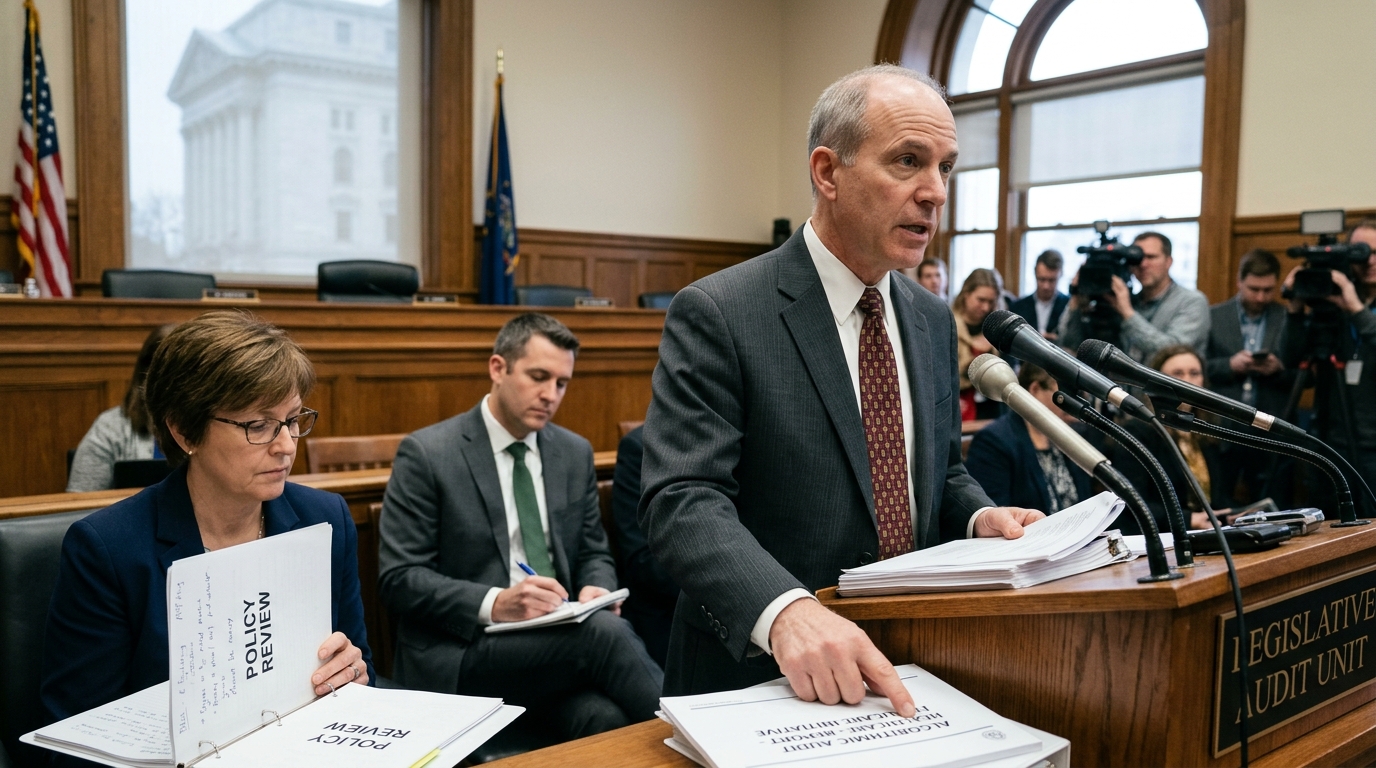
In a move that signals a radical restructuring of state oversight mechanisms, the Trump administration has announced an aggressive expansion of Artificial Intelligence (AI) to detect and combat fraud within the healthcare system. The initiative, primarily focused on Medicare and Medicaid programs, aims to recover billions of dollars lost annually to fraudulent billing, double-charging, and phantom medical procedures.
The Shift from Reaction to Prevention
Historically, healthcare fraud enforcement relied on a "Pay and Chase" model. Authorities would pay provider claims and subsequently attempt to identify irregularities through retrospective audits. Under the new strategy, the Department of Health and Human Services (HHS) is shifting the burden to real-time data analysis. These new AI systems do not merely examine individual transactions; they analyze entire networks of relationships between doctors, pharmacies, and patients, identifying patterns that would be invisible to the human eye.
According to government officials, the use of neural networks allows for the creation of "digital fingerprints" of legitimate medical practice. Any deviation from these norms—such as a physician billing for 26 hours of work in a single day or a pharmacy filling prescriptions for patients living hundreds of miles away—immediately triggers an alert, blocking payment before the funds are even disbursed.
The Politics of Efficiency and Its Discontents
This initiative fits into the administration’s broader narrative of a "smaller but smarter" government. The use of AI is presented as a tool that reduces the need for armies of bureaucratic auditors while simultaneously increasing federal revenue through cost savings. However, this approach is not without its critics. Medical associations and patient advocacy groups are raising concerns about the potential for "false positives."
- Risk of Automated Denials: There is a fear that legitimate but complex medical cases could be flagged by the algorithm, causing significant delays in patient care.
- Algorithmic Bias: If the AI’s training data contains biases, the system might disproportionately target providers in underserved or marginalized areas.
- Lack of Transparency: "Black box" algorithms make it difficult to appeal a decision, as providers often remain in the dark regarding the specific criteria for their rejection.
Technological Supremacy as a Means of Control
This expansion is not just about software; it involves deep collaboration with Silicon Valley giants. The administration appears ready to leverage private-sector computational power to fortify the public treasury. This public-private partnership raises additional questions regarding patient data privacy, as massive volumes of sensitive medical information now feed into government AI models.
"We aren’t just chasing thieves; we are redesigning the net itself," stated a senior White House technology advisor. "Artificial Intelligence is the ultimate auditor—one that never sleeps and cannot be bribed."
At a time when healthcare costs are a central political issue in the U.S., the success or failure of this algorithmic experiment will determine not only the fiscal stability of social safety net programs but also the future of the state-citizen relationship in the digital age. If the system proves effective without sacrificing the quality of care, it could become the blueprint for every government agency worldwide.