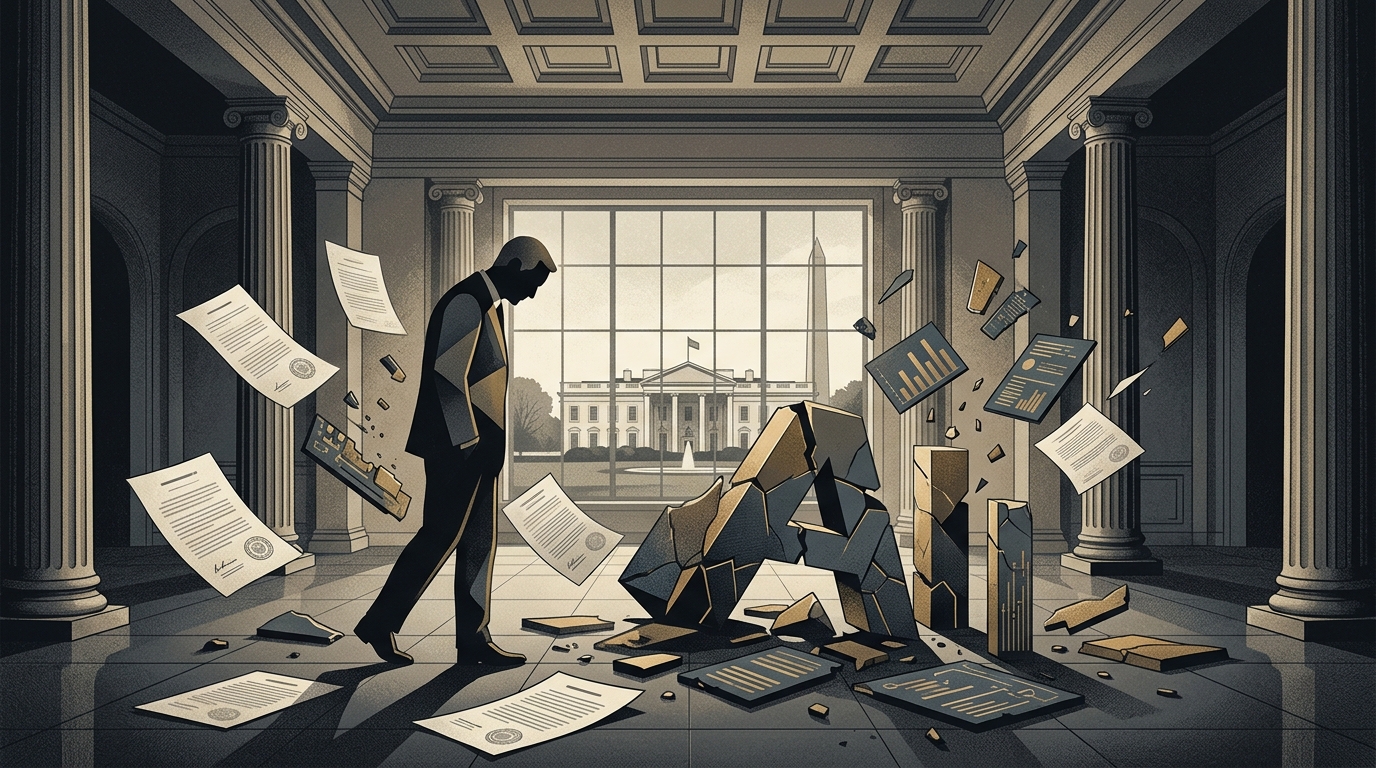
The history of Silicon Valley is replete with "disruptors" who believed that the laws of code and the market could supersede the rules of governance. However, the case of David Sacks within the Trump administration has become a monumental example of what happens when technological arrogance meets the immovable wall of Washington bureaucracy. Sacks, a member of the notorious "PayPal Mafia" and a close ally of Elon Musk, entered the White House with a promise to "burn down" the regulatory framework for Artificial Intelligence. A few months later, his departure is described by many as a "crash and burn" that leaves behind more questions than answers.
A Clash of Worlds: Tech Bros vs. The Deep State
The trouble began on day one. Sacks attempted to apply the "move fast and break things" model to an organization designed to move slowly and ensure institutional continuity. His agenda was clear: the abolition of stringent AI model reviews that had been established for national security reasons. Sacks argued that these reviews constituted "regulatory capture" by major players like OpenAI and Google, hindering smaller developers and open-source software.
However, his approach ignored a fundamental reality of Washington: national security. When Sacks tried to bypass intelligence agencies and the Department of Commerce, he faced an alliance of career bureaucrats and military analysts. To them, AI is not just a tool for profitability, but a weapon. The idea of releasing powerful models without state oversight was viewed by the "deep state" as national suicide, especially in the context of the systemic competition with China.
The Bone of Contention: Model Review
The central battle was fought over "Model Review"—the process where the government examines the capabilities of an AI model before its mass release. Sacks viewed this process as a form of censorship and a barrier to innovation. According to sources close to him, he believed the White House should trust the market. This stance put him in direct conflict with national security advisors, who presented classified scenarios on how unregulated AI could be used for cyberattacks or the creation of biological weapons.
Sacks’ failure to grasp the weight of these concerns led to his isolation. Instead of building bridges, he chose the tactic of public confrontation via social media and podcasts, which in Washington is seen as a sign of weakness and a lack of gravitas. As noted by The Verge's Regulator column, Sacks treated the White House as if it were a startup board meeting where the loudest voice wins.
Political Fallout and the Path Forward
Sacks’ fall is not merely personal. It reflects the failure of a specific school of Silicon Valley thought that believed financial power automatically translates into political leverage. The Trump administration, despite its anti-bureaucracy rhetoric, remains a machine that requires delicate handling and strategic alliances. Sacks failed to win over either the traditional Republicans concerned about China or the technocrats seeking clear rules of the road.
The result is that U.S. AI policy remains in a state of limbo. The tech giants Sacks intended to fight ultimately emerge as winners, as the absence of a coherent alternative proposal reinforces the status quo. The Silicon Valley version of "House of Cards" in Washington ended before the first episode could even air, leaving a bitter lesson on how technology and politics can—or cannot—coexist.
- Silicon Valley hubris clashed fatally with national security structures.
- Open-source AI lost a powerful but volatile advocate in the administration.
- National security remains Washington's top priority over pure innovation.
- Sacks’ social-media-first strategy failed to resonate in the halls of power.