In the modern digital landscape, the infrastructure supporting our banks, hospitals, and governments is not forged from steel, but from lines of code. A vast majority of this code is "open source"—accessible to all and built upon voluntary contributions. However, this openness, once hailed as the internet's greatest strength, is rapidly becoming its Achilles' heel. The recent spree by the hacker group known as TeamPCP, which has poisoned hundreds of GitHub repositories with malicious software, serves as a warning that can no longer be ignored.
The Anatomy of a Silent Invasion
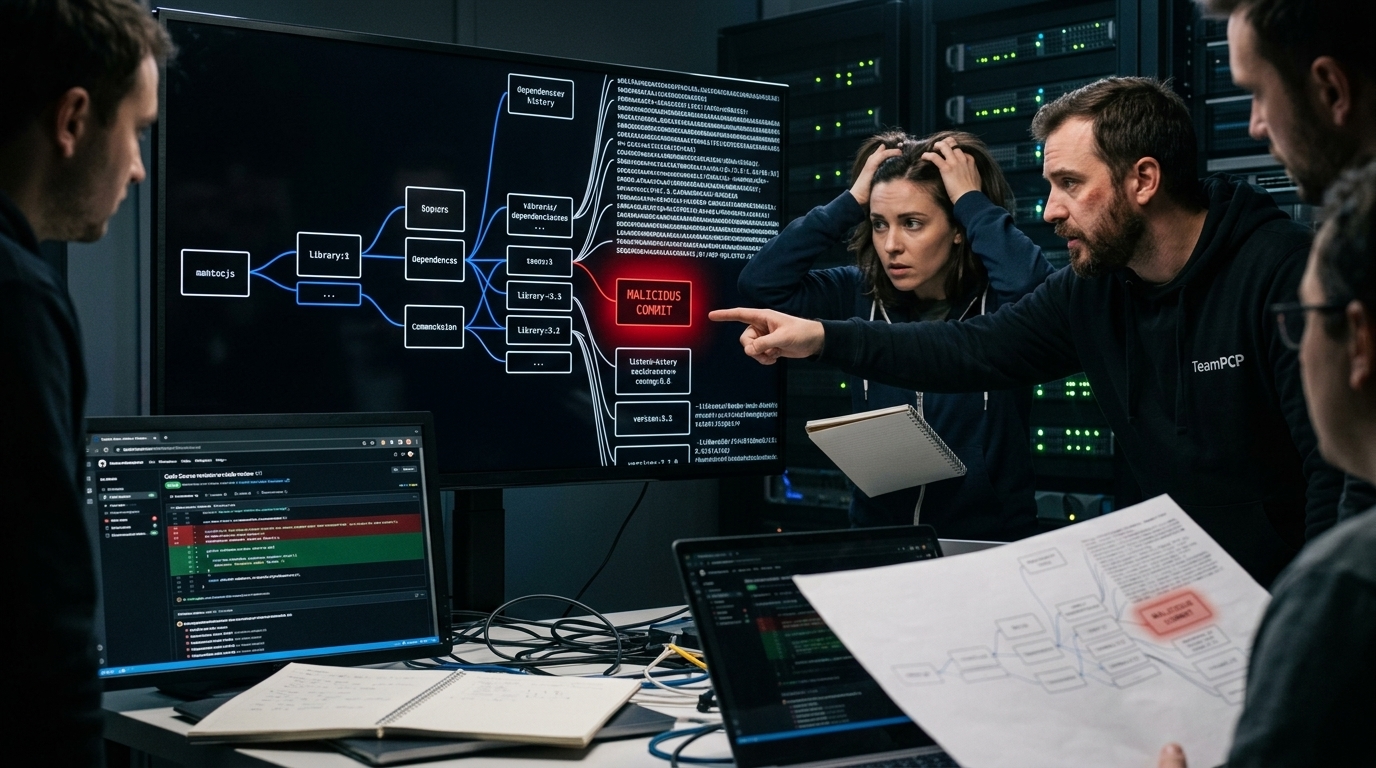
TeamPCP is not your typical cybercriminal gang seeking immediate financial gain through ransomware. Their strategy is far more insidious: software supply chain poisoning. Instead of attacking a large corporation directly, they inject malicious code into small, seemingly innocuous software libraries upon which thousands of other applications depend. When a developer downloads an update for a tool they use, they may be unwittingly introducing a Trojan horse into their corporate network.
The scale of this assault is unprecedented. Reports indicate that TeamPCP has automated the creation of thousands of fake accounts and repositories, utilizing techniques such as "typosquatting"—creating packages with names nearly identical to popular tools (e.g., "requestss" instead of "requests"). The ease with which this malicious code infiltrates professional environments highlights a structural failure of code-hosting platforms, like Microsoft’s GitHub, to effectively police their content.
The Policy of Responsibility and the Regulatory Vacuum
This issue transcends technical boundaries and enters the realm of global policy. To date, open-source creators and hosting platforms have enjoyed a form of immunity, based on the principle that software is provided "as is," without warranties. However, as 2026 finds the global economy fully dependent on these tools, the pressure for legislative intervention is mounting. The European Union, through the Cyber Resilience Act, has already begun setting stricter standards, but applying them to the chaotic world of open source remains a significant challenge.
- Who bears the liability when a free library causes millions in damages?
- Should tech giants be mandated to audit every line of code they host?
- How can innovation be protected without being stifled by security bureaucracy?
TeamPCP exploits precisely this accountability gap. In a world where "time-to-market" is the holy grail of business, security checks are often bypassed. Government policy must now shift from merely providing guidelines to enforcing specific "code hygiene" standards for any organization managing critical infrastructure.
AI: A Double-Edged Sword in Cyber-Warfare
In the current year, Artificial Intelligence plays a pivotal role in this conflict. TeamPCP appears to be leveraging AI to generate convincing documentation and produce code that evades traditional antivirus signatures. Conversely, the defensive community is deploying machine learning models to identify anomalies in software package behavior. Yet, the asymmetry remains: an attacker only needs to succeed once, while the defender must be effective everywhere, all the time.
"Trust is the currency of open source, and TeamPCP is attempting to trigger an inflation of unreliability that could bankrupt our digital future," notes a prominent cybersecurity analyst.
The conclusion is clear: the era of innocence for open-source software has ended. Countering groups like TeamPCP requires a radical rethink of how we perceive digital sovereignty and security. This is no longer just a technical problem for developers; it is a fundamental challenge for public policy and national security in the 21st century.