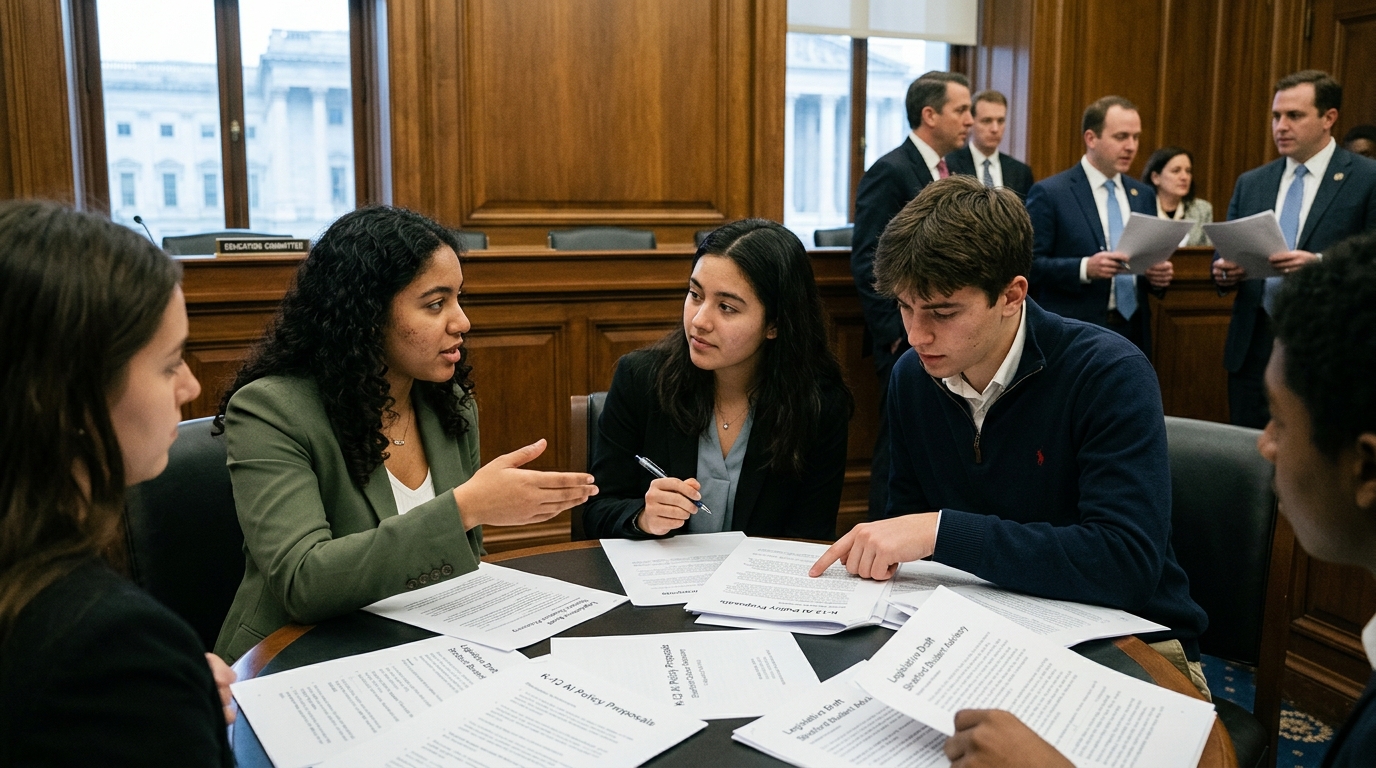
In an era where Artificial Intelligence (AI) is rapidly reshaping every facet of human endeavor, education finds itself at the epicenter of a profound transformation. The recent selection of students from Stratford to assist in shaping the national K-12 AI policy in the United States is more than just a local success story; it is a milestone in the democratic governance of technology. For the first time, those most affected by algorithmic shifts in the classroom—the students themselves—are being invited to the decision-making table.
The Voice of Digital Natives
Involving students in policy-making is a long-overdue recognition that the lived experience of "digital natives" is indispensable. The Stratford students are not being called upon as mere observers but as consultants who understand how tools like ChatGPT, Claude, and generative image engines are already integrated into the fabric of school life. Their insights can illuminate blind spots that policymakers and academics often miss, such as the thin line between AI-assisted learning and academic dishonesty, or how access to these tools might exacerbate the digital divide between privileged and underprivileged students.
- Ethical Use and Academic Integrity: Redefining learning when information is instantaneous.
- Equity in Access: Ensuring AI does not become a luxury for the few.
- Digital Literacy: The urgent need for critical thinking in the face of algorithmic output.
Beyond Classroom Walls: A National Imperative
This initiative comes at a critical juncture. The U.S. Department of Education and various national organizations are struggling to keep pace with the velocity of technological advancement. Existing structures often react with bans, which have largely proven ineffective and short-sighted. The student-inclusive approach proposes a model of "collaborative governance." Instead of top-down mandates, it seeks to create a framework that fosters both responsibility and innovation.
"We cannot design the future of education without those who will actually live it," say educational policy analysts. "The Stratford students represent a generation that does not fear AI, but demands to use it with transparency and fairness."
The national K-12 AI policy is expected to lay the groundwork for how schools handle student data privacy, how teachers are trained for an augmented workforce, and how student progress is evaluated in a world where traditional essays and multiple-choice tests are becoming obsolete. Youth participation ensures that these policies are grounded in reality, avoiding the technological determinism or alarmism that often characterizes adult-led discourse.
Challenges and the Road Ahead
Of course, the challenges are immense. AI carries inherent risks, including the amplification of biases and the spread of misinformation. Students involved in policy formation must themselves be educated in data ethics and algorithmic justice to provide meaningful input. Furthermore, there is a risk that their participation could become a form of "tokenism." To be truly impactful, their recommendations must be woven into legislative documents that hold school districts accountable on a national scale.
Ultimately, the selection of the Stratford students is a victory for educational democracy. It highlights that technology is not something that simply "happens" to us, but something we can and must shape collectively. As AI continues to evolve, the ability of students to engage in public discourse and policy-making will be the most vital skill they can ever acquire, transcending the technical knowledge of the tools themselves.