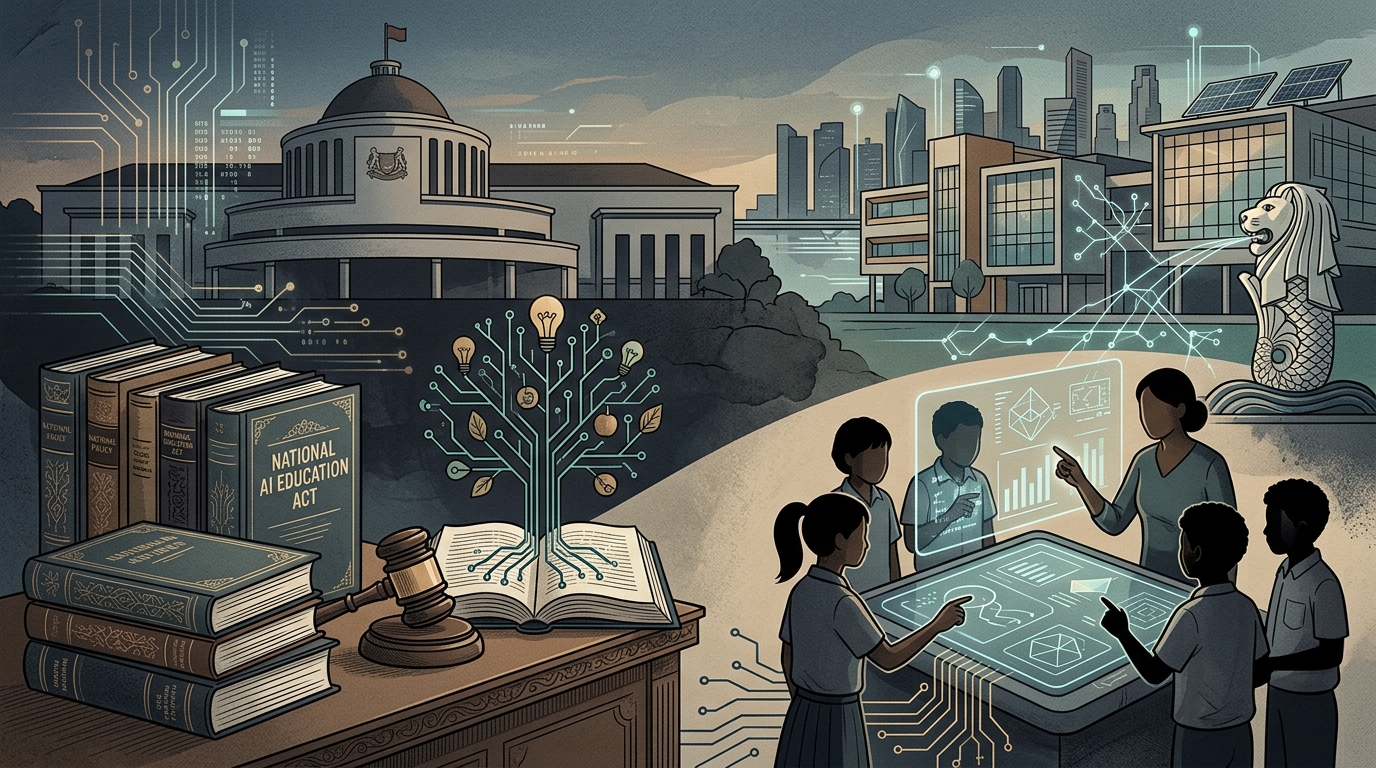
In a move set to radically alter the global educational landscape, Singapore, Asia's wealthiest nation by GDP per capita, has announced that starting in 2027, Artificial Intelligence (AI) will no longer be an elective or an extracurricular activity, but an integral part of the mandatory school curriculum. This decision is part of the National AI Strategy 2.0 (NAIS 2.0), which aims to position the city-state as a global leader in innovation and digital governance.
A Strategy for Survival Through Technology
For Singapore, investing in education has never been merely a social service; it is a tool for national survival. Devoid of natural resources, the nation relies exclusively on its human capital. Integrating AI into schools starting in 2027 is the response to the challenges of the Fourth Industrial Revolution. The curriculum will not be limited to teaching code. Instead, it will focus on "algorithmic thinking," the ethical use of data, and the ability of students to collaborate with intelligent systems to solve complex problems.
Singapore's Ministry of Education (MOE) argues that understanding AI is now as essential as reading and writing. Students will be taught how to evaluate the reliability of AI-generated information, how to use Generative AI tools responsibly, and how to comprehend the social implications of automation. This holistic approach aims to create a generation that is not just a consumer of technology, but a creator and a critical analyst of it.
Teachers and Infrastructure: The Great Challenge
Implementing such an ambitious plan requires an unprecedented mobilization of resources. The Singaporean government has already launched mass retraining programs for thousands of teachers. The goal is for educators not to feel threatened by AI, but to use it as an "assistant" in the classroom, allowing them to focus on personalized teaching and the emotional support of students.
- Creation of digital learning platforms that adapt to each student's pace.
- Introduction of AI labs in every school unit by 2026.
- Partnerships with tech giants like Google and Microsoft to provide expertise.
- Development of a national assessment framework for AI skills.
Simultaneously, the country is investing billions of dollars in upgrading connectivity infrastructure and purchasing computing power, ensuring that every student, regardless of economic status, has access to the most advanced tools. This model of "democratizing technology" is key to maintaining social cohesion in an era of rapid change.
Geopolitical and Economic Implications
Singapore's move sends a clear message to the international community: the battle for 21st-century dominance will be fought in the classrooms. While the West often finds itself bogged down in debates over the risks and regulations of AI, Asian economies are choosing the path of rapid adoption and educational adaptation. Singapore realizes that AI will reshape the global labor market, eliminating traditional roles and creating new ones that require high specialization.
"We cannot stop the wave of technological progress. But we can teach our children how to swim in this new environment with safety and confidence," a government official recently stated.
The success of this endeavor will be judged over time, but early indications suggest that Singapore is creating a blueprint that other developed nations will soon be forced to follow. The transition from traditional rote learning to critical interaction with data is now the only way forward for any society wishing to remain competitive and prosperous.