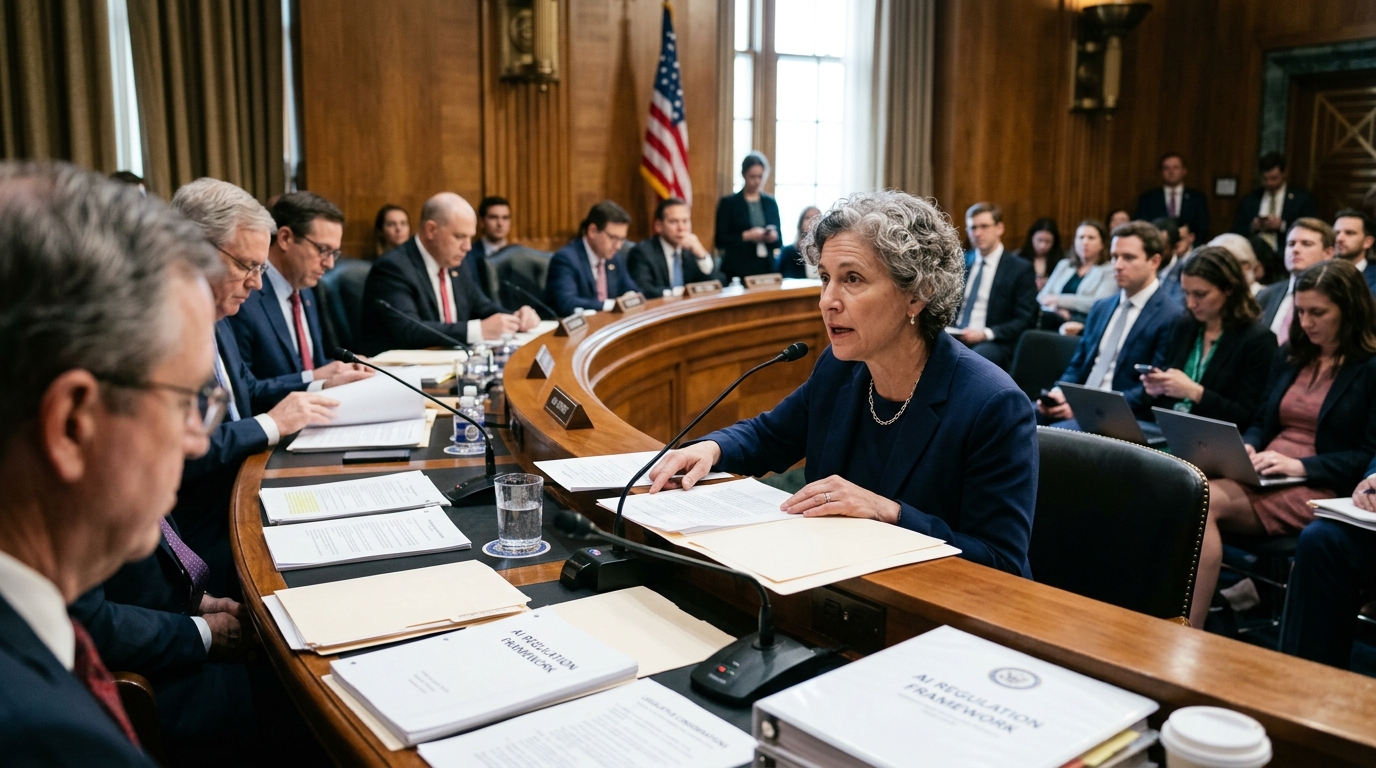
As we navigate the spring of 2026, the global community finds itself in a state of perpetual digital transformation. Artificial Intelligence (AI) is no longer a futuristic promise; it is a present, ubiquitous reality. In the United States, the debate has shifted from whether regulation is necessary to what form it should take and who should hold the reins of oversight. What began as local discourse in outlets like the Baytown Sun has escalated into a national confrontation touching the foundations of democracy, economics, and national security.
The Paradox of Innovation and the Strategy of Safety
The fundamental challenge for the federal government remains the delicate balance between fostering innovation and protecting the public. On one side, Silicon Valley's tech giants warn that excessive restrictions could cede leadership to geopolitical rivals, most notably China. Conversely, civil rights organizations and ethics experts argue that the unchecked deployment of 'black box' algorithms threatens privacy, amplifies societal biases, and could lead to unpredictable consequences for the labor market.
To date, the US approach has largely relied on voluntary commitments and the 2023 Executive Order. However, by 2026, the demand for something more permanent has reached a fever pitch. The need for a federal legislative framework that provides clarity for businesses and safety for consumers is imperative. The absence of a single federal law has led to a patchwork of state-level regulations—with California and New York leading the charge—creating a complex and often contradictory environment for tech companies to navigate.
The Threat of Misinformation and the Democratic Process
Perhaps the most compelling argument for immediate federal intervention is the protection of democratic processes. With the ability of Generative AI to create hyper-realistic deepfakes, the line between truth and fiction has blurred significantly for the average citizen. Federal regulation could mandate the watermarking of AI-generated content, ensuring transparency in political campaigns and news dissemination.
- Establishing safety standards for large-scale AI models.
- Protecting the intellectual property rights of content creators.
- Creating an independent oversight body (e.g., a 'Federal AI Commission').
- Ensuring algorithmic accountability to prevent systemic discrimination.
However, the creation of a new regulatory body carries the risk of 'regulatory capture.' This phenomenon occurs when the industries being regulated exert so much influence over the regulatory agency that the resulting rules serve the interests of dominant corporations, effectively stifling competition from smaller startups.
Economic Implications and the Future of Work
Regulation is not merely about technology; it is about the people who interact with it. The automation of sectors once considered 'safe,' such as legal services and data analysis, has sparked widespread anxiety. A federal framework could include provisions for workforce retraining and the equitable distribution of productivity gains derived from AI integration.
"We are not just regulating code; we are regulating the future of human dignity in the digital age,"remarked a leading sponsor of the proposed AI Safety Act in Congress.
In conclusion, the debate over AI regulation in the US is a litmus test for whether democratic institutions can keep pace with exponential technological progress. The decisions made in Washington will not only shape the American economy but will also set the global standard for decades to come. The balance is precarious: over-regulation may stifle the spirit of invention, while a lack of oversight could leave society vulnerable to a force we are only beginning to truly comprehend.