In an era where Europe faces existential challenges ranging from the energy crisis to global technological competition, Kyriakos Pierrakakis, speaking in Paris, outlined a framework for a radical overhaul of European economic strategy. His central thesis is clear: the continent's next "growth dividend" will not come from traditional subsidies but from the creation of a true Savings and Investment Union. This proposal, aligning with recent reports by Mario Draghi and Enrico Letta, aims to mobilize the vast amounts of private capital currently lying dormant in European banks instead of fueling innovation.
The Savings Union as a Solution to the Investment Gap
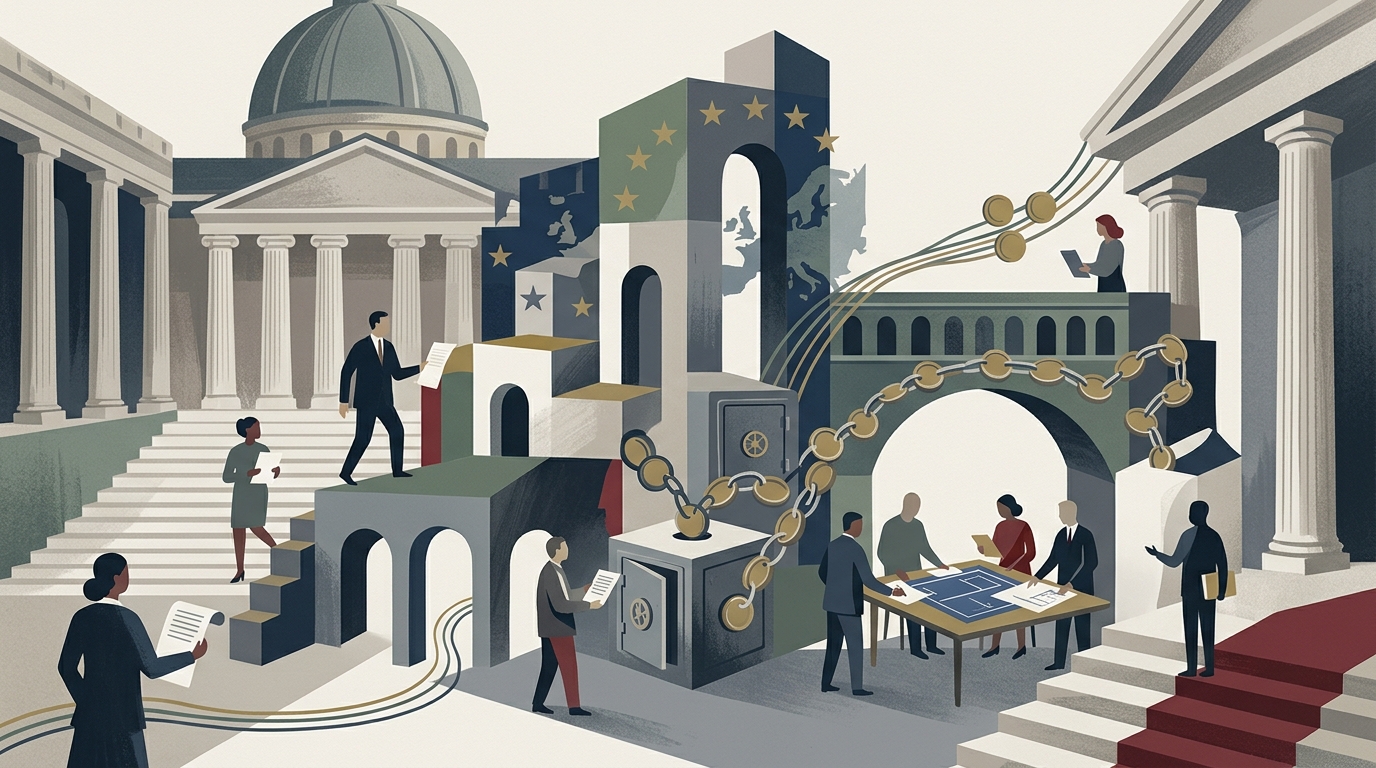
Mr. Pierrakakis emphasized that Europe suffers from a structural investment deficit compared to the US and China. While European citizens maintain high savings rates, these funds are rarely funneled into productive investments or high-tech startups. The Savings and Investment Union represents the evolution of the Capital Markets Union (CMU), aimed at unifying fragmented national markets. According to the Minister, this unification is essential to fund the green and digital transitions, which require hundreds of billions of euros annually.
- Mobilizing approximately €300 billion in private capital that currently flows to the US markets every year.
- Reducing borrowing costs for European businesses through a single capital market.
- Strengthening bank resilience by completing the Banking Union.
Geopolitical Instability and Strategic Autonomy
The speech extended beyond narrow economic confines to the geopolitical chessboard. Pierrakakis referred to the risks lurking in regions like the Strait of Hormuz, highlighting how regional conflicts can cause immediate shocks to the European economy. "Strategic autonomy" is no longer a theoretical concept but an imperative for survival. Europe must reduce its dependence on external energy suppliers and critical raw materials by investing in its own infrastructure and cutting-edge technologies.
"Europe's competitiveness is our strongest weapon in the face of geopolitical uncertainty. Without a solid economic foundation, strategic autonomy remains a dead letter," he noted.
The Digital Euro and the Fourth Industrial Revolution
Special emphasis was placed on digital transformation. Having led Greece's digital transition, Pierrakakis argued that the digital euro could serve as the cornerstone of a modern economy, facilitating cross-border transactions and reducing reliance on foreign payment systems. Simultaneously, integrating Artificial Intelligence into public administration and production is the only way to bridge the productivity gap with the rest of the world. Europe must move from merely regulating technology to actively producing it.
Greece's Role in the New European Landscape
The Minister concluded by addressing Greece's role. After a decade of crisis, the country is no longer Europe's "problem" but an active proposer of solutions. The Greek experience with reforms can serve as a guide for the broader European family. The need for a more flexible and daring Europe is shared, and Greece stands in favor of deep institutional changes that will allow the continent to lead once again in the 21st century.