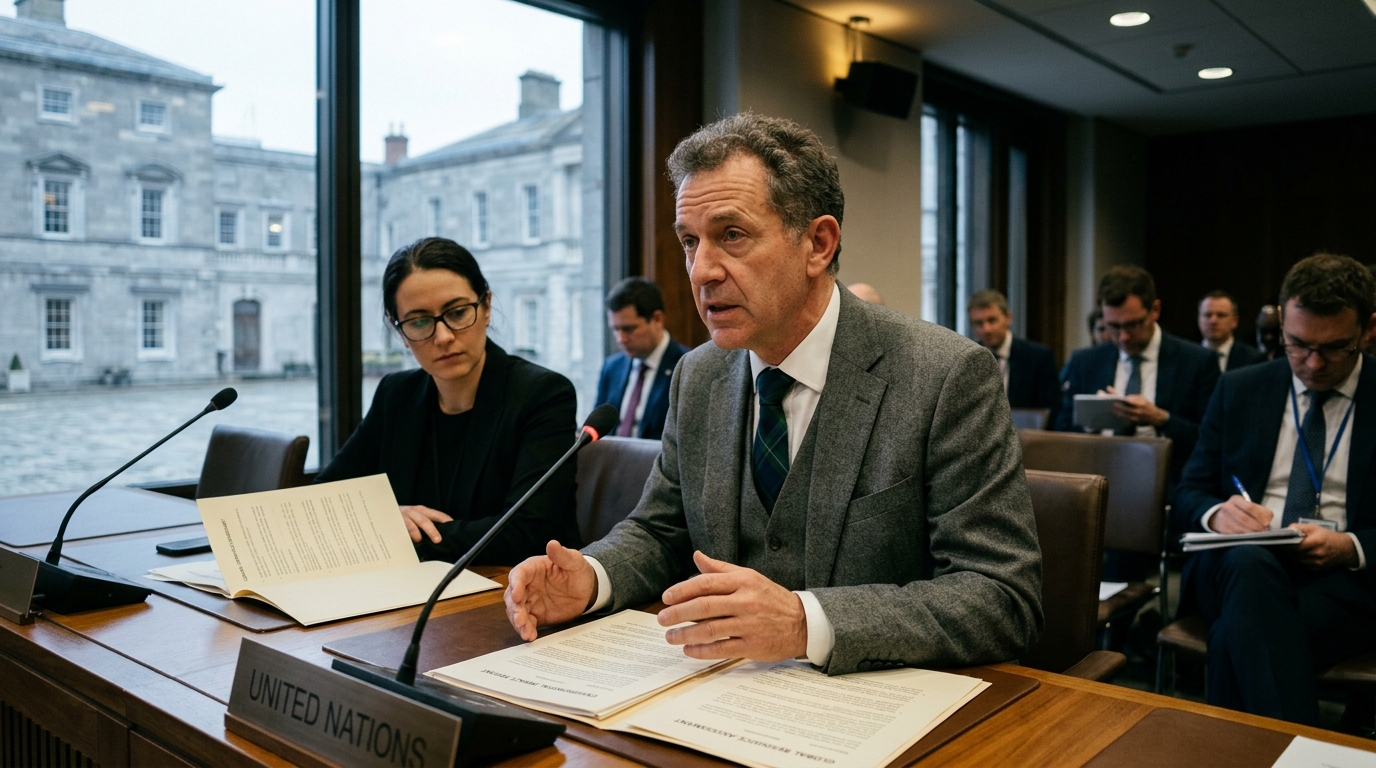
In an era where Europe struggles to find its footing between the technological superpowers of the US and China, Greece—a country once considered the "sick man" of the continent—is emerging as an unexpected beacon of digital and institutional innovation. The Minister of Education, Religious Affairs, and Sports, Kyriakos Pierrakakis, speaking recently at the historic Athenian Club, presented an insightful analysis of the country's achievements, condensing the Greek experience into five central lessons that could serve as a roadmap for European renaissance.
Mr. Pierrakakis' speech was not merely a report on his ministerial tenure at the Ministry of Digital Governance or current educational reforms. It was a political and philosophical positioning on how a state can regain the trust of its citizens through technology and decisiveness. According to the minister, Greece managed to "leapfrog" development stages, turning a crisis into an opportunity for a radical redefinition of the state-citizen relationship.
1. Speed as a Political Virtue
The first and perhaps most important lesson is speed in implementation. Europe is often trapped in endless consultations and bureaucratic rigidities. The Greek case of gov.gr proved that "agile development" is not just for startups but also for public administration. Mr. Pierrakakis emphasized that digitalization is not a technical issue but a profound political act aimed at breaking down the "silos" of bureaucracy. Greece showed that when there is political will, changes that used to take decades can be achieved in months.
2. Trust through Simplification
The second lesson concerns building trust. For years, Greek citizens viewed the state as an adversary. The digital revolution changed this narrative. Every click that saves a queue at a public service is a deposit into the "account" of social trust. Europe, facing a crisis of representation and the rise of populism, must understand that the best way to safeguard democracy is a state that functions efficiently and respects the citizen's time.
3. Education as a Tool for the Future
Moving to the Education portfolio, the minister analyzed the third lesson: the need for a "Digital School" and the liberalization of higher education. The recent legislation for non-state universities in Greece, despite reactions, represents a move toward alignment with European reality and an invitation for international competitiveness. Greece teaches that education cannot remain hostage to past ideologies but must adapt to the era of Artificial Intelligence.
- Installation of interactive whiteboards in every classroom.
- Introduction of computer science and robotics from the earliest grades.
- Linking universities with the labor market.
4. Interoperability: The Language of the New Era
The fourth lesson is technical but with massive social implications: data interoperability. Greece managed to make ministerial systems "talk" to each other. This model must be applied at a pan-European level. If Europe wants to have a single digital market, it must break down national digital borders and allow the free but secure flow of data for the benefit of citizens and the economy.
5. Strategic Autonomy and Innovation
The fifth lesson is the need for strategic autonomy. Mr. Pierrakakis pointed out that Europe cannot only be the regulator of technology but must also become its creator. Greece, by investing in innovation hubs and attracting giants like Microsoft, Google, and Amazon, showed that even a small country can claim a role on the global technological map. The lesson for Brussels is clear: excessive regulation without investment leads to lagging behind.
"Greece is no longer Europe's problem, but the laboratory of its solutions. The digital state is not a luxury; it is the new social contract."
Concluding his speech, the minister stressed that Greek success is not a reason for complacency but a starting point for new challenges. The integration of AI into public administration and the further upgrading of the educational system are the next milestones. Europe should look at Greece not as an exception, but as an example to follow on how tradition and technology can coexist for the common good.