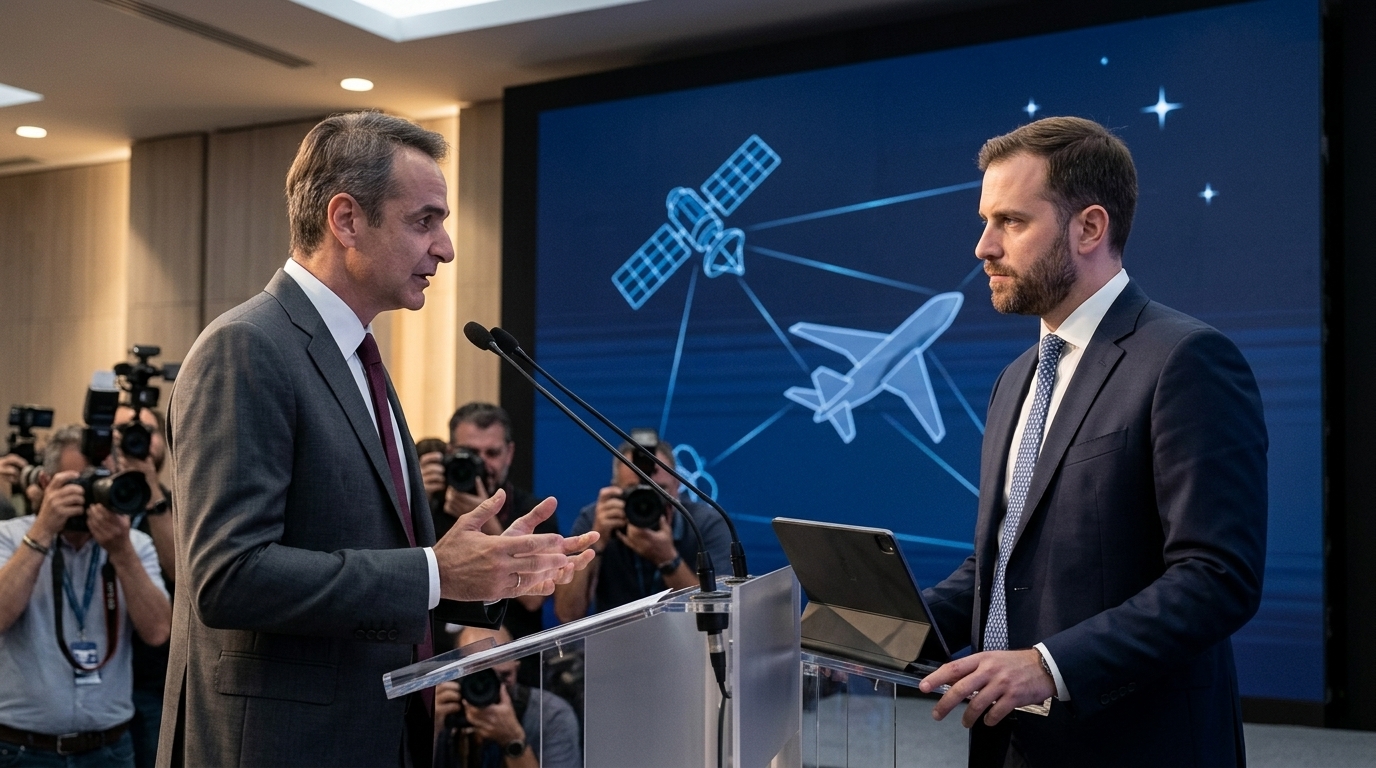
In a move that shifts the landscape of national security and high technology, the GEK TERNA Group and Airbus Defence and Space have announced a strategic partnership centered on the Greek space program. This alliance is not merely a business deal but a geopolitical statement of intent to bolster Greek deterrent power through space. As Greece seeks to modernize its defense capabilities, the choice of Airbus as a strategic partner by the country's largest domestic infrastructure group underscores the need for European solutions that guarantee operational autonomy.
The Greek Space Program and the Military Dimension
The Ministry of Digital Governance and the Ministry of National Defense have prioritized the creation of an integrated satellite network. The need for secure communications, border surveillance, and early warning in a volatile Eastern Mediterranean environment makes the military satellite program critical. Airbus, having developed some of the most sophisticated systems globally (such as Skynet and Syracuse), offers Greece the expertise to build and manage satellites that do not depend on third countries outside the EU.
GEK TERNA, for its part, assumes the role of the domestic pillar. With its experience in projects of strategic importance and its strong financial base, George Peristeris' group is transforming from an infrastructure and energy company into a high-tech and defense industry player. The partnership envisages the active participation of Greek companies in the supply chain, ensuring that a significant portion of the investment will return to the Greek economy.
National Sovereignty and European Autonomy
One of the strongest arguments in favor of the Airbus - GEK TERNA proposal is "data sovereignty." Unlike solutions based on non-European technologies, which often come with usage restrictions (Black Box), the European solution allows Greece to have full control over cryptographic keys and the data being transmitted. As analysts point out, "on the modern battlefield, whoever controls the information controls the outcome of the conflict."
- Full access to secure telecommunications for the Armed Forces.
- Independence from navigation and surveillance systems of third countries.
- Ability to interface with the European IRIS² system for broadband services.
"Our cooperation with Airbus is not just about equipment procurement; it's about the transfer of knowledge that will allow Greece to stand as an equal at the table of Europe's space powers," say sources close to GEK TERNA.
The Economic Dimension and Ecosystem Creation
Investing in space is not just a defense expenditure but a growth driver. This partnership is expected to act as a catalyst for the Greek space industry, which consists of dozens of highly specialized small and medium-sized enterprises. Through Airbus, these companies gain access to international programs and quality standards that were previously out of reach.
Furthermore, GEK TERNA aims to create ground infrastructure (Ground Stations) within Greek territory, turning the country into a regional space data hub. This implies new jobs for scientists and engineers, stemming the brain drain and enhancing the country's image as an innovation center. Airbus's strategic choice to partner with a local entity of this magnitude demonstrates its confidence in the prospects of the Greek market.
Challenges and the Future
Despite the positive outlook, the road to the program's completion is not without challenges. International competition, mainly from US and Israeli companies, is intense. However, Greece's European orientation, combined with the EU's need for strategic autonomy, gives a clear advantage to the Airbus - GEK TERNA proposal. The coming period will be crucial for finalizing technical specifications and signing the final contracts, which will set Greece on a trajectory of space independence.