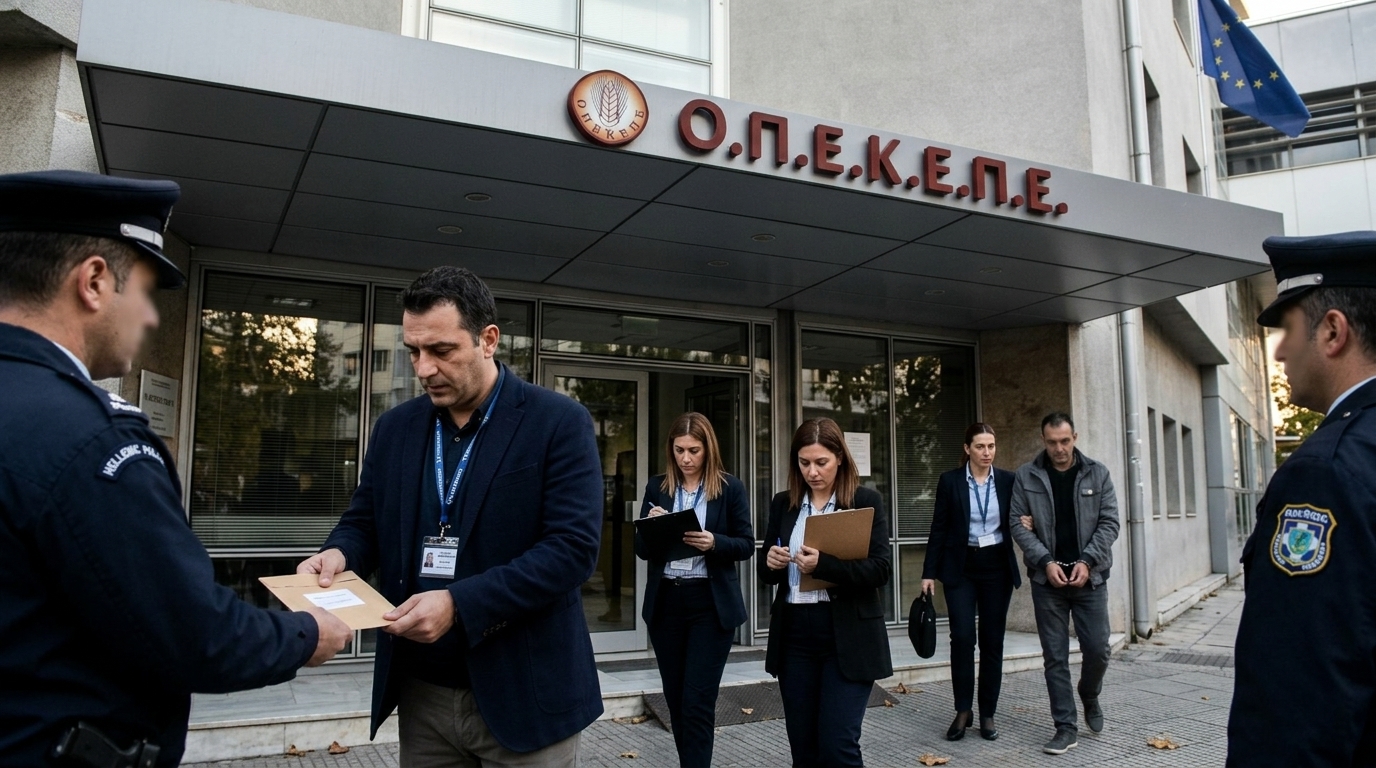
In a nation where agriculture serves as the bedrock of regional development, the news of the dismantling of a massive ring preying on agricultural subsidies brings not only public outcry but also profound questions about the integrity of state mechanisms. Operation 'Therismos' (Harvest), conducted by the Economic Police Division—often referred to as the 'Greek FBI'—has exposed a well-oiled machine for laundering European funds at the expense of both the EU budget and Greek taxpayers.
The scale of the fraud is staggering: more than €17 million in illegal payments were funneled into the pockets of fraudsters who owned neither a single acre of land nor a single head of livestock. The scheme relied on a simple yet effective method: creating a paper-based virtual reality that OPEKEPE’s oversight systems failed to detect for years.
The Anatomy of the Scam: How the Fraud Was Structured
The core of the illicit activity lay in the falsification of E9 tax declarations. The masterminds of the ring, having access to sensitive data or using 'strawmen,' declared non-existent plots of land as grazing pastures. In many instances, they utilized the tax identification numbers (AFM) of elderly citizens, deceased individuals, or people entirely unrelated to the primary sector, to collect subsidies without raising alarms.
According to investigative reports, the ring had extended its reach across various regions of Greece, from Central Greece to the Peloponnese. The methodology included:
- Document Forgery: Creation of fake lease agreements for land belonging to the state or unsuspecting private owners.
- Digital Manipulation: Tampering with the Integrated Administration and Control System (IACS) through collaborators who understood the platform’s blind spots.
- 'Strawmen' Networks: Utilizing hundreds of TaxisNet credentials to fragment the amounts, ensuring that automated control filters for large payments were never triggered.
"We are not talking about isolated incidents, but an organized industry of generating fictitious rights that undermines the future of the Greek countryside," a senior Economic Police official stated.
OPEKEPE: An Agency Under Scrutiny
This revelation comes at a critical juncture for OPEKEPE. The agency has long been in the crosshairs of the European Commission (DG AGRI), with the threat of fines and financial corrections looming over Athens. A lack of transparency and delays in the digital transformation of audits created the perfect environment for corruption to flourish.
The political leadership of the Ministry of Rural Development declares its determination to clean up the sector. However, critics point out that warnings had been present for years. The transition to cloud computing and the use of satellite data (monitoring) to verify crops are steps in the right direction, but their implementation often hits bureaucratic hurdles and internal resistance.
The Impact on the Genuine Farmer
Beyond the financial aspect, the fraud has a deep social dimension. Every euro that ends up illegally in the hands of an 'urban entrepreneur' with phantom sheep is a euro taken away from the actual livestock farmer in the mountainous regions struggling with production costs. The distortion of competition is immense, as fraudsters gain liquidity without any risk or labor cost.
Operation 'Therismos' is likely just the beginning. Authorities are now investigating the ring's connections with officials who provided the necessary 'expertise' to bypass audits. The remaining question is whether the Greek state has the will to proceed with a radical reset of the subsidy system, ensuring that the 'harvest' will henceforth only belong to those who actually sow.