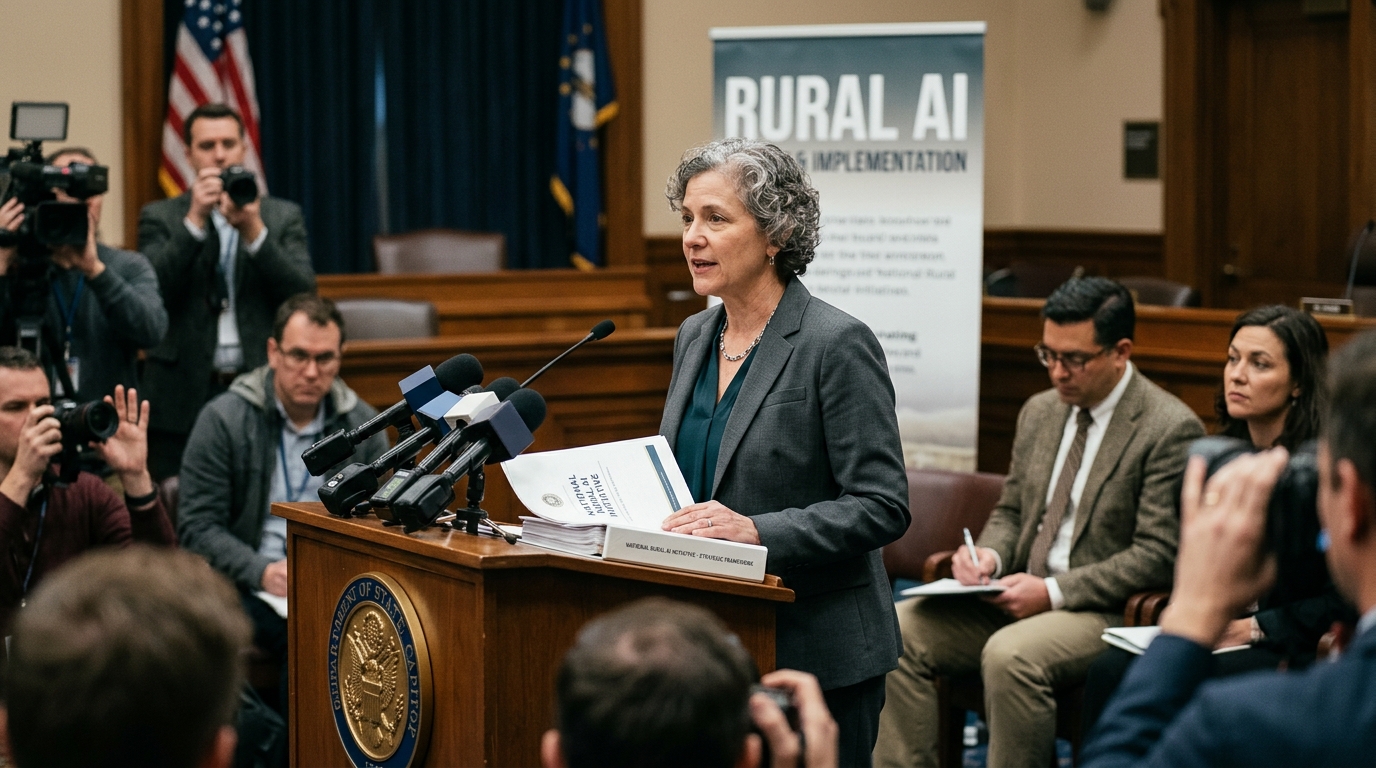
The history of technological progress often follows a predictable, albeit inequitable, trajectory: urban metropolises become the laboratories of the future, while rural areas remain tethered to the infrastructure of the past. However, a new national initiative recently announced in the United States, which is already sparking international discourse, attempts to overturn this paradigm. The focus is no longer on Silicon Valley, but on the schools of remote regions, where Artificial Intelligence (AI) is treated not merely as a tool for consumption, but as a field for co-design and implementation.
The Necessity of Inclusion in the Digital Era
For decades, the "digital divide" was a term describing the lack of access to high-speed internet and modern computers. In the age of Generative AI, this gap risks transforming into an unbridgeable abyss of knowledge and opportunity. The new initiative recognizes that if students in rural areas are not trained now on how to design and govern AI systems, they will find themselves at a severe disadvantage in a rapidly transforming labor market.
This approach differs fundamentally from previous efforts. Instead of imposing off-the-shelf software from Big Tech giants, the program focuses on "contextual design." This means that educators and students in rural schools actively participate in defining their needs. For example, using AI to optimize agricultural yields or manage local resources can become part of the curriculum, linking technology directly to the survival and prosperity of their community.
Educators as Architects of Innovation
One of the most significant hurdles in implementing this initiative is the shortage of specialized personnel. Rural schools often struggle with staffing even in core sciences. The national initiative addresses this through an extensive network of support and professional development. Through hybrid learning models, teachers in remote areas gain access to leading AI experts, turning their classrooms into living laboratories.
This strategy is not just about learning to code; it is about cultivating critical thinking toward AI. Students are taught to recognize algorithmic bias, which can be particularly acute when training data is derived exclusively from urban environments. This "critical digital literacy" is now considered as essential as reading and writing. By empowering rural voices in the design phase, the initiative aims to create AI that is more representative of the diverse human experience.
Challenges and Policy Implications
Despite the enthusiasm, the challenges remain formidable. Funding is the primary concern. While the initiative is backed by federal grants, its long-term sustainability depends on local economies and sustained political will. Furthermore, there is a risk that AI could be used as a pretext for further cuts in educational staff, under the illusion that algorithms can replace human mentors.
Proponents of the initiative, however, argue that AI can serve as a "force multiplier" for educators, relieving them of administrative burdens and allowing them to focus on personalized instruction. On a political level, this move is interpreted as an effort to revitalize the "heartland," preventing brain drain to urban centers and creating new economic prospects within rural communities. It is a strategic investment in human capital that aims to decentralize the tech economy.
Conclusion: A New Social Contract
Integrating rural schools into the design and implementation of Artificial Intelligence is not merely an educational experiment; it is an act of social justice. In a world where technology dictates power, ensuring that no community is left behind is essential for maintaining social cohesion. If this initiative succeeds, it could serve as a global blueprint for a more democratic and inclusive approach to technological evolution, proving that innovation has no zip code.