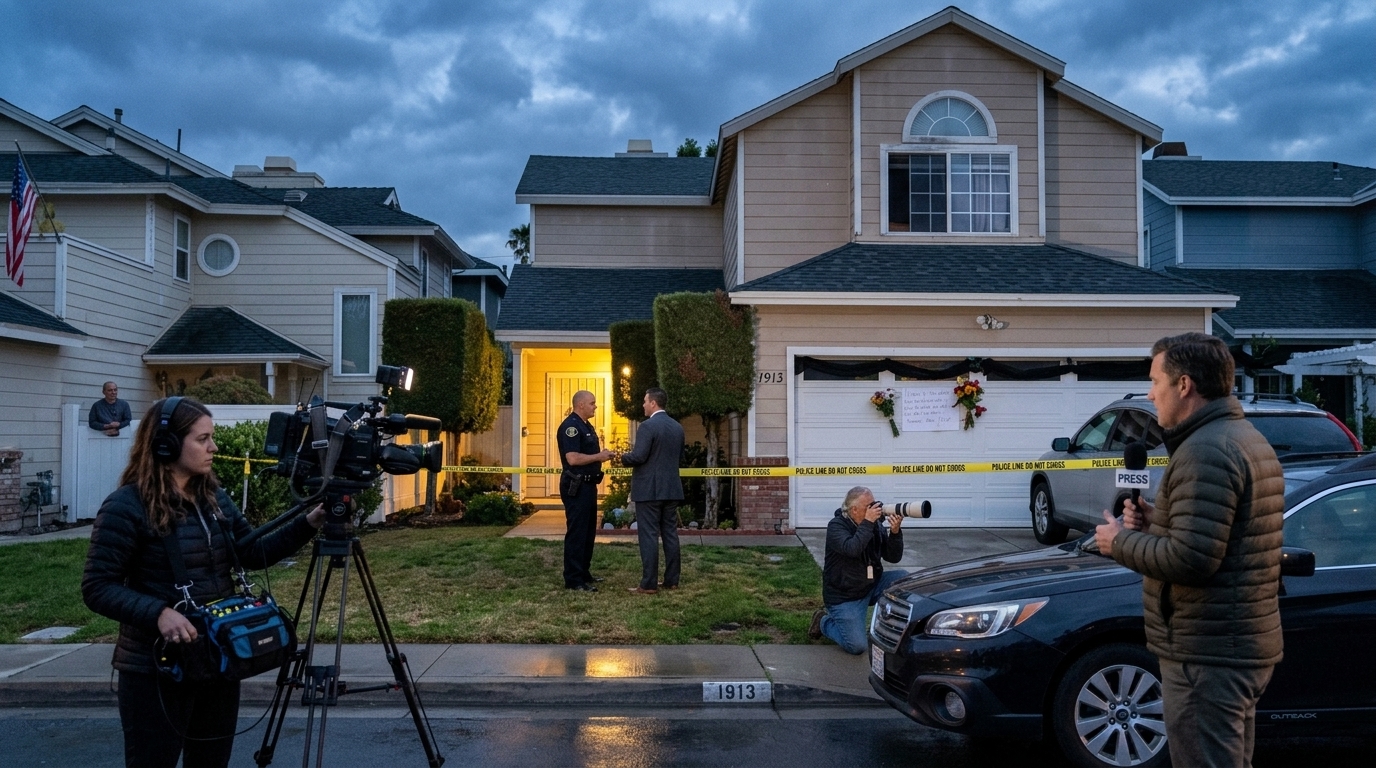
April 26, 2026, will be etched in Washington’s memory not for the traditional celebration of journalism and political satire, but for the terror that unfolded within the corridors of power. As details emerge regarding the shooting at the White House Correspondents’ Dinner (WHCD), the figure of Cole Tomas Allen has surfaced as a chilling case study in modern political radicalization. Allen, who referred to himself as a “Friendly Federal Assassin,” is not your typical perpetrator of political violence; his writings reveal a complex web of grievances, ideological contradictions, and a deep-seated obsession with the Trump administration’s military and domestic policies.
The Anatomy of a Delusional Identity
The moniker “Friendly Federal Assassin,” used by Allen in social media posts and private notes seized by the FBI, suggests a dangerous psychological dissociation. Behavioral analysts argue that this self-labeling indicates an individual who believed he was acting with a form of “state-sanctioned authority” or moral superiority, despite targeting the very leadership of that state. The inclusion of the word “friendly” implies a distorted sense of duty, where violence is framed as a necessary “surgical” tool to correct what he perceived as national deviance.
In his writings, Allen expressed a visceral aversion to Donald Trump’s return to power, but not from the conventional perspective of liberal opposition. Instead, his criticisms were hyper-focused on specific operational decisions. A significant portion of his ire was directed at recent U.S. military strikes against drug smuggling vessels in the eastern Pacific. Allen appeared to view these operations as an “excessive display of force” or “illegal military interventions” that violated his own arbitrary interpretation of international law.
Policy Grievances and the Rhetoric of Discontent
The case of Cole Tomas Allen underscores how political polarization in the United States has shifted from a debate over ideas to an obsession over tactics. In his manifesto, the suspect accused the administration of “betraying American values” through the militarization of drug enforcement. Notably, his rhetoric blended elements of isolationism with an almost anarchic distrust of federal agencies, even as he co-opted the “federal” label for his persona.
- Military Operations: Allen fiercely criticized the use of drones and naval assets against cartels, viewing them as a distraction from domestic crises.
- Immigration Policy: Despite his opposition to Trump, his writings also contained complaints about border management, depicting a man who fit into no recognizable political camp.
- Institutional Distrust: The choice of the WHCD as a target was deliberate. Allen viewed the gathering of journalists and politicians as an “elite collusion” against the American people.
The Failure of Security Apparatuses
That an individual with such a volatile and documented online presence could get within striking distance of the Washington Hilton, the dinner’s venue, raises harrowing questions for the Secret Service. Following the 2024 assassination attempt on Trump, security protocols were supposedly overhauled and fortified. However, Allen seems to have exploited the gaps in monitoring “lone wolf” actors who do not align with known terrorist organizations or established hate groups.
The use of Artificial Intelligence by authorities to flag threats also appears to have failed in Allen’s case. Algorithms are often tuned to recognize specific keywords associated with Islamist terrorism or white supremacy. The idiosyncratic ideology of the “Friendly Federal Assassin” likely slipped under the radar because it did not adhere to standard threat profiles. This highlights a burgeoning national security challenge: addressing individualized, “bespoke” radicalization.
The Aftermath for American Democracy
The attack on the WHCD is a traumatic blow to one of the few remaining institutions where political power and press scrutiny meet publicly. If the safety of such events cannot be guaranteed, the chasm between the leadership and the citizenry will only widen. Cole Tomas Allen may be a lone actor, but his grievances—however irrational—reflect a society simmering with underlying tension.
“Violence is never the solution, but it is always a symptom of a deeper institutional decay,” a senior FBI official stated during a press briefing following the arrest.
As the investigation continues, Washington must balance the need for heightened security with the preservation of democratic norms. Allen’s case serves as a stark reminder that democracy’s greatest threat is not always an external foe, but the internal erosion of reason and the transformation of political dissent into murderous obsession.