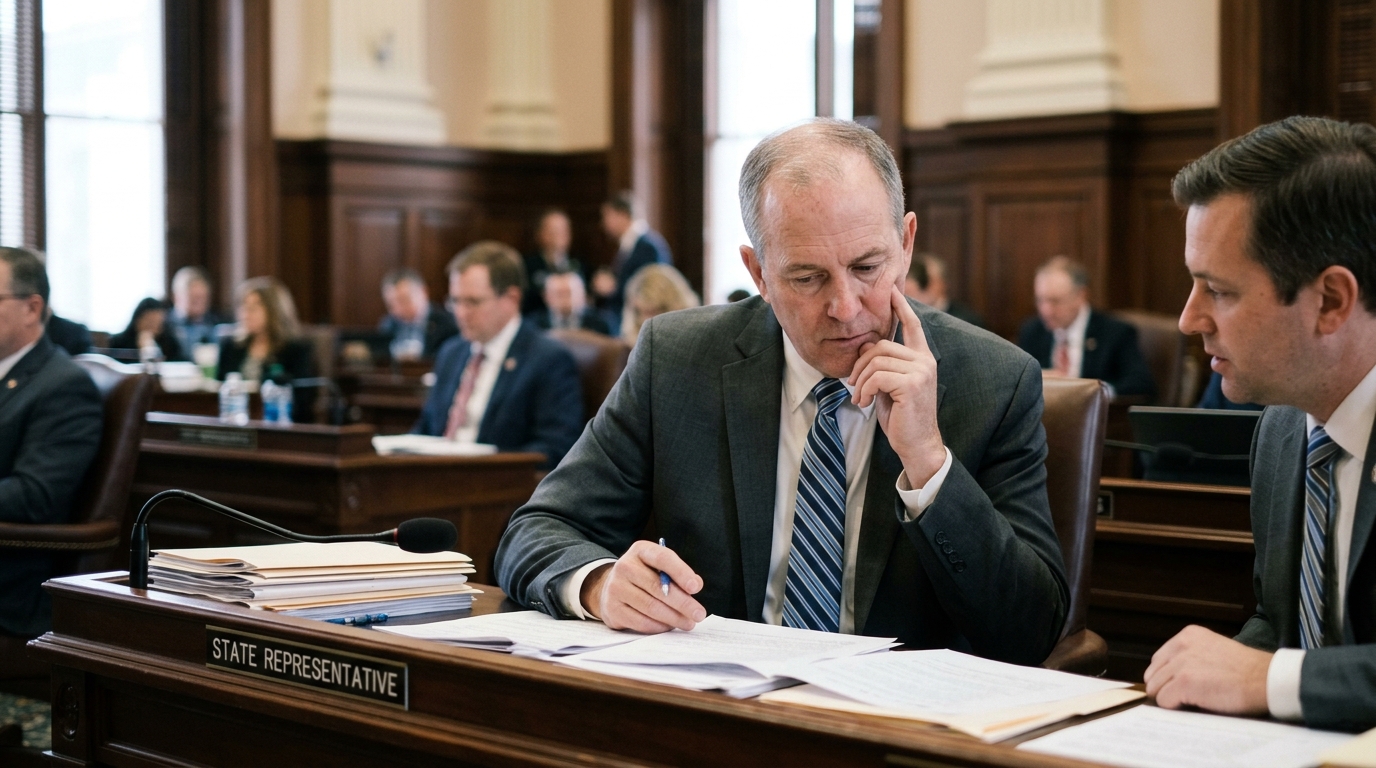
The political landscape in Florida is once again under the national microscope, not for a bold new initiative by Governor Ron DeSantis, but for a rare and significant display of internal legislative resistance. During a special session in Tallahassee, the Florida House of Representatives rebuffed a series of proposals from the Governor aimed at regulating Artificial Intelligence (AI) and further tightening laws against vaccine mandates. This development marks a pivotal moment in the tenure of a Governor who has historically commanded near-absolute loyalty from his state's legislature.
The AI Battlefield: Transparency vs. Innovation
Governor DeSantis’ proposed AI measures were centered on what he describes as "algorithmic fairness." The core of the proposal sought to compel tech companies to disclose whether their AI models—ranging from search engines to generative tools like LLMs—incorporate specific ideological biases. DeSantis has frequently criticized Silicon Valley, alleging that AI is being weaponized to promote a progressive agenda while suppressing conservative viewpoints. His legislative push aimed to give the state the power to audit these algorithms.
However, the Florida House, despite its Republican supermajority, hit the brakes. Lawmakers raised concerns about the feasibility and legal ramifications of such a move. Forcing private companies to reveal proprietary code or internal training datasets could lead to significant intellectual property violations and invite a wave of litigation. There was also a palpable fear that these regulations would tarnish Florida’s reputation as a burgeoning tech hub, potentially driving away the very firms the state has spent years trying to attract from California and New York.
Vaccine Mandates: A Question of Corporate Autonomy
The special session also addressed the Governor's desire to expand prohibitions on vaccine mandates. While Florida already has some of the nation's strictest laws preventing employers from requiring COVID-19 vaccinations, DeSantis sought to close perceived loopholes and extend these bans to all types of vaccines in various private sectors. The House's rejection of these measures suggests a growing "policy fatigue" regarding pandemic-era grievances.
Legislators argued that the current protections are sufficient and that further intrusion into the operations of private businesses contradicts the fundamental conservative principle of minimal government interference. This pushback reflects a broader trend: as the immediate memory of the pandemic fades, even staunchly conservative lawmakers are becoming wary of using state power to dictate the internal policies of private enterprises, especially when those policies involve public health protocols.
Political Implications and the Road to 2026
The rejection of these measures is more than just a legislative disagreement; it is a signal of shifting power dynamics. Following his unsuccessful bid for the presidency, DeSantis’ aura of political invincibility within Florida appears to be waning. Lawmakers are increasingly willing to assert their independence, particularly on issues where the Governor’s "culture war" agenda clashes with practical economic considerations or legal stability.
Key Takeaways for the Tech Sector:
- The failure of the Florida AI bill highlights the difficulty of state-level tech regulation.
- Companies remain wary of "ideological transparency" laws that could compromise trade secrets.
- The focus may shift toward federal standards to avoid a fragmented regulatory landscape.
As we move further into 2026, the focus of AI regulation is likely to shift from ideological battles to more concrete concerns such as deepfake detection and data privacy. The Florida House’s decision to stall these measures suggests that while the rhetoric of "anti-woke" AI remains popular on the campaign trail, it faces a much steeper climb when it reaches the floor of a legislature concerned with the state’s economic competitiveness and legal liability.
In conclusion, the outcome of this special session serves as a reminder that even in a highly polarized political environment, the practicalities of governance and the protection of business interests can still serve as a check on executive ambition. For AI developers and healthcare providers, the message is clear: Florida is not yet ready to go as far as its Governor might wish in regulating their core operations.