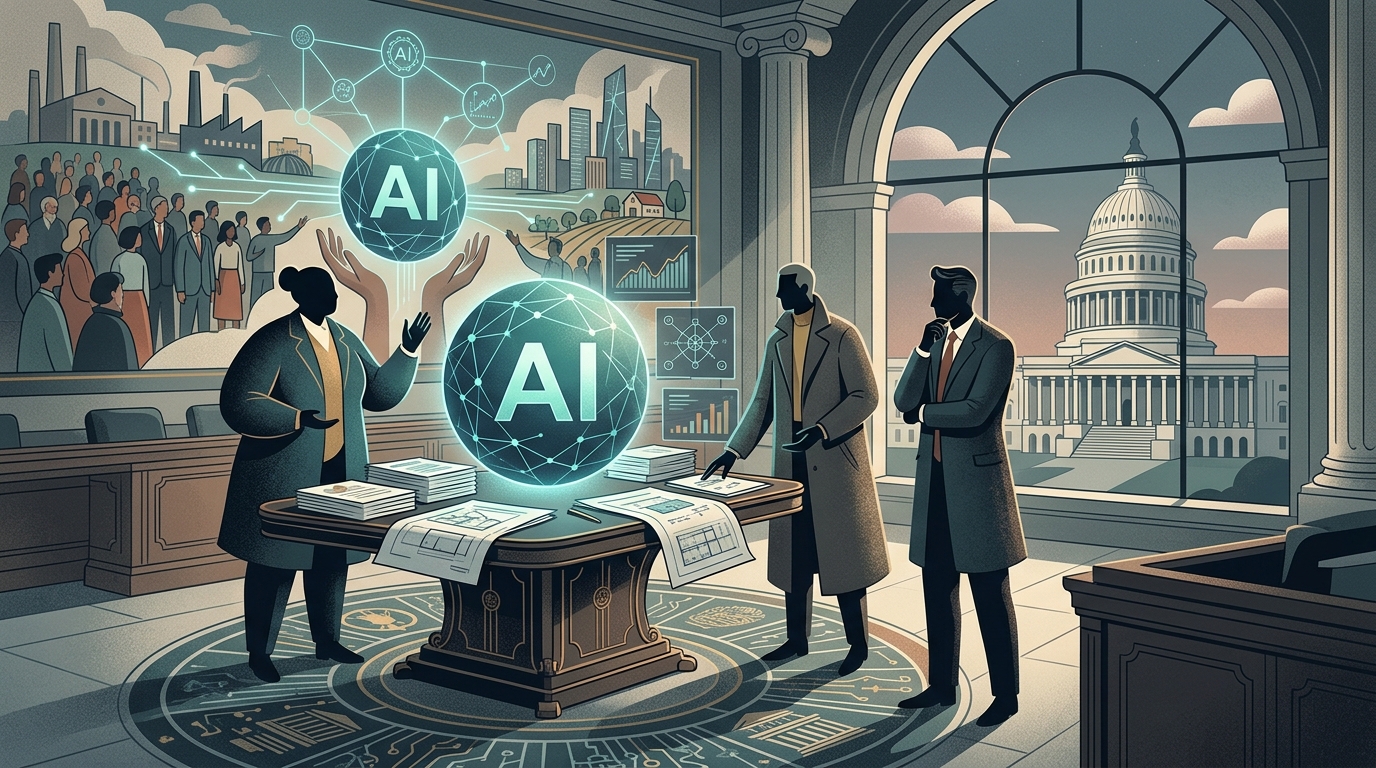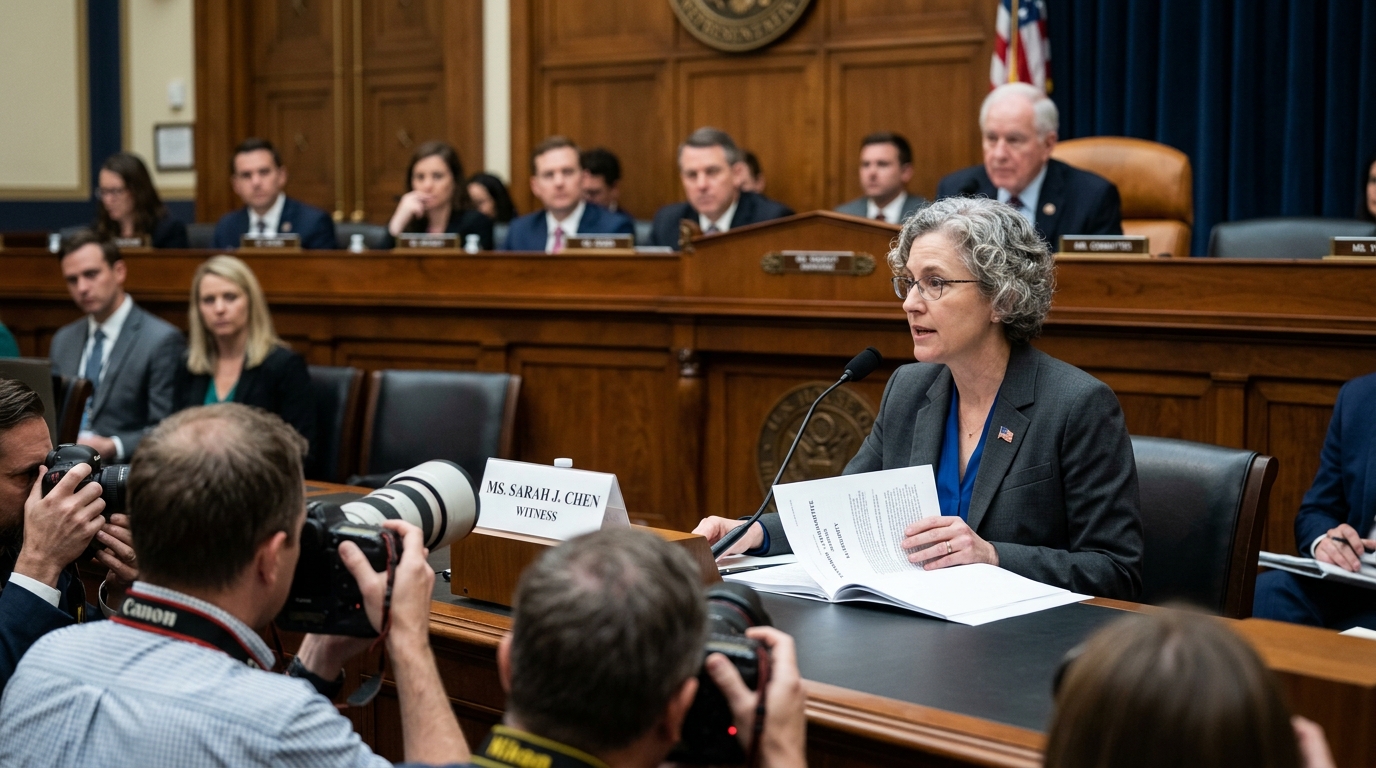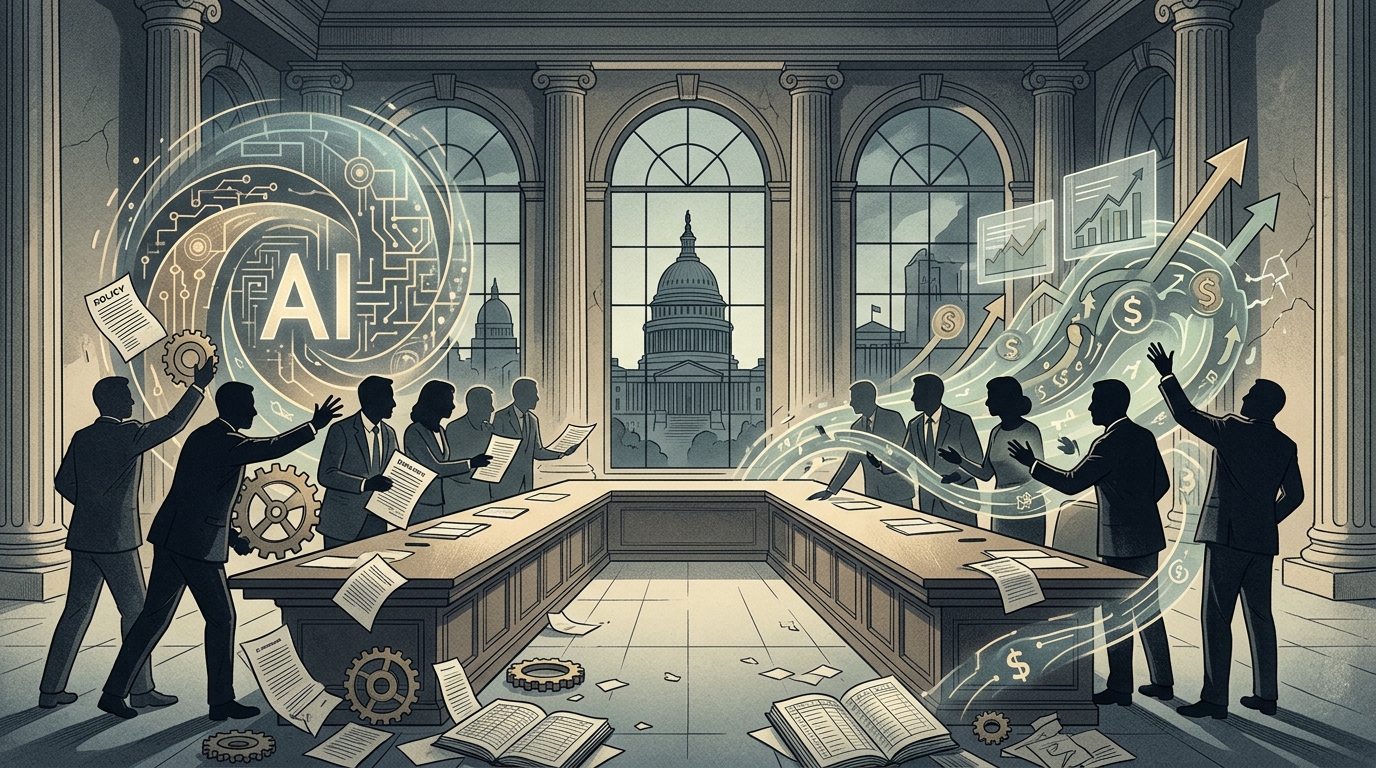
In the hallowed halls of the Federal Reserve, where interest rate decisions dictate the world's economic fate, a new source of disruption has emerged. It is not a geopolitical crisis or a sudden banking collapse, but Artificial Intelligence (AI). The disagreement brewing among Fed officials is not merely about technology; it is about the very nature of economic growth in the 21st century. At its core lies a critical question: Is AI a deflationary force that will turbocharge productivity, or a source of massive demand that will keep interest rates high for years?
Productivity as the Central Bank's Holy Grail
For some members of the Fed's Board of Governors, AI is the 'deus ex machina' they have been waiting for. After a decade of stagnant productivity growth, the ability of Generative AI to automate complex white-collar tasks, accelerate software development, and optimize supply chains promises a new era of supply-side expansion. When productivity rises, the economy can grow faster without triggering inflation, as businesses produce more with the same or less labor cost.
This faction, often joined by voices like Chicago Fed President Austan Goolsbee, argues that if AI delivers on its promises, the Fed could keep interest rates lower than previously expected, as the technology would do the heavy lifting of price containment. However, the problem is timing. History teaches us that technological revolutions, such as electricity or the internet, take decades to show up in official productivity statistics. The Fed must decide whether to act on the promise of future gains or wait for hard evidence.
The Threat of Overheating and the 'Investment Shock'
Conversely, a more cautious group of officials, including potentially Minneapolis Fed President Neel Kashkari, focuses on the demand side of the equation. Building the infrastructure for AI requires colossal investment. From constructing massive data centers to upgrading power grids and purchasing expensive semiconductors, AI is funneling trillions of dollars into the real economy.
- Massive demand for energy and raw materials, driving up production costs.
- Competition for specialized talent, maintaining upward pressure on wages.
- A surge in capital expenditures (CapEx) that acts as a significant fiscal stimulus.
This 'investment boom' could prove highly inflationary in the short term. If the demand for resources required by AI outpaces the speed at which the technology improves efficiency, the Fed might be forced to keep interest rates 'higher for longer' to prevent the economy from overheating. This creates a paradox where a technology intended to increase efficiency actually makes the cost of money more expensive in the interim.
The R-Star Enigma and the Future of Rates
The disagreement extends to an abstract but crucial concept: 'r-star' (r*), the neutral interest rate that neither stimulates nor restrains the economy. If AI permanently raises the economy's potential growth rate, then r-star must also rise. This would mean that the era of near-zero interest rates seen after 2008 is officially dead. A higher r-star implies that the floor for interest rates has moved up, affecting everything from mortgages to corporate debt.
"We are in a phase where the models of the past may no longer be able to interpret the speed of current change," says a source close to the Federal Open Market Committee (FOMC).
The Fed is now tasked with navigating uncharted waters. If it underestimates AI and cuts rates prematurely, it risks reigniting inflation. If it overestimates AI's immediate impact and keeps rates high, it risks stifling innovation and causing an unnecessary recession. This 'mammoth disagreement' over AI is not just an academic debate; it is the roadmap for how we will live, borrow, and work in the coming years. The central bank's ability to decipher the 'AI signal' from the 'inflationary noise' will be the defining challenge of Jerome Powell's remaining tenure.