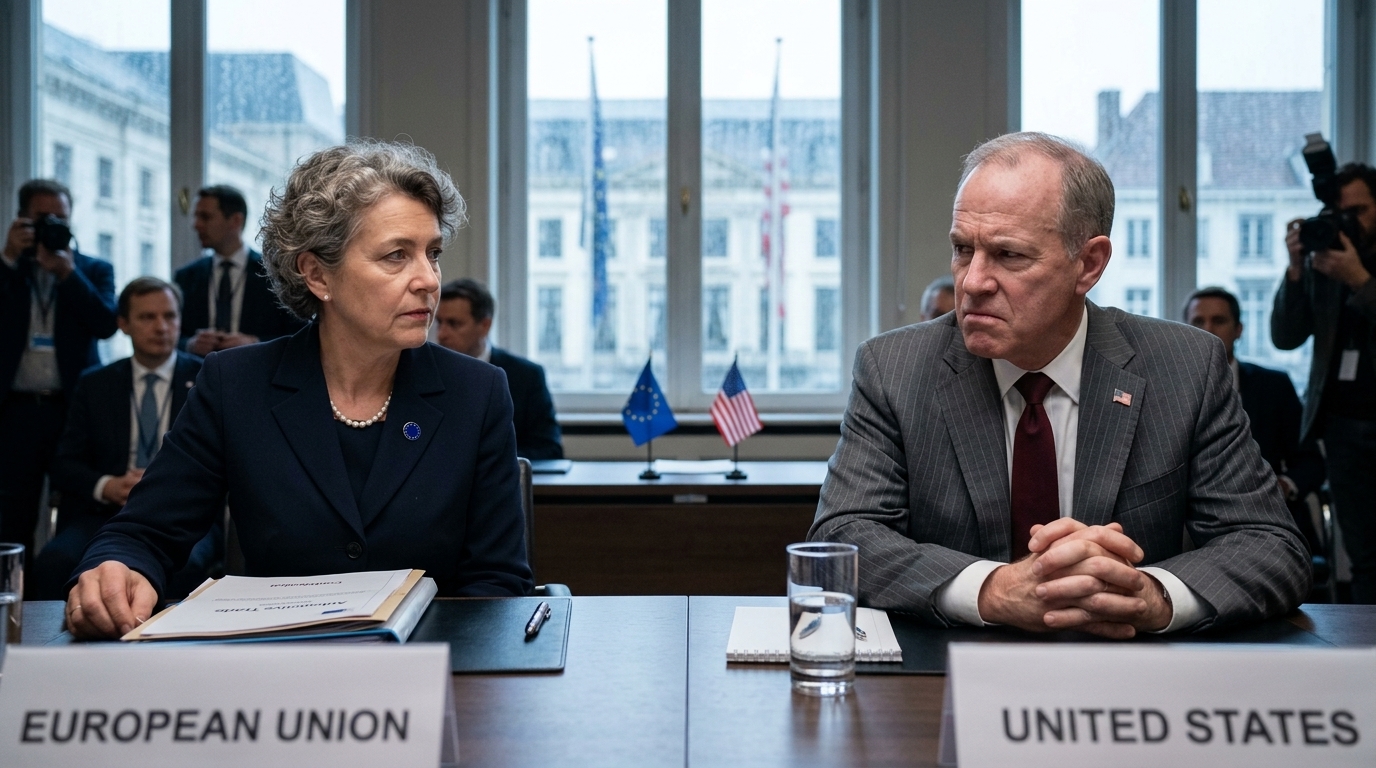
The atmosphere in Brussels is reminiscent of a war council. As we move through the first half of 2026, warnings that were once dismissed as mere campaign rhetoric have solidified into a harsh geopolitical reality. The European Union, led by the European Commission, is now explicitly stating it is "ready for anything" in the face of Washington's threat to impose horizontal tariffs on European cars—a move that could shatter the foundations of the transatlantic alliance.
The Strategy of "Deterrence Through Retaliation"
The European Union is no longer the passive observer it was in 2018. After months of internal deliberations, the Commission has compiled a detailed list of American products that will be targeted for retaliation if the White House proceeds with its threats. The strategy is clear: hitting politically sensitive US states by targeting products ranging from Kentucky bourbon to motorcycles and Midwestern agricultural goods.
However, Europe is simultaneously pursuing a diplomatic track. The Commission President has made it clear that the EU prefers a "win-win" deal that would include increased purchases of American liquefied natural gas (LNG) and soybeans, in an attempt to reduce the US trade deficit with Europe—the primary argument of the American side. "We do not seek a trade war, but we are not afraid of one either," a senior European official stated, signaling Brussels' new, more assertive stance.
The German Factor and the Existential Threat
At the heart of this crisis lies Germany. The German automotive industry, once the "engine" of the European economy, is going through one of the most difficult periods in its history. Following the energy crisis and intense competition from China in the electric vehicle sector, a new round of tariffs from the US—the largest market for BMW, Mercedes-Benz, and Volkswagen—could prove fatal.
Analysts warn that the imposition of 10% or 20% tariffs would force German companies to move even more of their production to US soil, leading to the deindustrialization of Central Europe and massive job losses. The pressure on Berlin is immense, with the coalition government balancing the need for European unity against the survival of its national champion.
"Trade is no longer just about economics; it is the new battlefield of geopolitical power, where cars are used as surface-to-surface missiles."
Beyond Tariffs: The Battle for Future Standards
The conflict is not just about numbers and dollars. It is about who will set the rules for 21st-century mobility. While the US focuses on protecting its domestic market through protectionism, the EU is trying to maintain its role as a regulatory power, promoting strict environmental standards and digital sovereignty in vehicle systems.
The situation is further complicated by the role of China. Washington is pressuring Brussels to adopt an equally tough stance on Chinese electric cars, using the threat of tariffs as leverage. The EU finds itself at a difficult crossroads: if it yields to American pressure, it risks retaliation from Beijing. If it doesn't, it faces the wrath of the White House. Europe's "strategic autonomy" is now being tested in practice, and the coming months will determine whether the Old Continent can remain a global player or if it will be squeezed between the two superpowers.