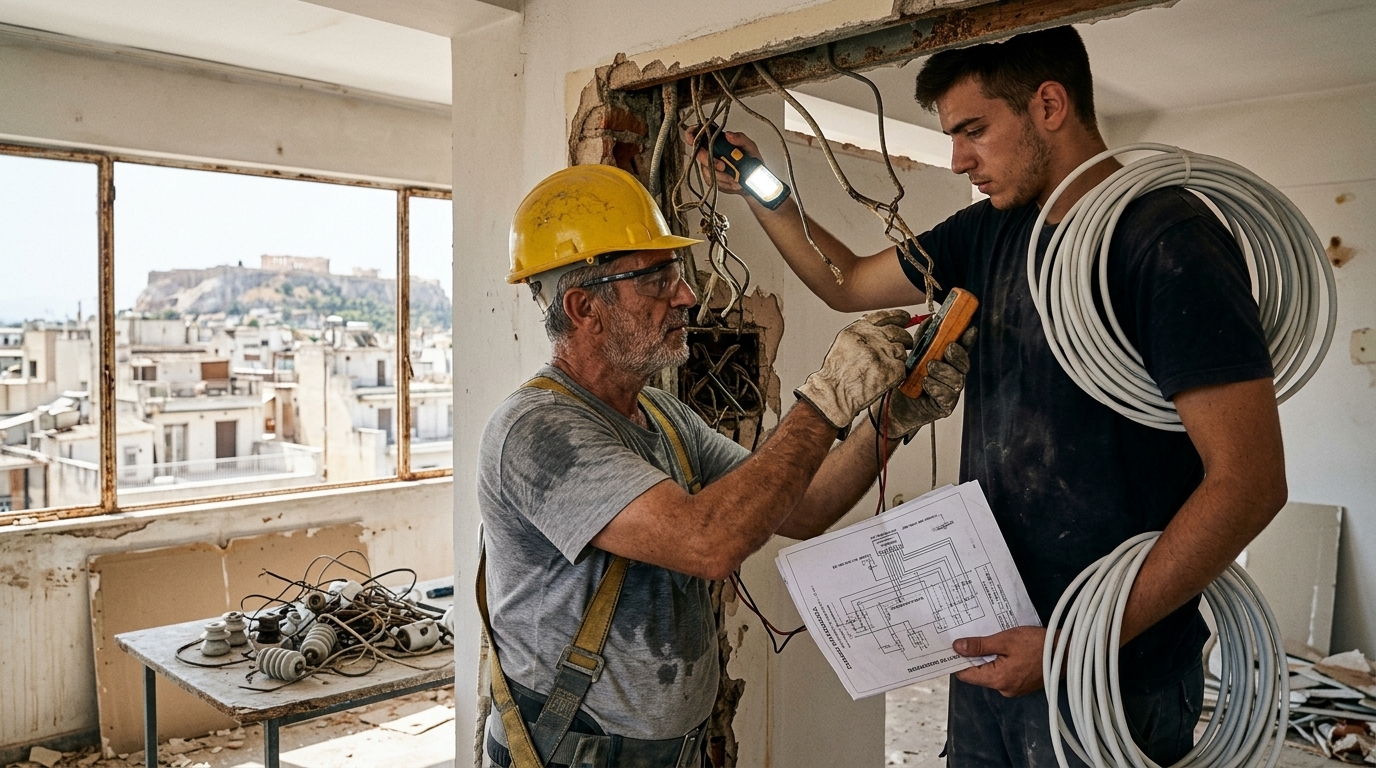
Greece stands at a critical crossroads. On one hand, the acceleration of the "twin transition"—green and digital—promises a new era of energy autonomy and technological excellence. On the other, the reality of our infrastructure, specifically electrical installations, remains anchored in the standards of previous decades, harboring risks that often escape public scrutiny. The Hellenic Institute of Electrical Installations Technology (ELITHE) is sounding the alarm, presenting five key proposals aimed at protecting human life and public property.
A Shocking Statistic: Ignorance and Danger
The data brought to light by ELITHE reveals a deep structural malaise. The fact that 43.4% of professionals in the field claim to be unaware of modern electrical safety requirements is not just a statistical error; it is a ticking time bomb at the foundation of our building stock. Even more alarming is the finding that 47.9% of fatal electrocutions occur within residences. The home, which should be the safest refuge, is turning into a trap due to poor maintenance and obsolete standards.
The green transition requires the installation of photovoltaics, heat pumps, and electric vehicle chargers. All these technologies sharply increase the electrical load and the demands on internal installations. If these new technologies are "plugged" into old, worn-out wires and panels without protection devices, the result will not be energy upgrading, but an increase in fires and accidents.
5 Proposals for a Secure Transition
ELITHE does not stop at diagnosing the problem; it proposes a set of measures that could transform the landscape:
- Linking Subsidies to Safety: It is proposed to integrate mandatory electrical safety checks into all programs like "Exoikonomo" (Energy Save). Energy upgrading is inconceivable without certified safety of the basic infrastructure.
- Market Tightening: Intensifying controls on the electrical equipment market is essential to exclude low-quality products or those of dubious origin that flood the shelves.
- Modernizing the HD 384 Standard: Updating regulations for internal electrical installations must keep pace with European developments and new technological requirements.
- Mandatory Reissuance of YDE: The Installer's Responsible Declaration (YDE) should not be a formality issued once, but a periodic inspection tool ensuring the installation remains safe over time.
- Professional Certification and Training: Creating a strict framework for continuous education for electricians to bridge the knowledge gap recorded in the survey.
The Political Dimension and State Responsibility
Greece's digital transition, promoted as the decade's great bet, relies heavily on the reliability of the electrical grid. From data centers to the "smart home," everything depends on the flow of electrons. However, the state seems to focus more on the "storefront" of digital services and less on the "guts" of the buildings. Underestimating electrical risk constitutes political negligence.
"Safety is not a cost; it is an investment in sustainability. Without safe electrical installations, the green transition will remain a fragile structure," say Institute officials.
It is clear that a central strategy is needed to coordinate the Ministries of Environment, Development, and Digital Governance. Safety must become part of our culture, not as a bureaucratic obligation, but as a fundamental right of the citizen.
Conclusion: Towards a New Social Contract of Safety
ELITHE's appeal comes at a time when climate challenges are becoming increasingly intense. High summer temperatures strain electrical grids and home installations. Adopting these five proposals is not just a technical necessity; it is an act of social responsibility. Greece must protect its citizens, ensuring that the future will be not only green and digital but, above all, safe.