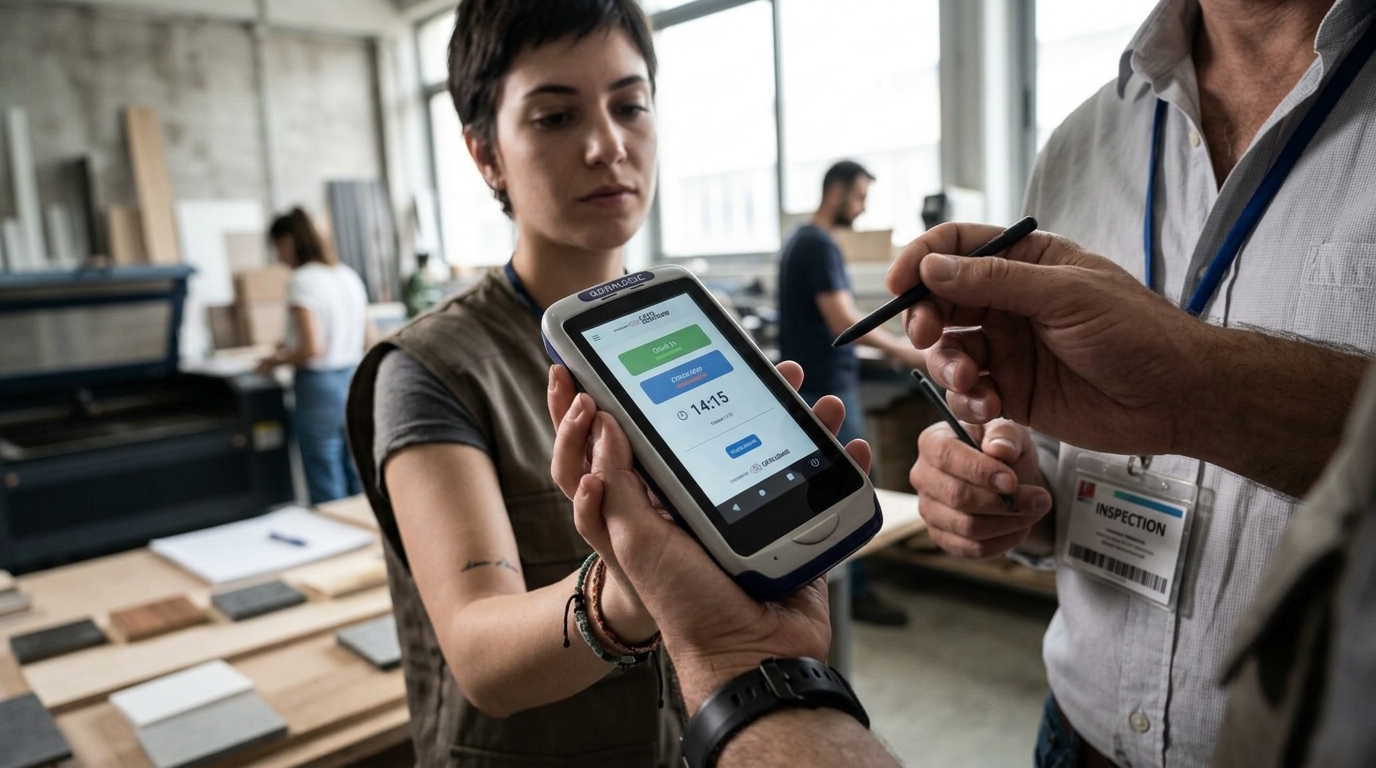
June 29, 2026, marks a critical milestone in the digital transformation of the Greek labor market. With the launch of the pilot implementation of the Digital Work Card in five new, strategically important sectors—including consulting services and advertising—the Ministry of Labor aims to permanently close the loopholes of undeclared and under-declared work. This move is not merely a technical change but a profound shift in employment culture in Greece, affecting thousands of employees who previously operated in an environment of often irregular hours and unrecorded overtime.
Expanding the Scope
The sectors joining the system today include consulting activities, advertising, market research, public relations, and other professional, scientific, and technical activities. These are sectors traditionally characterized by high flexibility, but also by the phenomenon of 'gray' labor, where the line between personal and professional time is often blurred. Digital recording through the 'Ergani II' system promises to bring the real picture of employment to light, ensuring that every minute of work is counted and compensated accordingly.
The pilot phase starting today aims to give businesses the necessary adjustment time without the immediate threat of fines, allowing for the resolution of technical issues that will undoubtedly arise. Integrating companies' time-tracking systems with the state's central database requires precision and stability, as any failure could lead to discrepancies triggering audit interventions.
The Challenge: Flexibility vs. Control
A central point of friction in implementing the card in these specific sectors is the nature of the work itself. In advertising and consulting, employees often work off-site, at client locations, or remotely. The question arises: how can the Digital Work Card capture this mobility without stifling productivity in an ocean of bureaucracy? The government argues that mobile applications and the 'remote work declaration' feature address these needs, yet the market remains skeptical about whether the system can handle the complexity of modern labor relations.
"The Digital Work Card is the most powerful tool we've ever had for protecting the worker and ensuring healthy competition among businesses," state Ministry of Labor sources.
On the employers' side, concerns focus on operational costs and the need for constant data updates. Small and medium-sized enterprises (SMEs) in the sector, in particular, face the prospect of an additional administrative burden at a time when profitability pressures are already intense. However, the digitalization of processes could lead to long-term error reduction and better human resource management.
Towards a Data-Driven Labor Market
The card's expansion is not an isolated event but part of a broader strategy to create a 'data-driven' labor market. By collecting vast amounts of real-time data, the state gains the ability to conduct targeted audits via AI algorithms, identifying patterns of non-compliance even before an inspector visits the workplace. This proactive approach changes the game, making the risk of non-compliance prohibitive for most businesses.
In conclusion, today's premiere for the five new sectors is a stress test for the system. If the implementation is successful, it will pave the way for full coverage of all economic activity in the country. The challenge remains: to find the golden ratio between strict legal compliance and the necessary flexibility required by the modern, globalized knowledge economy. Workers expect fairness, employers demand simplicity, and the state seeks transparency. Whether these three can coexist on a smartphone screen remains to be seen in the coming months.