The Greek labor market is on the verge of a structural transformation. With the implementation of the Digital Work Card now expanding to 476,000 additional employees, the Ministry of Labor aims to permanently close the 'black holes' of under-declared work and unpaid overtime. This move, which concerns critical sectors such as food service and tourism, is not merely a technical upgrade but an attempt to redefine the relationship between the state, the employer, and the employee through technology.
The Gradual Integration of 'Difficult' Sectors
The new expansion phase targets the heart of the Greek economy: tourism and food service (HORECA). These are sectors with traditionally high rates of delinquency, where seasonality and labor intensity often serve as an alibi for violating working hours. With the inclusion of these 476,000 workers, the total number of individuals covered by the 'ERGANI II' system is expected to reach 2.5 million, covering most of the private sector.
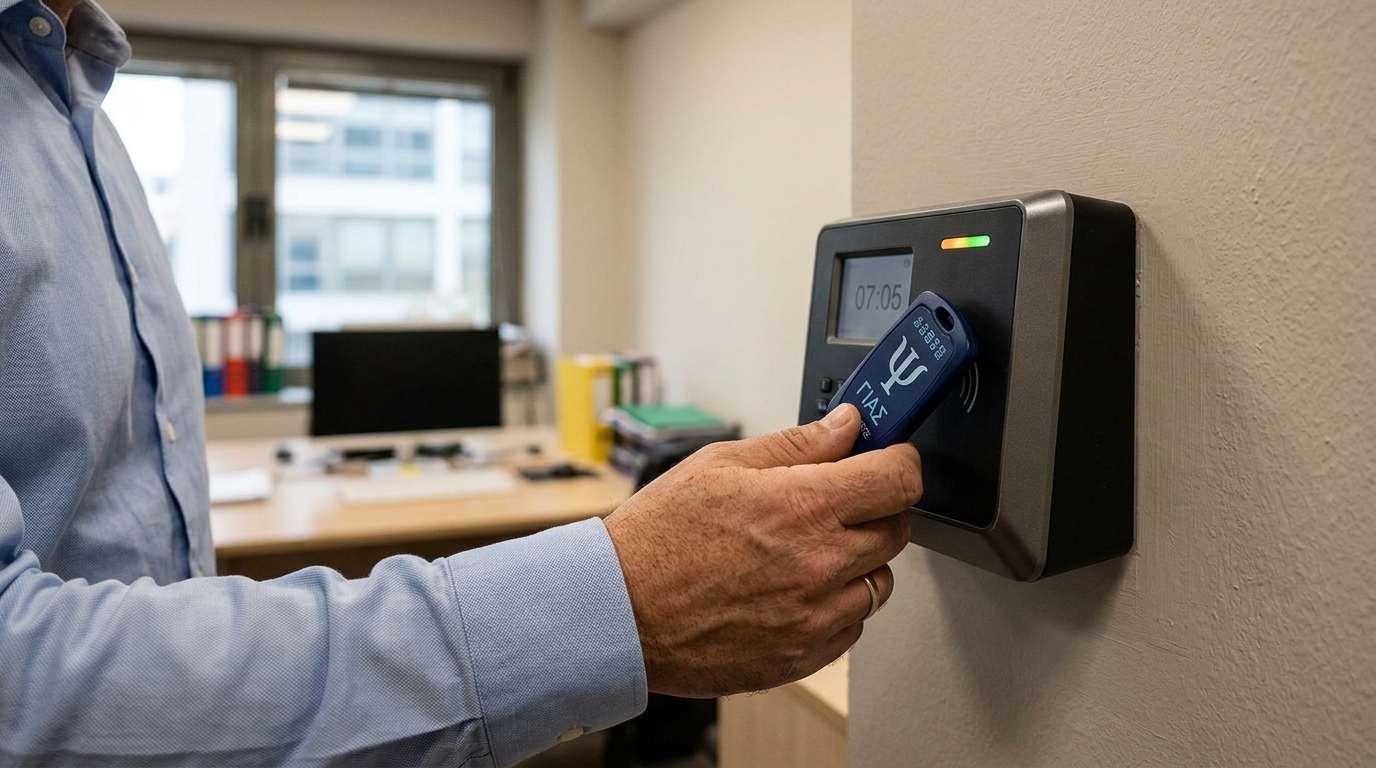
The process is not without challenges. Small and medium-sized enterprises (SMEs) express concerns about administrative costs and the complexity of implementation in environments where work is not always static. For instance, a waiter or a delivery driver is not always in front of a terminal. This is where mobile application technology and QR codes come in, allowing for real-time 'clocking' of the card, transferring data directly to the Labor Inspectorate's databases.
Transparency or Digital Surveillance?
The government's big bet is the suppression of 'grey' labor. According to analysts, the Digital Card acts as an irrefutable witness. When working time is recorded second by second, an employer's ability to declare four-hour employment while the employee works eight hours is drastically limited. Overtime is automatically calculated, and the contributions due to social security funds increase, providing a necessary 'breath' to the pension system.
However, criticism from workers and some trade unions focuses on the quality of work. Digital recording may ensure hours, but it does not inherently guarantee wage increases or improved working conditions. There is also the fear of 'technological bypass,' where employees might be pressured to clock out while continuing to work—a practice that requires strict on-site inspections to be eradicated.
Artificial Intelligence in the Service of Control
The ERGANI II system is not just a database; it now incorporates risk analysis algorithms. Through Big Data processing, the Labor Inspectorate can identify patterns suggesting fraud. For example, if in a business all employees clock out simultaneously every day without any deviation, the system triggers a 'red alert' for potential phantom use of the card. This proactive approach allows for targeted inspections where there is a real need, increasing the efficiency of state mechanisms.
The Future of Work in Greece
The expansion of the Digital Work Card is part of a broader plan to modernize the Greek economy. In a country striving to attract investment and improve productivity, transparency in labor relations is indispensable. This transition, though painful for some, promises a fairer competitive environment for law-abiding businesses and a protective shield for the most vulnerable workers. The remaining question is whether this digital revolution will be accompanied by a substantial increase in citizens' disposable income, at a time when inflation and the cost of living continue to pressure households.