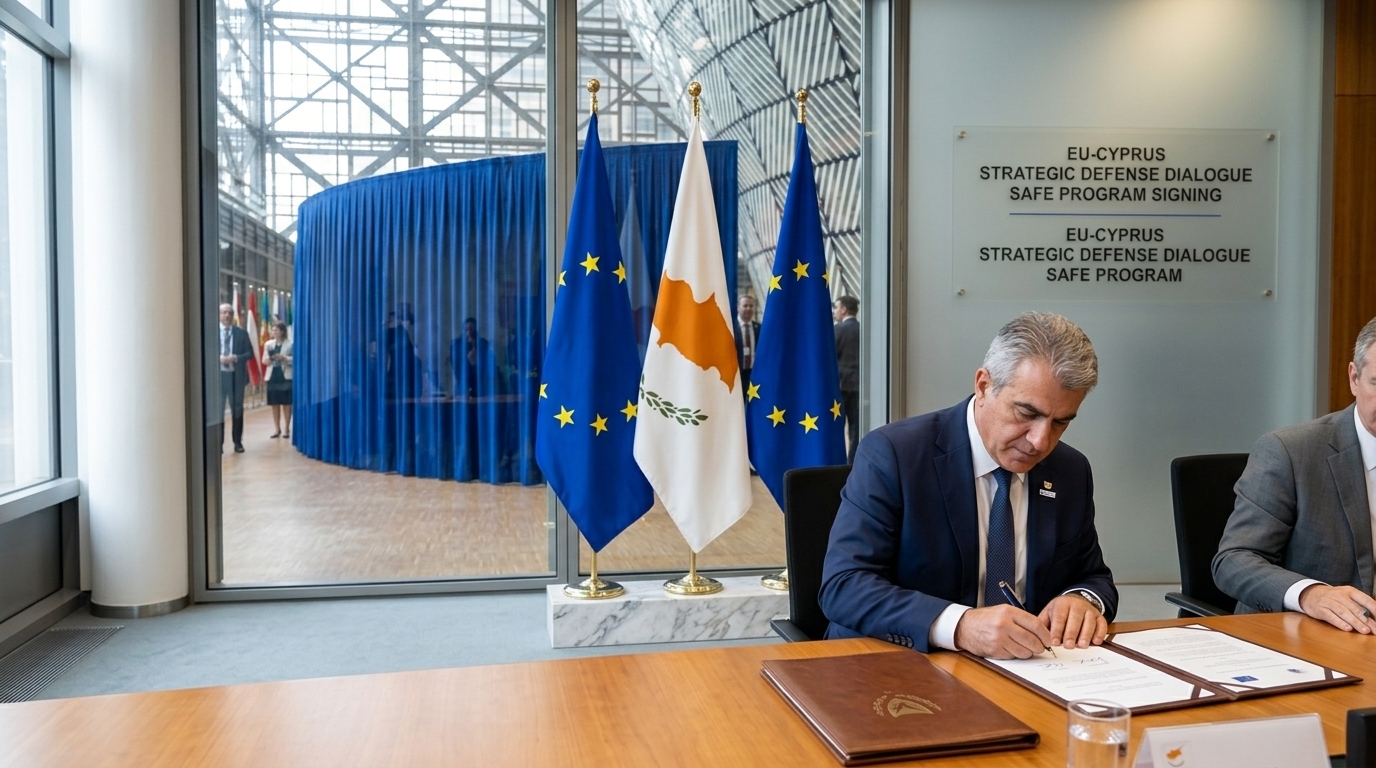
In a move with profound geopolitical and technological implications, the Republic of Cyprus has announced its official entry into the European defense program SAFE (Shared Awareness and Fabric of Europe). This development is not merely a bureaucratic addition to a list of collaborations, but a strategic choice that places Nicosia at the core of the European defense architecture, particularly in the fields of cyber defense and shared operational awareness.
The SAFE Program: A Digital Security Net
The SAFE program, operating under the auspices of the European Defence Agency (EDA), is designed to address modern threats that transcend traditional borders. In a world where hybrid attacks and cyber operations can paralyze critical infrastructure without a single shot being fired, the need for 'Shared Awareness' is imperative.
As the sixth member state to join—alongside powers such as France and Germany—Cyprus gains access to advanced real-time information-sharing tools. SAFE functions as a 'fabric' that interconnects national defense systems, allowing for faster threat identification and coordinated responses. For Cyprus, this represents a massive upgrade for the National Guard, which can now leverage data and expertise from across the European defense industry.
The Geopolitical Dimension in the Eastern Mediterranean
Cyprus's accession to SAFE cannot be viewed independently of the turbulent landscape of the Eastern Mediterranean. The region is a critical energy hub and a field of intense competition. With this move, Nicosia sends a clear message: its security is inextricably linked to European security. Analysts note that participation in such programs strengthens Cyprus's deterrent footprint by integrating it into structures that are difficult for regional players to ignore.
"Our participation in SAFE is not just technical; it is deeply political. It confirms Cyprus's role as a pillar of stability and as an active participant in shaping the EU's Strategic Compass," sources from the Ministry of Defense stated.
Furthermore, Cyprus offers the EU a unique geographical perspective. Its proximity to the Middle East and its ability to monitor maritime routes make Nicosia's contribution to the SAFE program particularly valuable for its partners, turning the island into an 'advanced outpost' for digital and defense surveillance.
Technology and Innovation: The Next Day
Participation in the program also opens avenues for the Cypriot technology industry and research centers. SAFE's requirements for advanced AI systems, encryption, and Big Data analysis create opportunities for local startups to participate in European consortia. This is expected to boost Cyprus's innovation ecosystem, transferring expertise from the military to the civilian sector.
However, challenges remain. Full integration into SAFE systems requires significant investment in infrastructure and human capital. Cyprus will need to demonstrate consistency in implementing security protocols and ensure that its digital shielding is impenetrable, given the increasing intensity of cyberattacks from state and non-state actors globally.
Conclusion
Joining SAFE is a milestone for the Republic of Cyprus. At a time when Europe is pursuing its 'Strategic Autonomy,' Cyprus proves that, despite its small size, it can play a decisive role. The transition from traditional defense to digitally integrated security is now a reality, and Nicosia seems ready to lead in this new, complex world.